Showing results for david narration
The science of memory and misinformation, with David Rapp, Ph.D.



Transcripts and additional resources:
Meet Our Guest(s):

David Rapp, Ph.D.
David Rapp is the Walter Dill Scott Professor of Education, Social Policy, and Psychology at Northwestern University. His research examines language and memory, focusing on the cognitive mechanisms responsible for successful learning and knowledge failures. This has included investigations into the influence of inaccurate information on comprehension, the evaluation of technologies that support formal and informal learning, and the iterative development of tools and curricula intended to support literacy. Rapp’s projects have been funded by the National Science Foundation, the U.S. Department of Education, the National Institute on Aging, and Meta.
Meet our host, Susan Lambert
Susan Lambert is Chief Academic Officer of Literacy at Amplify and host of Science of Reading: The Podcast. Throughout her career, she has focused on creating high-quality learning environments using evidence-based practices. Lambert is a mom of four, a grandma of four, a world traveler, and a collector of stories.
As the host of Science of Reading: The Podcast, Lambert explores the increasing body of scientific research around how reading is best taught. A former classroom teacher, administrator, and curriculum developer, she’s dedicated to turning theory into best practices that educators can put right to use in the classroom, and to showcasing national models of reading instruction excellence.
Quotes
“In terms of being exposed to misinformation, we see even if people have been exposed to inaccurate ideas—even once—it's encoded into memory; it's potentially gonna be there to influence you.”
“Once the information is in memory, you can't really get rid of it. What you can try to do is make other memories more powerful, more likely to resonate.”
“It feels easy for us to comprehend texts if we're well practiced at it. It feels easy, but it's actually a lot of cognitive operations going on behind the scenes and a lot of years of practice.”
“Sometimes our most effective processes actually lead us to misunderstand. For example, you're really good at encoding information to memory, that's great…except if you're exposed to inaccurate ideas, that's a problem.”
Episode 14: Maximizing our educational reach via technology with David Steiner
Episode 20: Evidence-based solutions and tackling unfinished learning with David and Meredith Liben
The curriculum effect
Research shows that students learn primarily through their interactions with teachers and content. Materials influence students directly, and they influence the way teachers teach. They are an essential part of the equation, with a proven and direct impact on outcomes. According to the Johns Hopkins Institute for Education Policy report Hiding in Plain Sight, “Research suggests that, in the aggregate and for specific instructional programs, changing from ‘business-as-usual’ to a high-quality curriculum, or from a low-quality to a high-quality curriculum, can boost student achievement.” The report calls this overall impact “the curriculum effect.”
Individual studies cited in Hiding in Plain Sight also show that:
- High-quality curricula increased student achievement in reading, math, and science from the 50th to the 60th percentile and higher: “a potentially transformative impact if aggregated across an entire class, grade, or school.” (Data from David M. Steiner et al., “StandardsWork: A Narrative Research Review,” Center for Research and Reform in Education; Institute for Education Policy, Johns Hopkins University, January 2017.)
- Access to rigorous materials increased achievement for Black and Latino students (Card & Giuliano, 2016).
- English Language Learners acquire knowledge and vocabulary faster when using grade-level content (with supports) (Zwiers, 2008; Walqui & Heritage, 2012).
- Math textbook choice has a significant effect on test scores (Bhatt & Koedel, 2012 & 2013; Agodini et al, 2010).
A cost-effective approach
And high-quality materials don’t have to come with sticker shock. Early evidence suggests that switching to a high-quality curriculum is not only more effective, but also more cost-effective, than other familiar school-led approaches to boosting student success.
For example, a 2015 study from the Center for American Progress found that the average cost-effectiveness ratio of switching curriculum “was almost 40 times that of class-size reduction in a well-known randomized experiment” (Boser, Chingos, and Straus, 2015).
High quality is not defined in a vacuum—it’s all about curriculum that supports teachers in the classroom. When teachers have high-quality instructional materials, they don’t have to spend their valuable time searching for resources and creating their own materials. They know they are using materials that have been developed and reviewed by researchers, academic experts, and teachers like them. They have curriculum that works harder so they can do what they do best: teach.
Reading comprehension strategies grounded in science

When we teach reading using what science (specifically the Science of Reading) tells us, we guide the brain to start recognizing and understanding those letters, syllables, and words. And the most effective reading comprehension strategies depend not only on explicit instruction, but on building background knowledge.
Comprehension instruction: Breaking it down
According to the Simple View of Reading, two cognitive capacities are required for proficient reading: (1) decoding, and (2) language comprehension.
“Reading comprehension is the product, not the sum, of those two components,” says Dr. Jane Oakhill, professor of experimental psychology at the University of Sussex. “If one of them is zero, then overall reading ability is going to be zero.”
As Oakhill explains further on Science of Reading: The Podcast, each component contains its own set of distinct skills and processes. It’s crucial to help students develop all of these capacities.
Building mental models for new information
Some readers are great at decoding but struggle with language comprehension. Why might that be—and how can you support them?
Here’s some context: After you read this paragraph, you aren’t likely to recall the precise wording—but you will probably remember the idea. Researchers use the term mental model to describe the cognitive strategies for the structure you create in your mind to perform this feat of comprehension.
Historically, educators have thought about the process of comprehension — everything that happens after each word is recognized — as a black box. But now we know that there are two levels of comprehension at work: comprehension processes and comprehension products.
Comprehension processes are the steps you take to build a mental model of a text during reading. Comprehension products refer to the work you are able to do with that model after reading.
Think of the process of building a mental model as a sort of micro-comprehension. Weaker comprehenders build weaker models, so they may struggle when asked to create a narrative text summary, identify a theme, put together predictions, or describe key details of a character’s evolving beliefs.
By actively engaging with text, connecting prior knowledge, utilizing graphic organizers, receiving explicit instruction, and exploring new information, students can learn to build robust mental models that enhance their comprehension of the text. These mental models serve as frameworks for understanding, organizing, and synthesizing information, which then leads to improved comprehension, retention, and critical thinking.
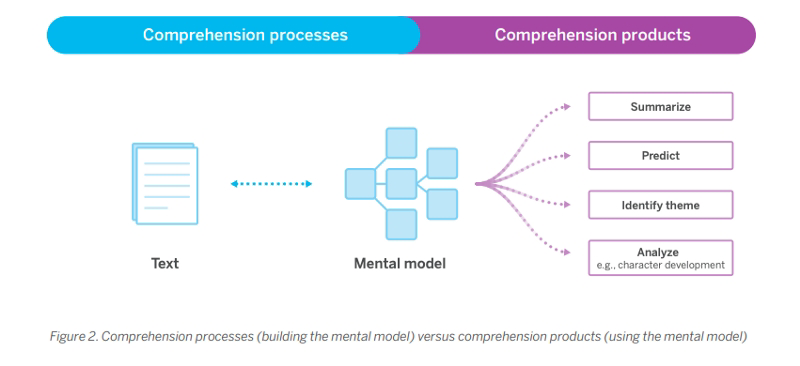
Researchers have identified as many as 17 comprehension processes that affect students’ ability to build and use their mental models. The following are a few of the comprehension processes that weak comprehenders most commonly struggle with, and that with practice, can be targeted for skill development and improved overall comprehension.
- Anaphora (using pronouns to refer to an earlier word or phrase): Some readers struggle to process pronoun relationships (Megherbi & Ehrlich, 2005), identify antecedents, and answer questions that require resolution of anaphora (Yuill & Oakhill, 1988).
- Gap-filling inference: When reading the sentence “Carla forgot her umbrella and got soaking wet,” more skilled readers will conclude that it rained. A lack of awareness of when and how to activate background knowledge to fill in gaps may hinder a student’s ability to make inferences and comprehend the text as a whole (Cain & Oakhill, 1999).
- Marker words: Writers use connective words (e.g., so, though, and yet), structure cues (e.g., meanwhile), and predictive cues (e.g., “There are three reasons why…”) to signal ways that text fits together. Students with limited knowledge of the meaning and function of these words may struggle with the meaning of the text (Oakhill, et al., 2015).
- Comprehension monitoring: When proficient readers encounter difficulty, they tend to stop, reread, and try to figure it out. Less proficient readers may just keep going or fail to recognize that what they’re reading doesn’t fit their mental model.
Two strategies that you can employ in your classroom to guide students in comprehension strategy instruction:
- Graphic organizers: Use graphic organizers such as concept maps, story maps, or Venn diagrams to help students learn to visually organize information and relationships within the text. Visualization enhances comprehension (Graesser, et al., 1994). As the text progresses, students can refer to and update their models.
- Comprehension monitoring: Teach readers to monitor their comprehension while reading by pausing to reflect on their understanding, clarify confusing points, and adjust their reading strategies as needed. Monitoring comprehension helps good readers stay engaged and actively construct meaning from the text.
How background knowledge powers comprehension
The Science of Reading demonstrates the importance of systematic and explicit phonics instruction. But students don’t have to learn phonics or decoding before knowledge comes into the equation. In fact, the opposite might even be true.
Let’s say you’re handed a passage of text describing part of a baseball game. You read the text, and then you’re asked to reenact that part of the game. Which is most likely to help you do so?
- Your ability to read
- Your knowledge of baseball
- Neither
If you answered “2,” you’re batting 1,000. This example summarizes an influential 1988 study that concluded that the strongest predictor of comprehension was knowledge. In the study, which showed readers (with varying degrees of background knowledge about baseball) a passage describing a game, struggling readers comprehended as well as strong readers—as long as they had prior knowledge of baseball.
“The background knowledge that children bring to a text is also a contributor to language comprehension,” says Sonia Cabell, Ph.D., an associate professor at Florida State University’s School of Teacher Education, on Science of Reading: The Podcast.
In fact, background knowledge is the scaffolding upon which readers build connections between prior knowledge and new words. Students with average reading ability and some background knowledge of a topic will generally comprehend a text on that topic as well as stronger readers who lack that knowledge.
But until recently, literacy instruction has typically focused on decontextualized skills—finding the main idea, making inferences—rather than on the content of texts and resources that students engage with. According to Cabell, what we know about knowledge and comprehension should inform instruction for the whole class. “I think most, if not every, theory of reading comprehension implicates knowledge,” she says. “But that hasn’t necessarily been translated into all of our instructional approaches.”
How can we help build background knowledge while teaching reading? Here are some strategies backed by science.
- Systematically build the knowledge that will become background knowledge. Use a curriculum grounded in topics that build on one another. “When related concepts and vocabulary show up in texts, students are more likely to retain information and acquire new knowledge,” say education and literacy experts Barbara Davidson and David Liben. According to them, this retention even continues into subsequent grades. “Knowledge sticks best when it has associated knowledge to attach to.”
- Provide instruction that engages deeply with content. Research shows that students—and teachers, too—actually find this content-priority approach more rewarding than, in Davidson and Liben’s words, “jumping around from topic to topic in order to practice some comprehension strategy or skill.”
- Support students in acquiring vocabulary related to content. Presenting keywords and concepts prior to reading helps students comprehend text more deeply. Spending more time on each topic helps students learn more topic-related words and more general academic vocabulary they’ll encounter in other texts.
- Use comprehension strategies in service of the content. While building knowledge systematically, teachers can use proven strategies—such as chunking and creating graphic organizers—to help students develop skills they can use to support their for understanding of important information.
- Use discussions and writing to help students learn content. Invite students to share their interpretations, supporting their thought processes in their own words and connecting with peers’ perspectives.
- Help students forge connections in small groups. Help students draw connections between reading lessons and units—and their own experiences—as they grow their knowledge base together.
Every day, the Science of Reading has more to tell us about comprehension as a multifaceted skill that requires a combination of various strategies, tools, and techniques to unlock meaning from text. Because of this body of research, we know that when educators bring intentional and evidence-based practices into the classroom, students can enhance their ability to comprehend grade level text, analyze information critically, and engage with diverse subject areas. By nurturing students’ reading comprehension skills grounded in the Science of Reading, educators can empower students to become good readers who can navigate complex texts with confidence and understanding.
Explore more
The Amplify blog:
Science of Reading: The Podcast
School by Design (SxD) becomes an independent company dedicated to helping education leaders design the schools their kids and teachers need
SxD will be led by Andrew Joseph, a senior executive at Amazon Education and the co-founder of TenMarks Education, Inc., a personalized online math program. Vicki Phillips, the previous K-12 Director of Education – College Ready at the Bill and Melinda Gates Foundation, will join the SxD Board of Directors, along with David Stevenson, Executive Vice President of Amplify.
SxD brings a design thinking approach to education’s annual resource planning cycle—from district budgeting to master scheduling—so that it shifts from an administrative process to a strategy for instruction. Delivered through an online platform, analytic tools, and technical assistance, SxD services include:
- Specialized resource audits that give districts and schools a quick way to see how resource allocation and utilization are currently impacting instructional decisions related to teacher time, student time, equity, class size, and more.
- Scenario planning to uncover the different ways budgets and time could be used based on the school experience leaders and teachers want to provide students and the supports staff need. Examples include: looking at ways to manage class size within current budget while also finding more time for teacher professional development; and exploring school designs developed around student learning opportunities such as STEAM, problem-based learning, and community-based learning.
- Decision-making supports for districts and schools to make informed decisions about budgeting, scheduling, and school model options so that they support, not block, high quality teaching and learning experiences.
“School by Design is tackling one of the biggest challenges for districts and schools: making sure resources and policies support teachers and students,” explains Vicki Phillips. “The SxD services and supports are invaluable to schools because they help solve, within budget, the age-old ‘pain points’ that undermine good teaching—issues such as class size, time for teacher collaboration and professional learning, and scheduling for interdisciplinary learning and student field experiences.”
School by Design is built around the leading work of Marilyn Crawford on resource alignment, master scheduling, and professional development in service of innovative teaching and learning. Over the past few years, School by Design has worked with dozens of districts and CMOs across the country to find thousands of hours for teacher professional development and planning, while helping schools address the unique learning needs of their students within budget.
“School by Design helps you solve problems. Most people know what their issues are, but School by Design helps them know what to do about it,” states Steve Broome, director of state development for high school and middle grades at the Southern Regional Education Board (SREB). Working with education leaders, Steve and the team at SREB use the SxD audit and scenario planning to help schools turn their High Schools that Work principles—such as multiple pathways to college and careers—into reality.
The SxD spinoff enables Amplify to focus on its core offerings of digitally-enabled instruction, assessment, and professional development for K-5 reading and language arts and middle school ELA, math, and science. As Amplify’s and SxD’s services and products are distinct but complementary, the organizations expect to collaborate to serve districts and schools.
“I’m honored to be leading School by Design to the next level,” says Andrew Joseph. “We are uniquely positioned in this too-often ignored space where resources meet instruction. Our platform and services have helped a number of districts and schools solve their resource allocation and scheduling challenges and uncover the possibilities for their schools. We’re excited to now help other educators create the conditions in which teaching and learning can thrive.”
As an independent company, School by Design will be better able to respond to the evolving needs of educators and expand its suite of products and services. Through actionable analytics, virtual experiences, and new school models, SxD will further its position as the leader of education design thinking—helping school leaders leverage data, see all of the opportunities for engaging, high quality schooling within their resources, and make informed decisions for the types of schools their teachers, parents, and students want and deserve.
Contact: media@amplify.com
Putting equity first
When so much about the world needs to shift, so urgently… here are a few places to start.

Listen: Educator, author, and leader Shawn Joseph shares his passion for social justice and discusses his work advocating for equity in education, shedding light on what he calls the “silent crisis” in literacy instruction.

Learn: Share Shawn Joseph’s discussion guide with your colleagues. Which insights are the most relevant to your district this year?

Lead: Take a look at this curated collection of multicultural and social justice books. Could one spark discussion for your students?

Lead: Share this infographic on the journey to freedom with your class. Ask students to select an event to research and present a two-minute video talk.
Leveraging the science of reading
Go deep on the insights and practices that will help our classrooms (remote or otherwise)–based on the latest science, and adaptable to every shift in the educational landscape.

Learn: Susan Lambert talks to Language Magazine about the science of reading and what it means right now.
Building strong foundational skills
Strong, systematic sound-first instruction is critical to helping students learn to decode and can increase student success. Learn how specific skills can increase your impact.

Learn: Start with Emily Hanford’s “Hard Words” article.

Listen: Jasmine Lane on the importance of equity, and how early literacy teachers can make a difference.

Listen: Bruce McCandliss on the changes a child’s brain shows when learning to read

Lead: Challenge a colleague to this Scarborough’s Rope activity–work through a sample lesson from your district and point out elements of the reading rope.
Sharing knowledge resources
Students need to be able to both read words and get the meaning of what they’re reading. Find out how to help them build key background knowledge from the get-go, so that it compounds over time.
Learn: Begin with Why knowledge matters–then follow up with Natalie Wexler’s podcast

Learn: Take a look at Achieve the Core’s overview of the importance of building knowledge and the groundbreaking “baseball study“

Listen: Anne Lucas on the importance of comprehension and the specific skills that can boost it.
Listen: Tim Shanahan on four crucial aspects in teaching reading and his views on teaching reading in middle school as an extension of evidence-based early literacy practices
Learn: Begin with Why knowledge matters–then follow up with Natalie Wexler’s podcast

Learn: Take a look at Achieve the Core’s overview of the importance of building knowledge and the groundbreaking “baseball study“
Assessing what students need
Assessment this year is more important than ever before–and also more challenging. What does this extended summer slide look like? How can you find time to review what’s needed, while still moving forward?
Learn: Education for Global Development’s thoughts on formative assessment in the time of COVID-19.
Learn: District Administration on why educators want more data– and more guidance on how to use it
Learn: Catch up on dyslexia risk factors and state legislation with our dyslexia toolkit.
Listen: Nancy Nelson on the importance of universal screeners in literacy instruction.
Lead: What can you offer struggling readers and their caregivers? Take a look at the IDA’s COVID-19 Resource Guide.
Thriving through remote learning
Everything about this school year has changed–yet your work is more important than ever before. How can you support your students, and your colleagues, in this new normal? Stop by Amplify Anywhere for ideas that may help.
And while you’re here–please download your free PDF “20 Self-Care Tips for Educators Right Now” (and please take care of yourselves!).
Alana Mangham on Teaching Now
Natalie Wexler on the New Normal
Thinking about back-to-school
Though it feels like the landscape is changing every day, we know we’ve got to find a way to get students back to learning. What will your school day look like? What reinforcement might you need to do in order to ensure equity? We will continue to share resources to support your journey.
Learn: In this recorded webinar, explore some ways CARES Act funding might support your students.
Learn: Hear from Baltimore educator Lucas Drerup on making middle school ELA both enjoyable and rigorous for students.
Listen: Jackson-Madison CAO Jared Myracle shares his thoughts on change management and the science of reading.
Listen: Doug Lemov, managing director of Uncommon Schools, discusses the role of technology in the classroom and remote instruction, and how educators can reconsider how they approach literacy.
Lead: As you consider how and when to reopen, review this article from The Atlantic on Eight steps that will let us reopen schools.
Lead: Guidance from District Administration on reopening safely this fall.
Finding high-quality instructional materials
If you were already thinking about new literacy resources–you’ve now got even more ideas about what high quality looks like. How will your literacy program work for all students? How do you need your literacy resources to support you in the classroom, in remote learning, and for every scenario in between?
Learn: Review this guide to a high-quality curriculum adoption. What factors matter most now, in literacy and in every subject?
Listen: Hear nationally recognized reading experts and authors David and Meredith Liben discuss evidence based solutions and more.
Lead: Download this K-8 ELA Instructional Materials Evaluation Guide. Share with your district leadership. What resources will you all need next year (and beyond) to do the best job possible for your students?
Lead: Talk to a few colleagues in the coming weeks. What are they seeing right now? What are they planning to improve next year?
Staying strong and staying connected!

Looking for ways to connect with other educators and stay updated on the latest research and trends in the science of reading? Check out a few more ways to do so below.
Science of Reading: The Podcast delivers the latest insights from researchers and practitioners in early reading. Further your professional development with each episode by subscribing and downloading them now.
Science of Reading: The Community is built for those committed to fostering conversation around the science of reading and implementing best practices in the classroom (including the virtual classroom).
Ready for more? Complete the form below to stay up-to-date on the latest resources.
Introducing our 2023 Science of Reading Star Award finalists!

Roll out the red carpet and shine those spotlights—it’s time to meet the 25 finalists for our 2023 Science of Reading Star Awards!
These educators and leaders help light the way for the next generation. They’ve implemented Science of Reading principles and guided their students toward lifelong literacy. They’ve demonstrated expert change management and professional development. Get ready to meet some of the brightest minds in education as we celebrate their achievements and see what makes them truly stellar!
Join our virtual event and awards program on May 23.
But first…meet our 2023 finalists! Below, you’ll hear from the nominees themselves, as well as the colleagues who nominated them, about what makes them stars.
The Changemaker Award
For exemplary leadership in guiding a district through a shift to the Science of Reading.
And the finalists are…
Heather Campbell
Learning Coach, Sunset Elementary, Washington County District, UT
Why she’s a star: “Heather’s philosophy that all students can learn to read if given proper instruction has changed the data. Our school made the change and the data is showing our students are thriving.” —Shelli Campbell, Learning Coach
Javonna Mack
Lead Content Teacher, Caddo Parish School, LA
Why she’s a star: “Whether working with students or teachers, Mrs. Mack keeps best practices grounded in the Science of Reading at the forefront. She constantly strives to build teachers’ expertise in teaching students to read through content-rich professional learning communities, often on Saturdays or after the workday has ended.” —Shannon Southwell, Lead Content Teacher
Aaron Jura
Reading Interventionist, Bloomingdale, IL School District
Why he’s a star: “Aaron has been the catalyst for our entire district embracing this shift to the Science of Reading, and we are just at the beginning of this amazing journey.” —Nicole Gabany, Reading Interventionist
Nicole Peterson
Director of PreK–8 Education, Sampson County Schools, NC
Why she’s a star: “She has created, initiated, implemented, monitored, evaluated, and adjusted processes and systems to ensure that teachers have access to resources, training, materials, and professional development to ensure that all students gain equitable access to high-quality, evidence-based instruction.” —Matthew McLean, Director, PreK–8th Grade Education
Virginia Quinn-Mooney
Teacher, Northville Elementary School, CT
Why she’s a star: “Virginia has gone from one person with a personal commitment to advancing her literacy knowledge. She has now impacted countless educators, parents, etc., with her tenacity and learning journey.” —Nicole Gregory, Teacher
The Data Dynamo Award
For commendable use of data to align a literacy system and maximize student achievement
Shennoy Barnett
Kindergarten Teacher, South Smithfield Elementary, NC
Why she’s a star: “My objective is to help as many children as I can become fluent readers and critical thinkers. As a literacy specialist here for just four months, I made great strides with literacy with my students.” —Shennoy Barnett, Kindergarten Teacher
Anne Elizabeth Carter
Kindergarten Teacher, Wake County District, NC
Why she’s a star: “Through systematic and explicit phonics instruction as well as targeted language comprehension instruction—using texts that incorporate science and social studies content as well as build knowledge systematically—my kiddos were TRULY learning how to read accurately and fluently.” —David Gaudet, Principal
Bethani Ploegstra
Kindergarten Teacher, Union Colony Elementary, CO
Why she’s a star: “She takes data from mCLASS® DIBELS®, Lexia, and SchoolPace (part of our reading curriculum), as well as formative feedback from what she hears and sees students doing daily in the classroom, to immediately adjust what she presents next to students, whether individually, in small groups, or whole class.” —Mandy Bailey, Assistant Principal
The Knowledge Builder Award
For showing the world that the Science of Reading is more than just phonics, and empowers students with knowledge from elementary to middle school
Corey Beil
Instructional Interventionist, Quakertown Community School District, PA
Why he’s a star: “He incorporated literacy into his daily math instruction by providing our students with opportunities to understand and connect with the content more deeply. Our students were exposed to practicing literacy concepts while expanding their mathematical knowledge and foundational understanding.” —Julianne Pennabaker, Teacher
Kim Smaw
Principal, Rosalyn Yalow Charter School, NY
Why she’s a star: “She was able to persuade the learning community to adopt the Science of Reading, firmly convincing them that this curriculum could empower students to gain rich learning experiences.” —Deirdre Frost, Reading Intervention Specialist
Angie Dutton
Instructional Coach, Onslow County Schools, NC
Why she’s a star: “Her positive attitude about the Science of Reading is contagious and is most likely why other educators feel comfortable reaching out to her for questions and guidance.” —Stacey Horne, Instructional Coach
Nicole Brodie
ELA Grade 7 Teacher, Long Middle School, GA
Why she’s a star: “She encourages her students to use their [voices] for change and impact and supports them in their learning process academically, [socially, and emotionally].”
—Renee Dawson, Grade 7 English Language Arts Teacher
The Intervention Innovator Award
For admirable use of intervention strategies to get at-risk readers back on track
Suzanne Maddox
RTI Teacher, Robertson County Schools, TN
Why she’s a star: “Mrs. Maddox reviewed individual student data, worked with teachers, and began using CKLA Skills and the intervention materials provided with this curriculum to continue a sounds-first approach to meeting the individual needs of students.” —Brooke Callis, RTI Teacher
Sara Thornton
Reading Interventionist, Senior Team Lead, Schmitt Elementary, CO
Why she’s a star: “Sara’s enthusiasm for and dedication to her work has been an inspiration to all involved and has resulted in a successful transition to the Science of Reading—as evidenced by our students’ amazing academic growth!” —Hayley Gunter, Reading Interventionist, Senior Team Lead
Markaya Aga
Reading Interventionist, Merit Academy, CO
Why she’s a star: “Since she has come on board at our school, the mindset around literacy and the growth of our programming [has improved] ten-fold. We need more educators like Markaya!” —Allison Hanson, Reading Interventionist
The Language Luminary Award
For outstanding success in developing the skills and strengths of emergent bilingual students
Wanda Ramirez
Grade 2 Teacher, El Sol Science and Arts Academy, CA
Why she’s a star: “We used to emphasize to students that what they know in one language cannot be used in the other language. Now, as a dual-immersion educator, I have the opportunity to change that mindset, teach my students to embrace their native [language], and empower them to use their entire linguistic ability. It’s a very powerful thing to be able to do.” —Wanda Ramirez, Grade 2 Teacher
Esmeralda Martinez
Kindergarten Teacher, Compass Community Schools, TN
Why she’s a star: “She has consistently worked on improving her teaching methods, tried new ways to engage the class, and worked diligently to support all of our students.” —Rachel, Marinari, Teacher
Christine Black
ESL Teacher, North Dover Elementary School, NJ
Why she’s a star: “We have a rapidly expanding ESL population, and Mrs. Black works tirelessly to ensure that her students are expanding their ELA skills in accordance with the major tenets of the Science of Reading.” —Dawn Gawalis, ESL Teacher
Rookie of the Year Award
For showing the world that the Science of Reading is more than just phonics, and empowers students with knowledge from elementary to middle school
Caitlyn Cockram
Teacher, Patrick County Schools, VA
Why she’s a star: “We have offered professional development in vocabulary and implementing SOR strategies, and Caitlyn is always one of the first teachers to sign up. She is dedicated to improving student achievement through research and evidence-based practices.” —Callie Wheeler, Teacher
Andrea Mason
Academic Interventionist, County Line Elementary School, GA
Why she’s a star: “Making the shift from balanced literacy to the Science of Reading hasn’t always been easy. But I continue to research and implement these best practices with my students because I can see that they are now on a path to becoming strong readers.” —Jennifer Ezell, Academic Interventionist
Mallory Pendergast
Phonics Teacher, Literacy Interventionist, Circle City Prep, IN
Why she’s a star: “As a kindergarten teacher, she led 100% of her scholars to be reading on grade level in the first quarter and maintained that momentum through the first semester.” —Sami Hyde, Senior Instructional Coach
ESSER Ace Award
For notable and innovative use of stimulus funds to help kids rediscover the joy of reading
Stephanie Hurst
District Literacy Specialist, Maple Avenue Elementary, NH
Why she’s a star: “She is also a voice on the utilization of [the] ESSER Fund—using the distribution of funds per federal protocol to ensure that the district’s lowest-performing schools have access to quality instructional materials and professional development all grounded in the Science of Reading.” —Mark Blount, K–12 Literacy Specialist
Callie Wheeler and Sara Vernon
Instructional Coaches, Patrick County Schools, VA
Why Callie’s a star: “Mrs. Wheeler played a key role in creating a culture of literacy within our schools, where the Science of Reading is central to the education of our students.” —Sara Vernon, Instructional Coach
Why Sara’s a star: “Sara has worked tirelessly to make the shift from the vision that was grounded in balanced literacy to one that is now making waves in Southwest Virginia with its Know Better, Do Better, Be Better approach to reading instruction.” —Callie Wheeler, Instructional Coach
Edie Bostic
Literacy Coach, Gallia Local, OH
“As a teacher, district Title I coordinator, elementary principal, and now district literacy coach, she continually champions the students under her care and is passionate about those students receiving the highest levels of instruction.” —Leslie Henry, Principal
Inspired? We are! Register to join our May 23 Science of Reading Star Awards virtual ceremony!
More to explore
Learn with and from other top-notch educators like you through our family of podcasts.
How comprehension fits into effective literacy instruction

Many of us grew up doing a classroom activity called “reading comprehension,” in which we would read a short text about, let’s say, sea turtles, then answer multiple-choice questions designed to demonstrate how much of that reading we comprehended. The next time, the reading might’ve been about the history of jazz.
Nothing against sea turtles or Dizzy Gillespie, but our approach to reading comprehension has evolved—and that’s thanks to the Science of Reading.
Let’s take a look at what we know now about how comprehension works and how to make it part of the best possible literacy instruction.
The role of comprehension in literacy instruction
Comprehension is one of the five foundational skills in reading and one of the two key components of the Simple View of Reading.
This framework lays out the two fundamental skills required for reading with comprehension:
- Decoding—the ability to recognize written words
- Language comprehension—understanding what words mean
In other words, reading proficiency is a product of word recognition and language comprehension.
The Reading Rope layers complexity onto this view, providing a visual metaphor of reading as a complex skill combining decoding skills, language comprehension, background knowledge, vocabulary, and more.
In this context, comprehension refers to the ability to understand and make meaning from written text. It involves not only accurately decoding and recognizing words, but also grasping the deeper meaning, intent, and implications of the text.
Product vs. process: The missing link in comprehension
Historically, comprehension instruction focused on the products of comprehension, rather than on the process. Students could demonstrate that they understood what they just read about sea turtles, but how did students understand it? What were their brains actually doing at the time? Answering those questions can help us better support students.
To do that, let’s look at the students who are not the best comprehenders—even though they have solid word recognition, vocabulary, and background knowledge. What’s missing?
After you read a piece of text, you’ll probably not recall its precise wording, but generally, you’ll remember the general idea. Doing so requires building a structure in your mind that researchers now call a “mental model.” The process of building a mental model is a sort of micro-comprehension.
Weak comprehenders build weak models. So when asked to analyze a character or make a prediction, their answers are not as strong as those of more advanced comprehenders.
We now know that students need four critical skills to improve their mental modeling/micro-comprehension—and thus their overall comprehension.
- Interpreting the usage of anaphoras (like she, him, them).
- Understanding the use of markers to signal ways that the text fits together — connectives (like so, though, whenever), structure cues, and directions.
- Supplying gap-filling inferences. (Writers often make assumptions about what can be left unstated, and weaker readers who fail to make these gap-filling inferences wind up with gaps in their mental models.)
- Monitoring comprehension as they read. (When something doesn’t make sense, strong readers stop, re-read, and try to figure it out, while weaker readers just keep going, failing to notice that they don’t understand.)
How background knowledge helps language comprehension
The Science of Reading demonstrates the importance of systematic and explicit phonics instruction.
But students do not have to learn phonics or decoding before knowledge comes into the equation.
“The background knowledge that children bring to a text is also a contributor to language comprehension,” says Sonia Cabell, associate professor at Florida State University’s School of Teacher Education, on Science of Reading: The Podcast. Background knowledge serves as the scaffolding upon which readers build connections between new information and what they already know. Students with average reading ability and some background knowledge of a topic will generally comprehend a text on that topic as well as stronger readers who lack that knowledge.
What we know about knowledge and comprehension should inform instruction. “I think most, if not every, theory of reading comprehension implicates knowledge,” says Cabell. “But that hasn’t necessarily been translated into all of our instructional approaches.”
So, a central question is: How can we help build background knowledge—and thus comprehension?
Broadly, we can work to use literacy curricula that intentionally and systematically builds knowledge as they go.
We can also be “intentional throughout our day in building children’s knowledge,” says Cabell, offering the example of choosing books to read aloud. She suggests we ask not just “‘Do they have the background knowledge to understand something,’ but rather ‘Can what I’m reading aloud to them build background knowledge?’”
Cabell also suggests being a little ambitious in your read-alouds: “Read aloud books a couple of grade levels above where [students are] reading right now, so that they’ll be able to engage with rich academic language.”
Comprehension instruction in the classroom
So, what does this type of comprehension instruction look like? Let’s explore a few science-informed examples:
- Systematically build the knowledge that will become background knowledge. Use a curriculum grounded in topics that build on one another. “When related concepts and vocabulary show up in texts, students are more likely to retain information and acquire new knowledge,” even into the next grades, education and literacy experts Barbara Davidson and David Liben say. “Knowledge sticks best when it has associated knowledge to attach to.”
- Present instruction that engages deeply with content. Research shows that students—and teachers, too—actually find this content-priority approach more rewarding than, in Davidson and Liben’s words “jumping around from topic to topic in order to practice some comprehension strategy or skill.”
- Support students in acquiring vocabulary related to content. Presenting key words and concepts prior to reading equips students to comprehend the text more deeply. Spending more time on each topic helps students learn more topic-related words and more general academic vocabulary they’ll encounter in other texts.
- Use comprehension strategies in service of the content. While building knowledge systematically, teachers can use proven strategies—such as “chunking” and creating graphic organizers—to develop students’ skills for understanding other texts.
- Use discussions and writing to help students learn content. Invite students to share their interpretations, supporting them in articulating their thoughts and connecting with peers’ perspectives.
- Help students forge connections. Help students draw connections among lessons and units—and to their own experiences—as they grow their knowledge together.
Comprehension goes beyond reading the words on a page. It involves actively engaging with the text, connecting ideas, drawing inferences, and relating the content to one’s own knowledge and experiences. By making sure students have the skills and knowledge they need to comprehend a text, we can help them comprehend the world.
More to explore
Using formative assessment to support literacy

Learning to read is not linear. That’s because reading is not just one skill, but a bundle of skills, intertwined and supporting one another.
In the late 1990s, reading and literacy expert Hollis Scarborough helped us visualize this complex process by creating a model that’s now known as the Reading Rope. Grounded in the Science of Reading, this now-iconic model emphasizes the need for a comprehensive, deliberate approach to reading instruction. It’s an approach that recognizes the importance of building both reading skills and the background knowledge that makes them even stronger.
The Reading Rope model also connects educators to key strands of formative data that guide instruction and assessment.
With data and information that support the relationship between language comprehension and word recognition skills, teachers can devise reading comprehension strategies and get a better idea of where to focus their instruction. And thanks to the Science of Reading, this data can also help you track what students know, and where they need to go.
Let’s take a closer look to see how it all works.
Reading comprehension and more: The strands of the Reading Rope
The design of the Reading Rope shows that the two core components of reading are word recognition and language comprehension.
Word recognition encompasses the ability to accurately, effortlessly, and rapidly decode printed words. Phonological awareness, phonics, and sight word recognition contribute to this strand.
- Phonological awareness is the ability to recognize and manipulate the individual sounds (phonemes) within spoken words. It includes skills such as identifying rhymes, segmenting words into syllables, and manipulating sounds within words. Phonological awareness provides the foundation for phonics instruction.
- Phonics involves the systematic relationship between letters and the sounds they represent. It includes understanding letter-sound correspondences, decoding unfamiliar words by applying sound-symbol relationships, and blending sounds to form words. Phonics instruction gives students the tools to decode printed words.
- Sight word recognition happens when students have had enough practice decoding words that they can automatically recognize and apply sound-spelling patterns across words. Automaticity in word recognition allows students to shift their focus from decoding to comprehending texts.
Language comprehension involves the understanding of spoken and written language. This includes vocabulary, grammar, syntax, and the ability to make inferences and draw conclusions. Language comprehension allows readers to extract meaning from and create meaning with text.
- Vocabulary refers to the words one knows and understands, both orally and in writing. A robust vocabulary enhances comprehension and communication.
- Grammar and syntax are the rules and structures that govern language. Understanding and applying grammatical rules help students comprehend and construct sentences, enhancing their ability to make meaning from and create meaning with text.
- Inference skills involve the ability to draw conclusions, make predictions, and derive implicit meaning. With these skills, students are able to combine their background knowledge with information in the text to make guesses and reach conclusions.
The importance of knowledge
The Reading Rope affirms that readers use their existing knowledge and experiences to make sense of what they are reading. A student who brings relevant background knowledge to a text can understand it even better than a stronger reader who’s new to the topic.
Background knowledge also helps readers navigate unfamiliar vocabulary or concepts. When readers encounter words or ideas they already have some familiarity with, they can make connections and use contextual clues to determine meaning, which contributes to reading fluency and comprehension.
Intentionally building background and academic knowledge—coupled with comprehension strategies—fuels students’ capacity to understand texts, answer questions, and grapple with ideas.
As educators Barbara Davidson and David Liben write: “Although students’ independent reading is often at lower complexity levels at the beginning of a unit, as they acquire knowledge about the core topic they are generally able to read texts on their related topic at complexity levels greater than their diagnosed grade level.”
Putting it all together with formative assessment
There are a variety of ways to gather information about your students’ skills and knowledge, using the Reading Rope as your guide. Here are just a few examples that correspond to its strands:
Word recognition
- Letters: See how students do with letter-sound correspondence tasks such as: matching graphemes to phonemes, writing letters that represent sounds, word-building activities, and sound sorts with word cards.
- Words: Gauge students’ ability to apply sound-symbol correspondences by asking them to spell words with sound-spelling patterns they’ve already learned.
Language comprehension
- Knowledge: How much are students learning about a topic overall? Keep asking—through pre-reading tasks, discussions, and checks for understanding.
- Vocabulary: Track students’ vocabulary growth with word-mapping, context-clue, and word-brainstorming tasks.
Skilled reading
Here’s where it all comes together. Many formative assessment activities will help you discover what your students know about the skills they’re using as readers. Here, we’ll focus on the power of students speaking and writing about what they’re reading.
- Speaking: As children learn to speak, they develop vocabulary and knowledge of sentence structure, both of which support reading comprehension. Simply giving students the opportunity to talk about a topic can provide insight into their oral language development.
- Writing: Challenge students to write summaries, critiques, and analyses of texts to see what they’re comprehending from what they’re reading.
More to explore
S1-10: Empowering the science educator: Jessica Kesler

In the final episode of the season, Eric sits down with his friend and professional development facilitator, Jessica Kesler. Jessica describes her passion for sharing free, high-quality, empathy-centered professional development for K12 educators. Jessica also shares her experience jumping into leadership positions while teaching in Philadelphia. Eric also chats with Jessica about how students often lean on teachers for more than delivering content. Explore more from Science Connections by visiting our main page.
Jessica Kesler (00:01):
One student at a time, isn’t gonna bring a million students through the door. But if we focus on their teachers, then they can implement it in their classroom and have this multiplicative effect that can continue on and help us to reach those millions of kids and helping them be prepared for future careers.
Eric Cross (00:19):
Welcome to science connections. I’m your host. Eric Cross. My guest today is Jessica Kessler. Jessica’s director of professional learning at TGR foundation, which is a tiger woods charity. There she creates and leads free stem, professional learning opportunities for educators across the country. Prior to working at TGR, Jessica worked as an elementary, middle and high school science teacher while fulfilling several leadership roles, including science department, chair and principal intern. In this episode, Jessica shares some of her classroom experiences while working in Philadelphia, where she was in classrooms, where her students needed her to be more than just her content. She also addresses how designing professional learning with empathy for teachers in mind creates better experiences for teachers. And now please enjoy my discussion with Jessica Kessler. So let’s, let’s start off with St. Joseph’s chemistry college to the classroom, like your origin story. What led you to ultimately get into the classroom and being successful, even just looking at, at your kinda like your resume or your CV of all of the things that you’ve done. You definitely weren’t idle, but start off with chem. Yeah. Like where did that passion come from?
Jessica Kesler (01:27):
Yeah. So when I was younger, I just had this burning passion to help people. Right. And when you’re young and you think about helping people, you think about doctors, doctors help people. Right. So I had this idea that I wanna be a surgeon. I wanna be a black surgeon. I wanna be a young girl, female Charles drew, and I just wanna go out there and do it. And so my mom is actually an alum of St Joe’s. So I spent a lot of time on campus cuz as she was getting her mini master’s degrees I will visit campus with her often. And so when I applied, I had the scholarships, had everything and I went in ready to be bio ready to be a surgeon. I took my first bio class and I was like, yes, let’s talk about the human body. And let’s get into dissections and sections. And they were like, okay, so a plant so has this. And I was like, Ooh <laugh> I was like, this is not what I was expecting at all. It just felt so detached from the trajectory that I wanted to take. And it just did not feed that passion of helping people in the immediate moment.
Eric Cross (02:31):
Did it, did it feel too abstract?
Jessica Kesler (02:33):
It felt abstract. It felt boring. Okay. And one thing I didn’t want was to be like stuck, bored. Like if I’m not being stimulated in a good way, mm-hmm <affirmative> then it’s not gonna last, but I love science. So I switched over to chemistry cuz I’m like this chemistry is exciting. I’m mixing things together. I’m producing new things. I’m doing extractions. I’m being introduced to machinery that I haven’t seen before. I’m loving it. I’m doing a math. The math is awesome. And so I switched over to chem and I started doing research in the summers and things like that. My research was around water quality in Philadelphia and looking at different natural water sources and comparing them and all those great things. But I was in a lab and the lab had no windows and I was stuck talking to this atomic absorption specter every day.
Jessica Kesler (03:24):
And I hit that, that wall again, where it was like, is this the rest of my life? Like talking to these machines and not having windows and not being able to interact with people. What is this? This can’t be life. And so I was seeking out some new opportunities that said, Hey, I need more money. First of all. So I’m like, I call the financial aid office like every week, like, Hey, what’s out today. What new scholarships do you have? I’m applying for everything. Like it was my goal to not have to pay for much of my education. And so I was talking to them and they’re like, Hey, you’re in science. There’s this awesome opportunity called a noise scholarship where they’ll pay for your last year and your master’s degree. If you go into education mm-hmm <affirmative> and I sat on it and I was like, this makes so much sense to me.
Jessica Kesler (04:12):
I was like, I’ve been literally tutoring my peers and teaching in churches and all this other kind of stuff. My whole life. It makes so much sense. How come nobody ever said this before? <Laugh> and so I applied for the noise scholarship, got in and started, you know, mm-hmm, <affirmative> doing practicums in the classroom as I went through my last year as a chemistry major and my first year for my masters and it just felt so right. And I was like, I can do this. And of course there were a lot of people who told me, no, Josh, you can’t do that. Like these kids will eat you alive. And I’m like I don’t think so. <Laugh> but, but that’s give it a go. And I stepped into the classroom and it, it just felt like, felt like it was always meant to be there.
Eric Cross (04:57):
So you were able to, you were able to make that connection between, I mean, if you’re, if you’re studying chemistry and bio and going into stem, I mean, there’s, there’s an aptitude there, but then you realize that this there’s a road that you could take that leads you into a room with no windows. And you’re just hanging out with machines all day
Jessica Kesler (05:14):
And I’m not helping people. Right. Right. And that was, my passion was like, I’m not helping people sitting in this room. I need to be a person that’s outside telling people about what happens in the room. Right. And how they can get involved and like what’s going on in here. Like that’s, that’s where I can be useful.
Eric Cross (05:28):
When you were, you were in Philly when you were teaching, what were you teaching when you were there?
Jessica Kesler (05:33):
So I started off teaching eighth grade science first job in north Philadelphia, teaching eighth grade science and just a, a funding tangent that first day a student called me a B
Eric Cross (05:44):
Trial by fire
Jessica Kesler (05:45):
Trial by fire called me out in front of like the whole floor. We were outside doing line drills and just was like, I hate you miss Kusa your B. And I was like, oh, this is it. This is it. This is where you stand your ground and you take it or you, you bail out <laugh> and you go back into the lab mm-hmm <affirmative>. And of course at the end of that, that traumatic experience between all the kids, like two months later, she wanted me to adopt her. So like everything comes full circles. Right.
Eric Cross (06:10):
That’s how it is. Right.
Jessica Kesler (06:11):
But I started teaching eighth grade science. There’s not a lot of science teachers at that level who actually have a science background. Most of them have elementary school background. So I’m the only scientist walking into the science classroom and saying, this is how science actually works. And so I ended up taking a lot of onus of science while I was there. Ended up building out the K through eight curriculum for science. I ended up doing like a science strategic plan to submit to the district. I ended up leading out our first couple stem nights and like really leading the stem department and kind of our science department. And this was as like a second, third year teacher <laugh> know, but nobody else had the science mm-hmm, <affirmative> the way that I had the science and the education. So it really opened up a door for me to be able to, to run full steam with all those things.
Eric Cross (07:04):
So MI was it primarily middle school during those, those years that you were there?
Jessica Kesler (07:07):
So there, I started with middle school and I did that purposefully because I was still young and I wanted there to be a good age gap between me and the students. And then I moved up to high school and taught high school chemistry, also taught a couple other different subjects while I was at that school. But primarily high school chemistry. Then I actually took a big leap down and I said, okay. I was going for my second master’s degree in educational leadership. And I was going for my principal cert. And I said, if I’m gonna be a principal of a school, then I need to understand all the levels of education and how they operate, cuz they operate really differently. So I said, I started in middle school, went to high school. I don’t have elementary school experience. In fact, I’d spent a day in a kindergarten classroom and I was like this never again, but I was like, I need to go back down there and I need to figure out how this system works because you know, I never know where I’m gonna land as far as principalship.
Jessica Kesler (08:01):
So I went and taught fourth grade.
Eric Cross (08:03):
How was that experience?
Jessica Kesler (08:05):
So imagine me going from teaching high school, seniors and juniors Uhhuh and like they’re self-sufficient and you know, they’re independent, they’re driving to school and all these things. And then I immediately drop down and go into fourth grade where these kids are crying every five seconds. They still have like a lot of bodily fluids, like there’s noses running and things. And like <laugh>, I was like a fish outta water. I was like, what is this? What’s going on down here. But those kids pour out so much love. And they, you, you become another parent to them. Mm-Hmm <affirmative> your high schoolers know who their parents are. They kind of are finding their place in society, but the little ones, they only know big people as parents, small people as equal. So they see you as another parent. So it taught me a lot about, you know, patience and breaking information down, even smaller. I had to figure out new and inventive ways to teach science and bring it down so far that they would be able to grab onto it and achieve it. And it was a challenge, but at the end it paid off, we were running, we were hitting like great markers for all of our PSSA goals that year. I mean, we were really knocking it out the park
Eric Cross (09:17):
And this backstory leads into how we met and adds to the picture as to why I really want to have you on, because your involvement with TGR, which is where I want to go next for the folks listening. I bet a lot of them have no idea what it’s about, just like I did. And now me learning about TGR foundation and meeting you I would love to make sure that everyone knows about it and what they offer.
Jessica Kesler (09:39):
Absolutely. So TGR foundation, a tiger woods charity was founded by tiger woods and his father with a mission to really introduced them education to students in low income minority populations and prepare them for success in their world and their future careers moving forward. And so was founded in 1996 and went through several changes in iterations since 1996. But eventually opened up its first learning lab, which is in Anaheim, California. And through the learning lab, they opened up these satellite sites. So they basically partner with schools to provide after school education and robotics and wearable electronics and things like that. And they would partner with schools to teach these courses after school, they would pay the teacher, pay for the materials and stuff like that to provide more opportunity for students in different areas. And so that’s how I was introduced to the foundation because while I was teaching high school my good friend and previous manager, Jason Porter shout out to JP Jason Porter used to lead the tiger woods foundation when it was the tiger woods foundation.
Jessica Kesler (10:52):
He used to lead the afterschool program. And when I joined that high school, he said, Jess, you got all this great content, knowledge, all this great enthusiasm, and we wanna get more women into this robotics. We wanna get them engaged in this process of, of stuff. And you will be a great role model to start bringing in more of our female students. And I was like, great, sign me up. And that’s where I started working with the TGR foundation, right after school programs, getting my students into robotics, competitions and clubs, doing different challenges and design challenges. And then after some time, a few years, they actually needed someone to come to the DC area and support the development of professional learning and partnerships here in DC, as they were continuing to expand. And really it came out of the idea that tiger gave this big mission to the organization that he wanted to reach millions of kids.
Jessica Kesler (11:48):
He said millions and everybody said, what millions, what M <laugh>. So the foundation was like, okay, well we can’t reach millions by just tackling one student at a time, right? Not one student at a time, isn’t gonna bring a million people or students through the door. But if we focus on their teachers, mm-hmm <affirmative>, then those teachers not only spend most of their day with these students and learn the basics of their skills with these students. But each one of those teachers has 30 to 150 200 students that they see every day. And that’s how we multiply this effect. So we train the teachers on all the stem competencies and the pedagogical tools and strategies to implement the stem that we’re doing in our learning labs. And then they can implement it in our classroom and have this multiplicative effect that can continue on and help us to reach those millions of kids and helping them be prepared for future careers.
Eric Cross (12:44):
And so D divide the effort, multiply the effects. Exactly. And then when I was exposed to it, this was over zoom. Now, how long has it been going on? Has it always been virtualized or did you do the, were you all doing this before? We all went online
Jessica Kesler (12:57):
Before the pandemic man, the glory days, right before pandemic, it feels like I’m talking about prehistoric times, right? Like back in the dinosaur, like era, like, I don’t know, pre we actually did these workshops in a person. So we would invite people to come to DC, invite teachers in Philadelphia to do a Philly one. We were in New Mexico. We were in Florida. We were, I mean, we were everywhere and this would be a extremely hands on engaging workshops. So not only do we focus on this is the theory and the philosophy behind the pedagogy, but we would also focus on like creating a student experience for the teacher, having the teacher flip into student mode and put on that student hat and actually go through sample lessons, model lessons and activities as the student so that they can feel it. So you can feel if, if you feel confused, your students are gonna feel confused.
Jessica Kesler (13:52):
If you feel like this is challenging, you, your students are gonna feel the challenge. If you are, don’t understand the instructions, your students will understand the instructions. So it gives us a different perspective and it puts us in their shoes. So we can better empathize with them and create more responsive lesson planning. So we flipped them into that student role for that purpose. When COVID hit, we went virtual, but virtual allowed us to reach teachers that we probably would’ve never hit. So it was kind of that blessing and disguise, right? It was like we didn’t keep people as long cuz obviously virtually you’re not, you don’t wanna stare at a screen for eight hours. So we cut it down. We revised it a little bit, but we kept the hands on philosophy and feel of it going by, you know, using materials that they could find at home really modeling what education could look like.
Jessica Kesler (14:41):
Mm-Hmm <affirmative> if you used your Z zoom room to capacity, or if you had these materials and resources or rethought your lesson plans and structures. So we went virtual and not only were we able to hit so many more thirst that first year thirsty educators ready to get, dive into it, ready for some comradery with fellow educators. But we were also able to expand our international network. We were able to get so many international educators through our global work that it was, it was beyond what we had when we were in person. So it really had this skyrocketing effect.
Eric Cross (15:20):
There’s professional learning pathways and then virtual stem studio. Is that right for professional development for like teachers who are listening, are those the two kind of main prongs?
Jessica Kesler (15:30):
Yeah. So a stem studio is basically just one, right? And a pathway is a collection. So we now offer four stem studios, four separate stem studios. The first one is on inquiry mindset. You attended that one area. And it’s really about for teachers who are changing their perspective on what the classroom should look and feel like, especially administrators too. It’s about developing that inquiry mindset. So you understand and you feel, and you practice and you learn the tools that are necessary for inquiry to happen in your classroom. We never promote overhauling your classroom. We’re just saying, add a little bit here and there and see how it impacts your students. The second one is on making inquiry, visible, making inquiry visible is all about making students thinking visible in the moment. What are tools and strategies that you use so that students can illuminate their thinking for themselves, but for you and their peers as well and how we benefit from that.
Jessica Kesler (16:28):
So not only do the students get to see their own thinking as they progress and you get to tell the story of how their minds have evolved, but you, as the teacher get to see, oh, this is where everyone is making the mistake, or this is how this misconception came about. Or this is where I need to target for my next lesson. So it makes you more responsive in the moment. And then the third and fourth one where we’re actually launching for a small group this summer, it won’t be available to the masses until maybe a year or two down the line. We have one small group that we’re just going to test it out with. The third one is about developing your inquiry environment. So thinking not just about your physical space, but thinking about your intellectual space too. So what are the things that you can embed into your physical space and develop in a student’s intellectual space that will help you create a holistic inquiry environment?
Eric Cross (17:22):
So this is this inquiry space, not just physical, but then also the intellectual environment
Jessica Kesler (17:26):
Intellectual. Exactly. And it focuses in on the design process and how we design spaces. Because as a teacher, we take a lot of background in the background onus of de creating these spaces. If you take someone out of an old habit or space and tell them, oh, we are gonna change in your minds and teach inquiry, but put them back in the same environment, they’re gonna be conflicted, right? Their bodies wanna do one thing, their minds wanna do another thing. And they don’t know how to bridge the gap between the two. So this is a really illuminating, like how do you change all the spaces? How do you design a flow in space in your classroom and in your students thinking that allows them to be productive in that inquiry environment. It’s really good stuff
Eric Cross (18:11):
Who creates these experiences for teachers.
Jessica Kesler (18:14):
We do. So me and my teammate, Holly, Dard shout out HD. Holly Dard, we really put our brains together and developed these. So it’s a really a team effort because like Jason Porter, Eric even David Tong when he was with us, really collectively thought about what it is that we wanted educators to experience. And then Holly and I do a lot of the grunt work, but then we really collectively put it all together and make it what it is. So I have a heavy hand and a lot of that. And in fact, inquiry four is all about the entrepreneurial mindset. So oftentimes educators don’t consider themselves entrepreneurs, but if you take a look at what an entrepreneur is and what they do on a regular basis, educators are entrepreneurs, but we are missing an opportunity to use our entrepreneurialship in the classroom to drive for stem competencies in inquiry based practices. And so in, in stem studio, four, we really focus in on how the educator is the entrepreneur of their classroom, but also uses entrepreneurial techniques to tackle issues in their schools, districts, and spheres of influence. So it’s really taking the educator to the next level of their teaching practice through entrepreneurship. This is some deep stuff.
Eric Cross (19:37):
It is, well, this entrepreneurial mindset is, is something that I’ve heard before. And I definitely see the link between even the term teacherpreneur beyond just selling lessons on teachers, pay teachers. <Laugh> it’s way bigger than that,
Jessica Kesler (19:52):
Where entrepreneurs actually in the classroom, not just because we do things on the side to make money. Exactly.
Eric Cross (19:57):
A lot of teachers hear that. They’re like, yeah, I got, you know, I got, got a few jobs going on. Exactly. Yeah. And, and I think one thing we, I should have said this earlier, and I’ll, I’ll say the intro, but these are all free.
Jessica Kesler (20:07):
This is largely sponsored by do OD stem as well. So we have a partnership with D O D stem and they have been driving forth the department of defenses, strategic stem plan for years. And as a part of that, they give us funding in order to provide these opportunities for educators for free. So literally educators don’t have to come with anything. And we are giving you not only the content of our, our lessons and our instruction, but we’re also going give you a chance to earn a free micro credential. So people are spending 12 plus hours with us in a workshop which sounds like a lot of time, but it’s over a series of time and days. But we wanna give you something that means something after that, we wanna give you a micro credential to add to your resume, to show your administrator, to show that you have achieved the next level in your professional learning career.
Jessica Kesler (20:59):
Right? And if you finish the pathway, which is all for, then we give you our TGR foundation certificate that says that you’ve completed so much professional learning in these areas that you are basically a warrior of inquiry that you are ready to go out and really lay inquiry out in new creative ways, not in your CLA just in your classroom, but everywhere you go in your district, in your school. And on top of that, we just offer so many other great free partnership incentives like discovery, education, experience licenses. We’re doing raffles this summer. We’re giving out free a free meal voucher so that you can get some lunch. One of these days we’re offering $50 gift cards so that people can get school supplies. So anything you do with us, and you’re like, man, I really wish I could have this so that I can do that in my classroom. We wanna break down all the barriers that prevent teachers from doing this stuff in their classroom, actively engaging in this stuff. And we give you a free copy of the books that we reference. Again, trying to break down the barriers,
Eric Cross (22:00):
What are some of the things that you’ve noticed kind of being on both sides of science teaching in the classroom, and then in training trends with teachers, things like moments that have been great or, or challenges that you’re noticing teachers experiencing, especially maybe changes in differences from a, from, you know, an outsider’s perspective. Seeing what teachers are experiencing are like, since you’ve been doing PDs for folks.
Jessica Kesler (22:22):
Yeah. So it’s actually really interesting being on both sides of the fence. You know, what I always noticed is that teachers are eager, but they’re tired. They’re wanting to learn, but they can’t take advantage of every opportunity to learn. And especially during COVID time, if you take a look at even all the professional learning that’s happening across the world right now, attendance is going down because teachers are so burnt out this hybrid space, this either we’re in person, but we’re still wearing masks and still social distancing and all this other stuff, or I’m still virtual or I’m virtual some days and I’m in person other days, it’s just wearing our teachers out. And I think we notice that as we see a large numbers of friends and family just start to retire, right? Like people are just like, I don’t know if I can adapt to another change in education.
Jessica Kesler (23:14):
Like education goes through these waves of big changes and it’s hard for everybody to adapt to, but for those who are willing to stick it out and those who are able to stick it out and, and still have that energy and enthusiasm to learn, they come in so hungry for more resources, so hungry to learn more and they still have their why at the top of their minds, as they think about why they do this it’s for the kids it’s to drive this mission is to get more kids excited about this. And they just come in so passionate. So once they come in, once we can get them to come in they stick with us for a really long time. They’re like, what else do you have? What else do you have? What else do you have? But we hear, still hear the common threads of like, do I have time for this?
Jessica Kesler (23:58):
Do I have the funding for this? Do I have the energy for this? Do, will my students understand this? And we are constantly facing that challenge of trying to address those things by, but keeping the excitement going, like we know you don’t have enough time. We’re gonna call it out from the start. I know you don’t have enough time to try to do 29 extra things. Mm-Hmm <affirmative>. But my advice is always, but do one thing at a time, start with something small, asking your students a few questions rather than lecturing to them. Doesn’t take a whole lot of extra time, but it gives you so much extra insight. So let’s not work, you know, harder, let’s work smarter. Let’s embed this into our, our work together. And I always say that we’re not asking you to add to your plate. You know, it’s not Thanksgiving where you just pile, keep piling on a plate.
Jessica Kesler (24:47):
It’s it’s a time where you organize the plate. It’s allowing inquiry to restructure your plate so that everything has its place and its time mm-hmm <affirmative> do you wanna leave room so that the educator feels comfortable trying some new initiative? That’s why we encourage admin. We have librarians attend elementary school teachers, administrators, we, and we encourage it because everyone can support the classroom. And if administrators are more in touch with these new practices and tools and strategies, then they can help facilitate the learning. As the teachers are trying new things and coaching them in specific areas. So we really opened the door for some studios, for any and all who are gonna participate in that child’s education, because us all rallying around them as that three-legged stool helps to create that environment and helps support the teacher. The teachers need support, and we’re trying to do our part by providing the resources and the tools, but they need everyone else to.
Eric Cross (25:42):
We don’t always think about it as a way to support, to get support in our classrooms for ourselves. But I agree with you by, by educating vertically up the chain, you know, vice principal, principal, whoever it is, mm-hmm <affirmative> superintendent getting them on boarding and, and educating them to see what’s ex expected. We’ll open up doors and more freedoms for you because now you just have this vertical alignment of folks kind of on the same wave length. Exactly.
Jessica Kesler (26:07):
Yep. And that’s why we love districts. Anaheim union school district is actually one of our partners this year, where they have invited their teachers to participate in the whole pathway because they know how important it is that we practice these tools and strategies. And they want as many educators in the same space going through this at the same time as possible so that we can support each other through it. And so that we don’t feel like islands, oftentimes as educators, we feel like islands we’re in our classroom day in and day out. And we don’t feel like there’s anybody else who’s doing the same things we’re doing and supporting the work that we’re doing. So when we get administrators who support it, it’s magical. It can be magical.
Eric Cross (26:47):
What are some opportunities that are coming up if somebody’s listening and they, they wanna sign up for something, are there things coming up this month or next month or in the summer that they can participate in?
Jessica Kesler (26:55):
Yeah, for sure. So we’ve been doing our monthly workshops. And if you go to our website, so if you actually go to TGR foundation.org and slash stem studio you’ll actually see our summer events already posted, already live for everybody to start engaging in. And again, everything is free. So registration is open and available for everybody to participate. We are offering that first inquiry stem studio inquiry mindset twice the week of June 21st and the week of June 28th, two opportunities for educators to join us for inquiry mindset for the first one. And then also in July, we’re offering the second one making inquiry visible, and that’s the week of July 12th. So again, all free stuff, raffle prizes are available for those who register early and get in there and reserve their seat. It is limited seating. And so, yeah, a bunch of opportunities coming up this summer and guess what all you have to do is sign up and then you get all these free things coming your way. You get to look forward to all this exciting stuff. So TGR foundation.org/studio.
Eric Cross (28:01):
And if folks wanna follow you in your career, your journey.
Jessica Kesler (28:05):
Yeah. I’m on Twitter and LinkedIn, for sure. And it’s Jessica Kessler, K E S L E R one S
Eric Cross (28:12):
I wanna honor your time. And as we close, you’ve been an educator of impact in, in your own classroom. And I know you’re still teaching actively now, and you’ve also made an impact on me and other educators through your professional development. And, and the last question I’d like to end with is who’s the most memorable teacher or learning experience that you had during K eight. When you think about you, your time in school, who was a memorable teacher or a moment that kind of stands out to you and what was it that they did that made them memorable?
Jessica Kesler (28:44):
It was that one teacher who brought me my first T I, 84. You remember when a new calculators came out, I had a teacher give me one amazing, but I think in high school, there was really a turn about where I had miss Caroline and Mr. Canello math and Spanish teacher. So two opposite wings of the, the education spectrum there. But most of all, they listened. They listened to me. I felt seen with those teachers, they supported me. They listened to me, they saw my potential. And they just rallied around me and continued to support me thereafter. Even afterwards, I continued to reach out to those educators. And I think that’s what drives me to be that force for, for my students. And I remember my most memorable heart touching education experience was probably, I had a high school student get interviewed by the newspaper.
Jessica Kesler (29:38):
And they were like, oh, what’s your favorite classes? And what’s your favorite this, and what’s your favorite of that? And he was like, well, I love chemistry, which is what I was teaching. It was like, and I love my after school robotics team. I was leading and I love this and this and this. And he basically listed all the stuff that I was doing that I was teaching and that I was leading in the school. And I was like this one student, literally out of all the classes and experiences he’s experiencing is really just calling out everything that I’m doing. And I feel like it’s because he felt seen, he felt heard. He was like, this person is listening to me. And no matter what space we’re in this teacher is, is there for me. And so I try to be that wherever I go, <laugh>,
Eric Cross (30:16):
It’s amazing how making someone feel seen and, and making them feel important and heard, and, and being present for them. All of a sudden opens up their interests into the subjects that you’re teaching. Thank you for, for making time for serving our kids for serving teachers during a hard time, and for making PD one, being part of an organization that made it free and serve teachers, but also making PD fun and enthusiastic. I think that was one of the things in addition to the empathy that you led with, but also your enthusiasm and passion was something that really resonated with me. And it made our time together. Feel like something that was, was making me a better teacher for my kids. And so, thanks for making time for us tonight. Oh,
Jessica Kesler (30:53):
Bless face.
Eric Cross (30:57):
Thanks so much for joining me and Jessica today. If you have any great lessons or ways that you connect with students, please email us@stemamplifycom.wpengine.com. That’s S TM amplifycom.wpengine.com. And please remember to support the podcast by clicking subscribe, wherever you listen to podcasts, you can also hear more about the podcast in our Facebook group, science connections, the community until next time.
Stay connected!
Join our community and get new episodes every other Tuesday!
We’ll also share new and exciting free resources for your classroom every month.


Meet the guest
In the final episode of the season, Eric sits down with his friend and professional development facilitator, Jessica Kesler. Jessica describes her passion for sharing free, high-quality, empathy-centered professional development for K12 educators. Jessica also shares her experience jumping into leadership positions while teaching in Philadelphia. Eric also chats with Jessica about how students often lean on teachers for more than delivering content.
About Science Connections
Welcome to Science Connections! Science is changing before our eyes, now more than ever. So…how do we help kids figure that out? We will bring on educators, scientists, and more to discuss the importance of high-quality science instruction. In this episode, hear from our host Eric Cross about his work engaging students as a K-8 science teacher. Listen here!

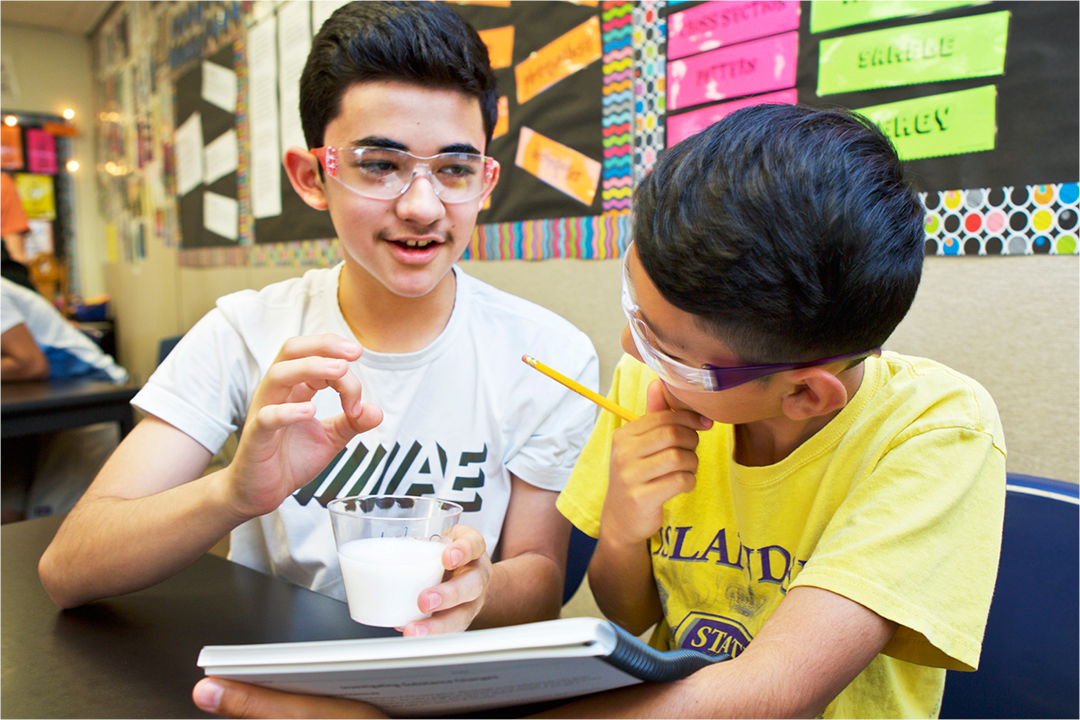

Unleash the potential of knowledge building in language comprehension
Every child is capable of becoming a skilled reader. Every classroom can provide that opportunity and drive student success, through a content-rich literacy curriculum.
We’ll show you how.
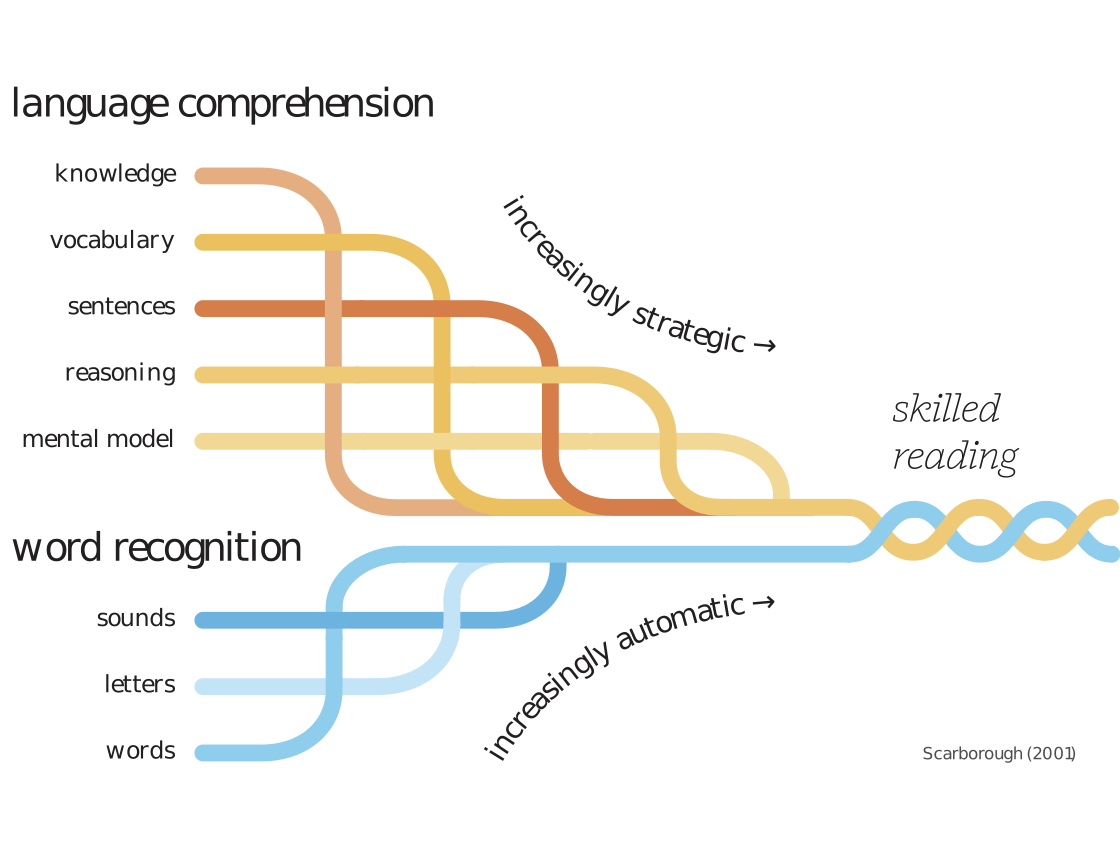
The relationship among knowledge, language comprehension, and literacy skills
The Science of Reading shows that early literacy skills are best built deliberately, on a foundation of knowledge. Knowledge building is not a result of reading and language comprehension; it’s a vital prerequisite and a fundamental part of the process. When students read a text on a familiar topic–event a tough one–they’re more likely to comprehend it. In other words: The more you know, the more, and faster, you learn.
Why is building knowledge so important?
Background knowledge—coupled with comprehension strategies—fuels students’ capacity to understand texts, answer questions, and grapple with ideas.
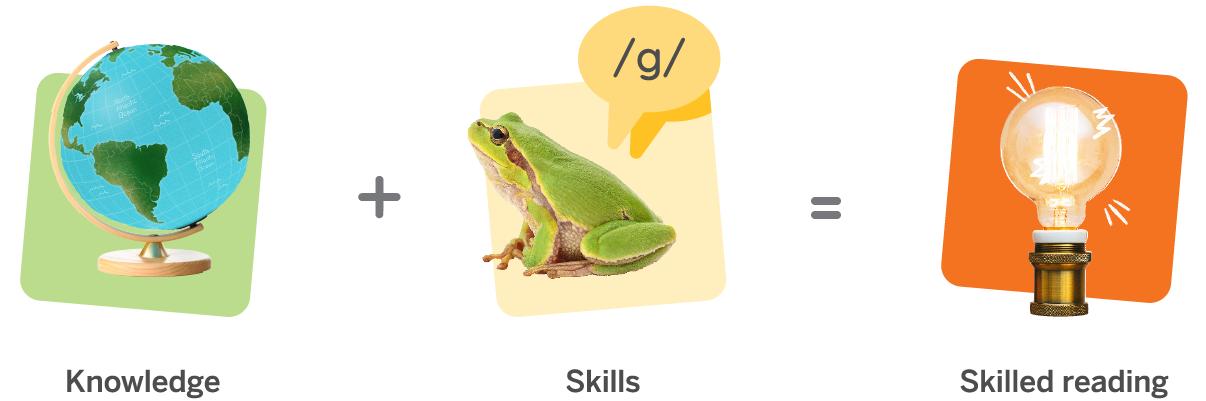
Students bring different bodies of knowledge into school. Some are whizzes at baseball or mechanics; some visit museums, have tons of books at home, and know the word “yacht.” That means their comprehension of a given topic or text will correlate with what they already know. But what happens when they learn the same content together? A recent independent study showed that a knowledge-building literacy curriculum in elementary school raised test scores and helped eliminate income-based opportunity gaps.
It is our responsibility as educators to bring the world into the classroom for all students and help them grow their literacy skills.
Literacy instruction has typically focused on decontextualized skills—finding the main idea, making inferences—before, or instead of, the content of texts and resources that students engage with. Many teachers may have been trained to “put the skills and strategies in the foreground, like a skill of the week, then bring in texts that they find suited for demonstrating the skill or strategy,” says Natalie Wexler, author of The Knowledge Gap. But science shows that harnessing skills and strategies to content is actually more effective. That is, using a coherent and systematic progression of content that helps knowledge and skills build on each other has been shown to result in better student outcomes.
“The advantage of a coherent curriculum is that the topics it covers can build on one another, with one unit providing a foundation of knowledge for others that come later, both throughout a single school year and across grade levels,” according to Barbara Davidson and David Liben. Along the way, students also cultivate curiosity and confidence, accelerating the entire process. So the more you know, the faster you learn—and that lasts a lifetime.

Getting started with knowledge based learning
Effective literacy instruction must celebrate the experiences students have but not assume each student has specific pieces of prior knowledge. Rather, it must build knowledge in the classroom. Students (and teachers) need curricula that expose them to a diverse array of new topics—spanning history, science, literature, culture, and the arts—in an intentional sequence that builds a rich and common knowledge base from which all students can draw.
Want to get started now? We’ve got an ebook to help you out.
Professional development to support your shift to the Science of Reading
Ignite literacy transformation with Amplify’s Science of Reading: The Learning Lab—an inspiring three-course series.
- Course 1: Foundations to the Science of Reading
- Course 2: Advanced Topics in the Science of Reading: Assessment and Reading Difficulties
- Course 3: Applied Structured Literacy
Crafted to the standards of the International Dyslexia Association, this self-paced online series provides unparalleled, research-backed instruction. Explore enriching activities, curated resources, and learn from Susan Lambert, chief academic officer and host of Science of Reading: The Podcast.
The best investment you can make is in knowledge, and the returns are priceless.
Learn more about the online courses or request a quote!
Tap into individual online course seats.
Before and after knowledge building: What knowledge looks like in the classroom
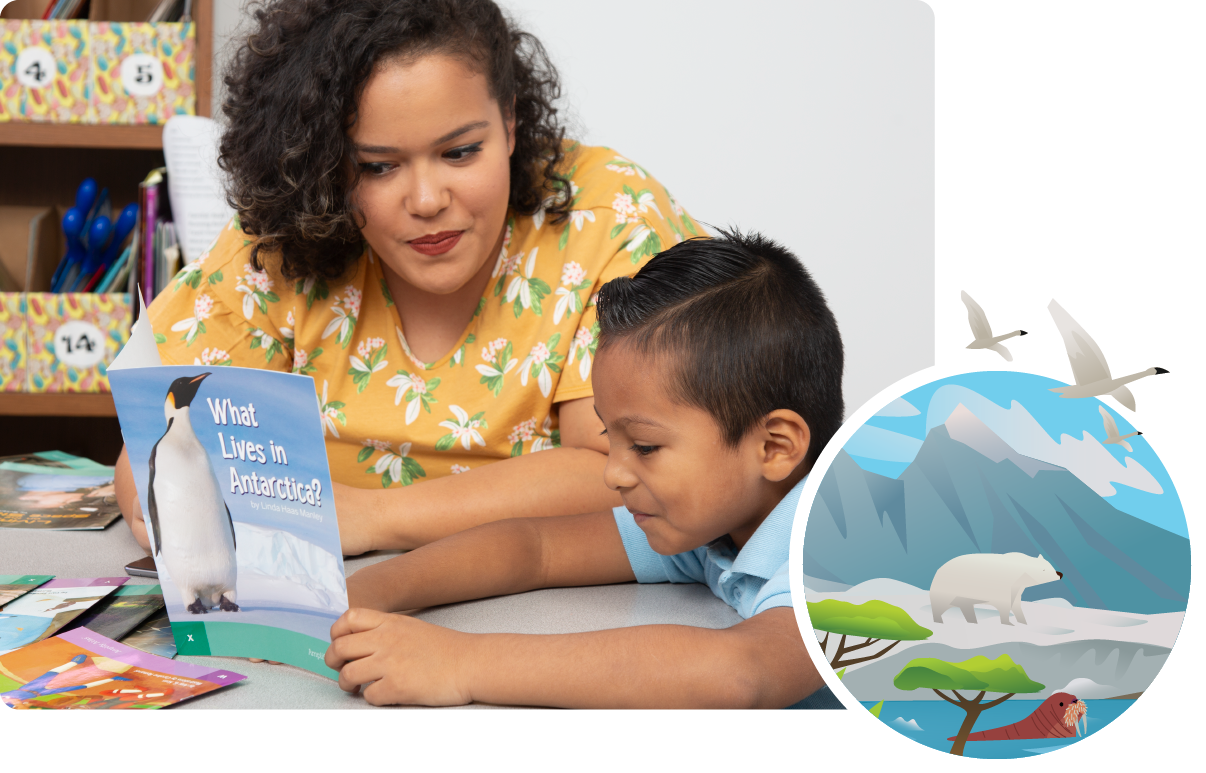
Making connections to what students already know
Before: Teachers “activate” students’ prior knowledge before reading.
After: Teachers build students’ knowledge explicitly for students to leverage later as background knowledge.

Developing reading comprehension
Before: Teachers focus instruction on comprehension strategies (e.g., “strategy of the day” instruction).
After: Teachers focus on content and use comprehension strategies to help students gain knowledge of that content.

Introduction of new topics and information
Before: Students learn about content-area topics individually in disconnected units of instruction.
After: Students learn topics through a coherent approach that builds knowledge within and across units of instruction.
See the remarkable difference shifting to a knowledge-building approach can make in your school. Our enlightening flyer guides you through a before-and-after journey, illustrating the profound impact of knowledge building on learning. Check it out!
What to look for in a knowledge-building literacy curriculum:
It develops content knowledge.
The program should immerse students in a given domain for weeks—that’s how they acquire academic knowledge. The content should also develop from grade to grade, so that students learning about Renaissance art can reflect on and compare to what they previously learned about art in the Middle Ages.
It leverages read-alouds for exposure to complex language.
In early grades, students’ listening comprehension outpaces their reading comprehension. Interactive read-alouds can be used to expose students to academic language and rich vocabulary. With background knowledge, vocabulary words are “the main support beams in the comprehension house.” This approach also helps teachers introduce students to new information and experiences—in a supportive and interactive environment.

It introduces students to a wide variety of topics and content.
A content-rich curriculum exposes students to broad knowledge over time in a systematic, cumulative way, which is more effective than spending several months on just one topic. And while that’s happening, students are participating in enriching discussions and writing activities so they can further interact with the content, promoting deeper engagement and supporting retention of both the knowledge and associated vocabulary.
It builds both knowledge and foundational skills.
Knowledge building is just one component of literacy development. A content-rich curriculum that helps students build both knowledge (language comprehension) and skills (word recognition) takes into account both sides of the Reading Rope, giving students everything they need to build the foundation for a lifetime of literacy success. Instead of learning to read so they can read to learn, students who use a content-rich curriculum learn to read and learn about the world at the same time, enabling them to understand what they’re reading.
Science of Reading Essentials: The science of learning

Transcripts and additional resources:
Meet Our Guest(s):

Natalie Wexler
Natalie Wexler is the author of multiple books, including Beyond the Science of Reading: Connecting Literacy Instruction to the Science of Learning and The Knowledge Gap: The Hidden Cause of America’s Broken Education System—and How to Fix It; and is the co-author, together with Judith C. Hochman, Ed.D., of The Writing Revolution: A Guide to Advancing Thinking Through Writing in All Subjects and Grades. She has a free Substack newsletter called Minding the Gap, and she was the host of the Knowledge Comprehension podcast, Season 1. More information is available on her website, www.nataliewexler.com.

Nathaniel Swain, Ph.D.
Nathaniel Swain is a teacher, instructional coach, and writer. He produces a blog for teachers called Dr. Swain’s Cognitorium and is cohost of the Chalk Dust podcast with Rebecca Birch. Nathaniel works directly with schools and systems through an online learning platform called Luminary.
He founded a community of educators committed to the science of learning, called Think Forward Educators. He also has a best-selling book, Harnessing the Science of Learning: Success Stories to Help Kickstart Your School Improvement.

Hugh Catts, Ph.D.
Hugh Catts’ research interests include the early identification and prevention of reading and disabilities. He is a former board member of the International Dyslexia Association and former president of the Society for the Scientific Study of Reading. He has received the Samuel T. Orton Award, the International Dyslexia Association’s highest honor, and the Honors of the Association award from the American Speech-Language-Hearing Association, for his career contributions in these disciplines. His current research concerns the early identification of reading and language difficulties and the nature and assessment of reading comprehension problems.

Daniel Willingham, Ph.D.
Daniel Willingham is a professor of psychology at the University of Virginia, where he has taught since 1992. Until about 2000, his research focused solely on the brain basis of learning and memory. Today, all of his research concerns the application of cognitive psychology to K–12 education. He is the author of several books, including the best-selling Why Don’t Students Like School? and Outsmart Your Brain. His writing on education has appeared in 23 languages. In 2017, he was appointed by President Barack Obama to the National Board for Education Sciences.

Peter C. Brown
Peter C. Brown is a bestselling writer and novelist, retired from a career as a management consultant. He is the lead author of Make It Stick: The Science of Successful Learning. Make It Stick has been translated into 17 foreign languages and received international acclaim for changing the way we understand learning.
Jamey Peavler, Ed.D.
Jamey Peavler is a co-director of and full-time instructor in the Graduate Reading Science program at Mount St. Joseph University. Before joining Mount St. Joseph, Jamey served as director of training for the M.A. Rooney Foundation. In addition, she works for the National Council for Teacher Quality (NCTQ) as a higher-education textbook and teacher licensure reviewer. Her research interests include instructional design, the impact of spaced practice and interleaving to support effortful retrieval and retention of information, the role of oral language and syntactic awareness on comprehension and written expression, and foundational skills for supporting literacy in the early childhood setting.


David Rapp, Ph.D.
David Rapp is the Walter Dill Scott Professor of Education, Social Policy, and Psychology at Northwestern University. His research examines language and memory, focusing on the cognitive mechanisms responsible for successful learning and knowledge failures. This has included investigations into the influence of inaccurate information on comprehension, the evaluation of technologies that support formal and informal learning, and the iterative development of tools and curricula intended to support literacy. Rapps’ projects have been funded by the National Science Foundation, the U.S. Department of Education, the National Institute on Aging, and Meta.
Meet our host, Susan Lambert, Ed.D.
Susan Lambert is chief academic officer of literacy at Amplify and host of Science of Reading: The Podcast. Throughout her career, she has focused on creating high-quality learning environments using evidence-based practices. Lambert is a mom of four, a grandma of four, a world traveler, and a collector of stories.
As the host of Science of Reading: The Podcast, Lambert explores the increasing body of scientific research around how reading is best taught. A former classroom teacher, administrator, and curriculum developer, she’s dedicated to turning theory into best practices that educators can put right to use in the classroom, and to showcasing national models of reading instruction excellence.
Quotes
“To build a meaningful memory of something that you can hold on to and use, you have to think about it.”
“Memory is a cognitive process. It's the way the brain encodes, stores, and retrieves information.”
“You can't learn something new if it doesn't connect to something you already know.”
“The catch about writing is it's hugely important. It can help cement knowledge and long-term memory, deep knowledge, et cetera.”
“When we have knowledge in our long-term memory, all of these limitations suddenly disappear.”
“We can only work with a limited set of information and when there's too much happening in our working memory, we experience cognitive overload. Essentially, our system is overloaded and we shut down.”
“Essentially, memory is what enables us to retain knowledge, skills, and experiences, forming the foundation for all learning and cognition.”
“The resonance model of comprehension suggests when someone asks a question, lots of ideas get activated automatically in memory.”
“Your mind is very good at bringing up from memory the necessary facts, the facts that will help you given the context.”
“A lot of our students that are having difficulty are experiencing cognitive overload. So the first thing we need to think about is how are we gonna minimize that for them?”
Season takeaways for tackling math anxiety
Meet our hosts: Bethany Lockhart Johnson and Dan Meyer
Bethany Lockhart Johnson is an elementary school educator and author. Prior to serving as a multiple-subject teacher, she taught theater and dance, and now loves incorporating movement and creative play into her classroom. Bethany is committed to helping students find joy in discovering their identities as mathematicians. In addition to her role as a full-time classroom teacher, Bethany is a Student Achievement Partners California Core Advocate and is active in national and local mathematics organizations. Bethany is a member of the Illustrative Mathematics Elementary Curriculum Steering Committee and serves as a consultant, creating materials to support families during distance learning.
Dan Meyer taught high school math to students who didn’t like high school math. He has advocated for better math instruction on CNN, Good Morning America, Everyday With Rachel Ray, and TED.com. He earned his doctorate from Stanford University in math education and is currently the Dean of Research at Desmos, where he explores the future of math, technology, and learning. Dan has worked with teachers internationally and in all 50 United States and was named one of Tech & Learning’s 30 Leaders of the Future.
Quotes
I've been listening to @lockhartedu @ddmeyer's latest season of their podcast @MTLShow. It has been very good to hear about maths anxiety and its causes and now a bit about how to avoid it and help recover from it. Thank you both and all your guests.
Stay connected!
Standards are the 'what' and curriculum is the 'how,' with Sue Pimentel


Meet Our Guest(s):
Susan Pimentel
Susan Pimentel is a founding partner of two nonprofits devoted to accelerating student achievement, StandardsWork and Student Achievement Partners. For four decades her work has focused on advancing meaningful and enduring education reforms—characterized by stakeholder buy-in—that champion proven tools for increasing academic rigor and student preparation. She has served as lead writer of the Common Core State Standards for English Language Arts and Literacy and chief architect of the American Diploma Project, two initiatives designed to close the gap between high school and postsecondary demands. In addition, Susan served two terms on the National Assessment Governing Board, an independent, bipartisan board that sets policy for the national assessment. She became vice-chair of the body in her second term. One of her most widely-read publications includes a 2018 EducationWeek op-ed “Why Doesn’t Every Teacher Know the Research on Reading Instruction?” Others include “Reading as Liberation: An Examination of the Research Base” and “Scaling the “Dinosaur Effect”: Topic vs. Theme in Elementary Classrooms,” both co-authored with literacy experts Meredith and David Liben. She holds a bachelor’s degree in early childhood education and a law degree from Cornell University.
Meet our host, Susan Lambert
Susan Lambert is the Chief Academic Officer of Elementary Humanities at Amplify, and the host of Science of Reading: The Podcast. Throughout her career, she has focused on creating high-quality learning environments using evidence-based practices. Lambert is a mom of four, a grandma of four, a world traveler, and a collector of stories.
As the host of Science of Reading: The Podcast, Lambert explores the increasing body of scientific research around how reading is best taught. As a former classroom teacher, administrator, and curriculum developer, Lambert is dedicated to turning theory into best practices that educators can put right to use in the classroom, and to showcasing national models of reading instruction excellence.

Quotes
“Vocabulary is how we describe concepts. It's how we know how to talk to one another. And vocabulary development weaves its way through all four domains in the standards. All four—reading, writing, listening and speaking, and language.”
“What the standards say is, ‘Leveled texts are out and complex texts are in.’ There's no research behind assigning a level to students' reading and then sort of imprisoning them in that.”
“Text complexity level is critical for students to be able to do well when they leave school and also so they can independently read texts and other sorts of sources on their own as well.”
“So standards are really important, right? Because they allow a meeting of the minds in terms of this is what our students need to be learning. It's like a compact, if you will, with our students and our parents and the public to say, ‘This is what you can expect your students to be learning.’”
“The standards define the ‘what’ importantly: the level of complexity, the level of sophistication, etcetera. But the curriculum tells us how to do the ‘what’ well, and how to use the literacy research to make sure all students get access.”
“The more stuff you know, the better you're able to navigate the world. Whether that means as a citizen…as a worker…as a college student…as a mom or dad—whatever it is—the more you know about stuff, the better off and I think the happier life is. And certainly the happier kids' lives are when they're actually learning stuff.”
“The whole notion is that the content matters. What I'm reading about matters; and how I get through that content matters; and how I get access to that content matters—which means I'm building my knowledge slowly but surely.”
Amplify announces new reading acceleration program to address learning gaps next fall
BROOKLYN, N.Y., May 18, 2021 — Amplify, a publisher of next-generation curriculum and assessment programs, announced the launch of Amplify Skills Boost, a grades 1–6 solution that works alongside any core program to provide 30 minutes of highly targeted foundational skills instruction each day.
Based on Amplify’s 20 years of expertise in early literacy, and built on the science of reading, Amplify Skills Boost is an easy-to-implement, integrated system that schools and districts can use to identify reading gaps and accelerate student learning. The offering includes quick assessment tools, targeted instruction, personalized practice, and intervention. By focusing on the skills each student needs most, Amplify Skills Boost enables educators to stay focused on grade-level instruction the rest of the day.
“Amplify Skills Boost raises the bar in terms of quality and accessibility — any teacher can use this alongside any core program to boost their students’ reading skills after a year of interrupted instruction,” said Alexandra Clarke, senior vice president and general manager of ELA curriculum at Amplify. “It integrates quick assessment with instruction, practice, and intervention, allowing educators to focus on connecting and teaching versus testing.”
Drawn from Amplify’s rigorous assessment, core, personalized practice, and intervention programs, Amplify Skills Boost can be combined with any existing program. Instructional content is easy for any teacher to implement and is adaptable for use with entire classrooms, small groups, or individual students.
The product includes a series of videos on phonemic awareness developed in collaboration with literacy experts David and Meredith Liben. In conjunction with the Amplify Skills Boost release, Amplify is partnering with the Right to Read Project to develop and make available for free a groundbreaking series of student-facing Science of Reading videos that teach students how their reading brain develops over time.
District and school leaders interested in learning more about Amplify Skills Boost may visit www.amplify.com/skills-boost.
About Amplify
A pioneer in K–12 education since 2000, Amplify is leading the way in next-generation curriculum and assessment. Our captivating core and supplemental programs in ELA, math, and science engage all students in rigorous learning and inspire them to think deeply, creatively, and for themselves. Our formative assessment products turn data into practical instructional support to help all students build a strong foundation in early reading and math. All of our programs provide teachers with powerful tools that help them understand and respond to the needs of every student. Today, Amplify serves more than seven million students in all 50 states.
West Virginia’s review of the program built for middle schools, Amplify ELA
What’s included in our literacy curriculum for 6–8
Amplify ELA is a blended literacy curriculum designed specifically for grades 6–8. The heart of every lesson is the text. Our core English Language Arts curriculum enables teachers to teach skills through texts and develop their students’ muscles for building meaning through reading. With Amplify ELA, students learn to attack any complex text and make observations, grapple with interesting ideas, and find relevance for themselves.
Year at a glance
Each grade includes six core units centered on literary or informational texts, delivered in several forms of media. In addition to these main units, students will engage with targeted Grammar lessons and a dedicated Story Writing unit, plus two to three immersive learning experiences called Quests.
Grade 6 core units

Dahl & Narrative
1 assessment lesson
4 sub-units | 28 lessons | 4-6 weeks

Mysteries & Investigations
1 assessment lesson
5 sub-units | 32 lessons | 4-6 weeks

The Chocolate Collection
1 assessment lesson
5 sub-units | 25 lessons | 4-6 weeks
The Greeks
Myth World Quest
1 assessment lesson
4 sub-units | 25 lessons | 4-6 weeks

Summer of the Mariposas
1 assessment lesson
2 sub-units | 27 lessons | 4-6 weeks
The Titanic Collection
1 assessment lesson
5 sub-units | 25 lessons | 4-6 weeks
Grade 7 core units

Red Scarf Girl
1 assessment lesson
4 sub-units | 31 lessons | 4-6 weeks

Character & Conflict
1 assessment lesson
4 sub-units | 29 lessons | 4-6 weeks
Brain Science
Perception Academy Quest
1 assessment lesson
4 sub-units | 25 lessons | 4-6 weeks
Poetry & Poe
The “Who Killed Edgar Allen Poe” Quest
1 assessment lesson
5 sub-units | 29 lessons | 4-6 weeks
The Frida & Diego Collection
1 assessment lesson
5 sub-units | 25 lessons | 4-6 weeks
The Gold Rush Collection
1 assessment lesson
5 sub-units | 25 lessons | 4-6 weeks
Grade 8 core units

Perspectives & Narrative
1 assessment lesson
4 sub-units | 27 lessons | 4-6 weeks

Liberty & Equality
1 assessment lesson
6 sub-units | 38 lessons | 4-6 weeks
Science & Science Fiction
1 assessment lesson
3 sub-units | 29 lessons | 4-6 weeks
Shakespeare’s Romeo & Juliet
1 assessment lesson
2 sub-units | 22 lessons | 4-6 weeks

The Holocaust: Memory & Meeting
1 assessment lesson
6 sub-units | 21 lessons | 4-6 weeks

The Space Race Collection
1 assessment lesson
5 sub-units | 25 lessons | 4-6 weeks
Units at a glance
Amplify ELA lessons follow a structure both grounded in regular routines and flexible enough to allow for a variety of learning experiences. Lesson structures vary from day to day, ensuring that students are always engaged.
Learn more in the Amplify ELA Grade Overview.
Unit 6A
Dahl & Narrative
Students begin with narrative writing to develop foundational Focus skills and establish key classroom routines. Teachers use this work to create targeted feedback cycles and build a vibrant community centered on diverse experiences. Students then apply observational skills to Roald Dahl’s Boy: Tales of Childhood, learning to work closely with textual evidence.
Unit 6B
Mysteries & Investigations
Students read like an investigator to embark on a multi-genre study into the mesmerizing world of scientific and investigative sleuthing. The Secret of the Yellow Death: A True Story of Medical Sleuthing by Suzanne Jurmain, and Sir Arthur Conan Doyle’s Sherlock Holmes stories take place in the late 19th century, when medical diagnostics and criminal investigations were still evolving into scientific fields.
Unit 6C
The Chocolate Collection
Students explore primary documents and research the diverse cultural roles chocolate has played over 3,700 years, from its various uses in ancient Mexico to issues with modern production. Along the way, they build information literacy skills, craft research questions, and collaborate in Socratic seminars. Students also learn how to construct an evidence-based argument and use those skills to write pieces aimed at convincing readers about chocolate preferences, school lunch policies, and recommendations for local candy stores.
Unit 6D
The Greeks
Students closely explore and analyze three stories from Greek mythology: “Prometheus,” “Odysseus,” and “Arachne.” Drawing on the routines and skills established in previous units, these lessons ask students to move from considering the state of a single person to contemplating broader questions concerning the role people play in the world and the various communities they inhabit.
Unit 6E
Summer of the Mariposas
Students read Summer of the Mariposas by Guadalupe García McCall, a contemporary Latino retelling of The Odyssey. Following five sisters on their journey into Mexico and back, students explore this reimagining of the hero’s journey as they encounter Mexican folklore and Aztec legends along the way. Students analyze character development, compare the novel to Homer’s original, research Aztec mythology, explore symbolism, and engage in collaborative discussions before writing an essay about what makes the heroes successful.
Unit 6F
The Titanic Collection
Students explore primary documents and conduct research to understand the 1912 Titanic disaster, building information literacy skills by examining artifacts such as dining menus, ship photos, telegraph transcripts, and newspaper accounts. Each student is assigned a passenger from the manifest and writes a narrative account from that person’s perspective, considering different views. Students also participate in Socratic seminars to examine the complicated issues within the Titanic story.

Unit 7A
Red Scarf Girl & Narrative
Students begin with narrative writing to develop foundational Focus skills while teachers establish targeted feedback cycles and build a classroom community centered on diverse experiences. After exploring how they describe their own experiences and emotions, students apply the same close attention to analyzing details in Ji-li Jiang’s Red Scarf Girl: A Memoir of the Cultural Revolution.
Unit 7B
Character & Conflict
Students analyze characters’ responses to conflict and examine how authors use character interactions to develop theme and perspective. They read Carson McCullers’ “Sucker” and Lorraine Hansberry’s A Raisin in the Sun, both texts that explore how families facing hardships can support and harm one another. Students observe complex character growth and discuss issues of identity, family obligations, and differing notions of success.
Unit 7C
Brain Science
Students explore narrative nonfiction and informational texts about brain science to understand what it means to be human and how their developing brains impact daily experiences. They also build awareness of their cognitive strengths and analyze the structures of informational texts and scientific arguments. Key texts include Phineas Gage, Inventing Ourselves: The Secret Life of the Teenage Brain, and Oliver Sacks’ The Man Who Mistook His Wife for a Hat.
Unit 7D
Poetry & Poe
Students learn visualization techniques to read like a movie director, beginning with poems by D.H. Lawrence, Federico García Lorca, and Emily Dickinson to form mental images. They then read three Edgar Allan Poe texts, creating storyboards and analyzing narrative elements to learn about unreliable narrators. Students also participate in the murder-mystery Quest “Who Killed Edgar Allan Poe?” and write an essay arguing whether they can trust a narrator in the unit’s texts.
Unit 7E
The Frida & Diego Collection
Students explore primary source documents and research on Mexican artists Diego Rivera and Frida Kahlo, learning how they drew inspiration from Latin American folklore, politics, and customs. Along the way, students build information literacy by generating research questions and visual analysis skills through close reading of key paintings. They also compare the artists’ descriptive writing to Shakespeare’s and analyze figurative language. The unit culminates in a research project showcasing their interpretation of Frida and Diego’s work and legacy.
Unit 7F
The Gold Rush Collection
Students explore primary documents and conduct research on the California Gold Rush, building information literacy skills and constructing research questions. They also learn about the diverse people who participated, compare fictional and historical accounts, and participate in Socratic seminars. Students write narrative accounts from specific perspectives and complete a culminating research assignment combining essay and media project elements.
Unit 8A
Perspectives & Narrative
Students learn to read like writers, paying attention to craft and writing moves that shape reader experience and developing Focus and Showing skills as they build collaborative classroom routines. Students study three narrative texts, exploring themes of belonging and identity through close reading. They also practice alternating between analytic and narrative writing, and conclude with an essay arguing whether the mothers in Amy Tan’s “Fish Cheeks” are role models.
Unit 8B
Liberty & Equality
Students study Civil War-era writings that debate the meaning of “all men are created equal,” exploring various perspectives on American ideals. Key texts include Walt Whitman’s Leaves of Grass, Frederick Douglass’ Narrative, and Harriet Ann Jacobs’s Incidents in the Life of a Slave Girl. The unit culminates with an essay examining Douglass’s arguments and Lincoln’s Gettysburg Address to consider what America means by “all men are created equal.”
Unit 8C
Science & Science Fiction
Students read Gris Grimly’s Frankenstein, a graphic novel adaptation of Mary Shelley’s novel, exploring themes of creator responsibility, societal influence, and the risks of scientific inquiry. They trace Victor’s sympathy for his creation, rewrite scenes from the creature’s perspective, and debate whether Victor owes the creature a companion. The unit concludes with an essay determining whether the creature should be considered human.
Unit 8D
Shakespeare’s Romeo & Juliet
Students read five excerpts from Shakespeare’s Romeo and Juliet to learn key elements of Shakespearean English through close reading. They practice memorizing and reciting the famous “Prologue,” put on stage performances, translate Shakespeare’s language into contemporary terms, and study the Shakespearean sonnet form. The unit concludes with an essay arguing whether love or hate is responsible for Romeo’s death.
Unit 8E
Holocaust: Memory & Meaning
Students use close reading to explore memoirs and primary sources that address two key Holocaust questions: How do societies become participants in atrocity, and what are our responsibilities as witnesses? Students analyze multiple perspectives through texts, including Alexander Kimel’s “I Cannot Forget,” Irene Butter’s Shores Beyond Shores, 1936 Olympics propaganda, and excerpts from Maus and Night.
Unit 8F
The Space Race Collection
Students explore primary documents and conduct research on the Space Race. They build information literacy skills, construct research questions, and learn about diverse participants from Soviet cosmonauts to American heroes like Buzz Aldrin and Katherine Johnson. Each student researches an assigned cosmonaut or astronaut and writes space blog entries from their perspective. Students also complete a capstone research essay and media project.
Print & digital components
The program includes instructional guidance and student materials for a year of instruction, with lessons and activities that keep students engaged every day.

Teacher materials
Teacher Edition
Available digitally and in print, the Teacher’s Edition contains all the information teachers need to facilitate classroom instruction, including detailed lesson plans, video teacher tips, presentation slides, standards alignment, Exit Tickets, real-time differentiation strategies, and robust reporting.
Student materials
Student Edition
Available digitally and in print, student materials guide middle schoolers through complex texts and writing by engaging them with high-quality narrative and informational texts—providing videos, audio supports, and a digital experience that captures their attention. They also keep all of their writing in one place with a personal Writing Journal.

Explore more programs
Our programs are designed to support and complement one another. Learn more about our related programs.
Corona-Norco Unified School District
Amplify ELA – Atlanta Review3
What’s included in our Grades 3–5 language arts curriculum
Grounded in the science of reading, Amplify CKLA for grades 3–5 integrates foundational skills students have learned in grades K–2 while continuing to build rich content knowledge. With Amplify CKLA, you’ll have the instruction and guidance of proven, evidence-based practices to help all of your students become strong readers, writers, and thinkers.
Year at a glance
The Amplify CKLA curriculum is modeled after proven research in early literacy that supports a two-strand approach to literacy instruction in the early years. With this approach, students in Grades K–2 complete one full lesson per day that builds foundational reading skills in the Skills Strand, as well as one full lesson that builds background knowledge in the Knowledge Strand. The deep content knowledge is sequenced together with research-based foundational skills in Grades K–2 so that students develop the early literacy skills necessary to help them become confident readers, as well as build the context to understand what they’re reading.
In Grades 3–5, lessons combine skills and knowledge with increasingly complex texts, close reading, and a greater emphasis on writing. Students start to use their skills to go on their own independent reading adventures, further opening up their worlds.
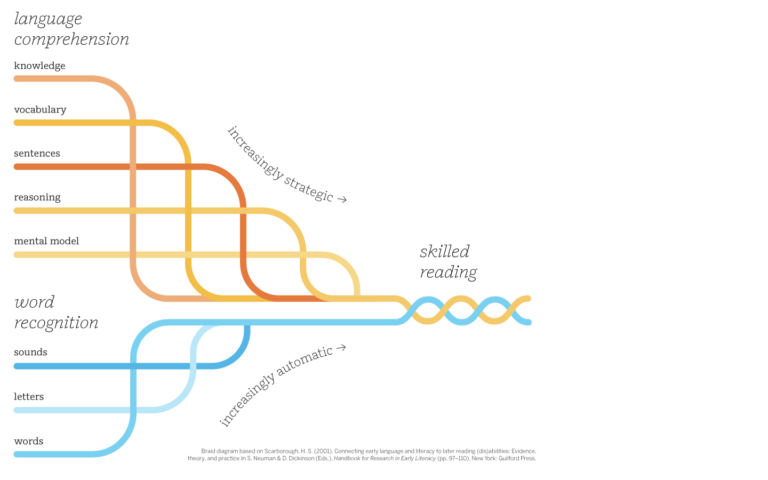
Units at a glance
Students move fluidly between reading, writing, speaking and listening, and language activities, with increasingly complex texts, close reading, and a greater writing emphasis.
Unit 1
Classic Tales: The Wind in the Willows
Students explore international classic tales, including The Wind in the Willows, Alice in Wonderland, and “Aladdin and the Wonderful Lamp.”
Number of Lessons: 15
Unit 2
Animal Classification
Students learn how scientists use animals’ characteristics to classify and study them; students apply knowledge through text-based discussions and writing exercises.
Number of Lessons: 15
Unit 3
The Human Body: Systems and Senses
This unit involves the study of the human body, building students’ understanding of its senses and skeletal, muscular, and nervous systems.
Number of Lessons: 14
Unit 4
The Ancient Roman Civilization
Students dive into ancient Rome, studying its history, culture, and myths about Roman gods and goddesses.
Number of Lessons: 15
Unit 5
Light and Sound
Students learn the science behind light and sound, read biographies of Alexander Graham Bell and Thomas Edison, and write newspaper articles.
Number of Lessons: 17
Unit 6
The Viking Age (with Core Quest)
This unit’s informational and literary texts convey information about the Vikings, their culture, and their exploration.
Number of Lessons: 11

Unit 7
Astronomy: Our Solar System and Beyond
Students learn about astronomy, the universe, and important figures in the history of space exploration, including Nicolaus Copernicus and Mae Jemison.
Number of Lessons: 20
Unit 8
Native Americans: Regions and Cultures
Students compare, contrast, assemble information, and reflect on what they have learned about Native Americans and their ways of life.
Number of Lessons: 13

Unit 9
Early Explorations of North America
Students explore reasons for European exploration, what exploration was like, and who went exploring; then students write opinion pieces using this information.
Number of Lessons: 14
Unit 10
Colonial America
Students learn about colonies in early America, including how colonies were started and the progress colonists made after settling.
Number of Lessons: 16
Unit 11
Ecology
Students learn about different aspects of ecology, including food chains, the balance of nature, changes to the environment, and protecting the environment.
Number of Lessons: 12
Unit 1
Personal Narratives
This unit examines the genre of personal narratives, including nonfiction works written by a first-person narrator involved in the events being described.
Number of Lessons: 15
Unit 2
Empires in the Middle Ages
This unit covers the history of various empires and geographical regions throughout the Middle Ages.
Number of Lessons: 25

Unit 3
Poetry
Students explore poetry, training in methods and devices poets use and learning to read, write, and interpret formal and free verse poems.
Number of Lessons: 15

Unit 4
Eureka! Student Inventor
This Core Quest, a narrative-driven unit, immerses students in close-reading adventures and scientific and historical content about inventions. Students write and read opinion, informational, and narrative texts.
Number of Lessons: 10

Unit 5
Geology
This unit focuses on the composition of Earth and the forces that change its surface.
Number of Lessons: 15

Unit 6
Contemporary Fiction with excerpts from The House on Mango Street
This unit explores narrative literature and writing, using excerpts from The House on Mango Street as its anchor text.
Number of Lessons: 13
Unit 7
American Revolution
Students learn that disagreements about principles of government led colonists in North America to seek independence from Great Britain.
Number of Lessons: 17
Unit 8
Treasure Island
Students focus on character development, setting, plot, and literary devices while reading an abridged version of a classic novel, Treasure Island.
Number of Lessons: 19
Unit 5
Writing Quest (supplemental): The Contraption
In this supplemental Quest, students interact with a mysterious machine fueled by their writing and solve the machine’s puzzles. This Quest features a digital environment controlled by the teacher.
Unit 1
Personal Narratives
This unit examines the genre of personal narratives, including nonfiction works written by a first-person narrator involved in the events being described.
Number of Lessons: 15

Unit 2
Early American Civilizations
Students study the geography, climate, flora, and fauna of the Americas and the rise and fall of the Maya, Aztec, and Inca civilizations.
Number of Lessons: 15

Unit 3
Poetry
Students explore poetry, training in methods and devices poets use and learning to read, write, and interpret formal and free verse poems.
Number of Lessons: 13

Unit 4
Adventures of Don Quixote
In this unit students trace the development of plot, characters, and literary elements while reading a full-length, adapted version of Don Quixote.
Number of Lessons: 15
Unit 5
The Renaissance
This unit provides students with a broad exposure to the art and literature of the Renaissance through the works of renowned masters.
Number of Lessons: 19
Unit 6
The Reformation
This unit teaches students about the Reformation, a movement involving religious and political upheaval that shifted the political power in Europe.
Number of Lessons: 10

Unit 7
A Midsummer Night’s Dream (Core Quest)
This unit is an immersive Quest that treats Shakespeare’s comedy as both literature and a living text for interpretation and performance.
Number of Lessons: 15

Unit 8
Native Americans
Students learn how settlers, explorers, and the American government in the 1800s affected Native American cultures and their relationship with the land.
Number of Lessons: 15
Unit 9
Chemical Matter
Students learn about chemistry and close-reading through a literary and informational work, The Badlands Sleuth, in which the protagonist uses chemistry to solve mysteries.
Number of Lessons: 15
Unit 10
Writing Quest (supplemental): The Robot
Students interact with a classroom pet that learns and grows with their writing. This Quest features a digital environment controlled by the teacher.
Program components
The program includes instructional guidance and student materials for a year of instruction, with lessons and activities that keep students engaged every day.
Component
FORMAT
Teacher Guides
Teacher Guides for each unit provide engaging lessons with standards-based objectives and formative assessments that empower teachers with proven strategies and research-based tools.
Print or digital
Differentiation resources
The online Assessment and Remediation Guide (Grade 3) and the Decoding and Encoding Supplement (Grades 4–5) provide thousands of pages of targeted activities in decoding, spelling, and other core literacy skills. Supplemental Guides provide opportunities for enrichment.
Digital

Writing Studio
A riveting connected writing program for more time, practice, and challenge in writing, with a focus on informative, narrative, and opinion modes of writing.
Print or digital

Digital experience
The Amplify CKLA digital experience delivers ready-made, customizable, slides-based lesson presentations to enhance instruction and save time. Everything needed to plan and present high-quality, engaging early literacy instruction is in one convenient place.
Digital
Component
FORMAT
Student Readers
Amplify CKLA’s Student Readers anchor each of the content-based units, providing a close-reading experience fueled by rich background knowledge that inspires students to dig deeper.
Activity Books
In addition to providing daily opportunities for students to respond to text and apply skills and knowledge, Activity Books feature formative assessments for each day’s objectives.
Digital experience
The Amplify CKLA digital experience delivers ready-made, customizable, slides-based lesson presentations to enhance instruction and save time. Everything needed to plan and present high-quality, engaging early literacy instruction is in one convenient place.
Digital
Explore more programs
Our programs are designed to support and complement one another. Learn more about our related programs.
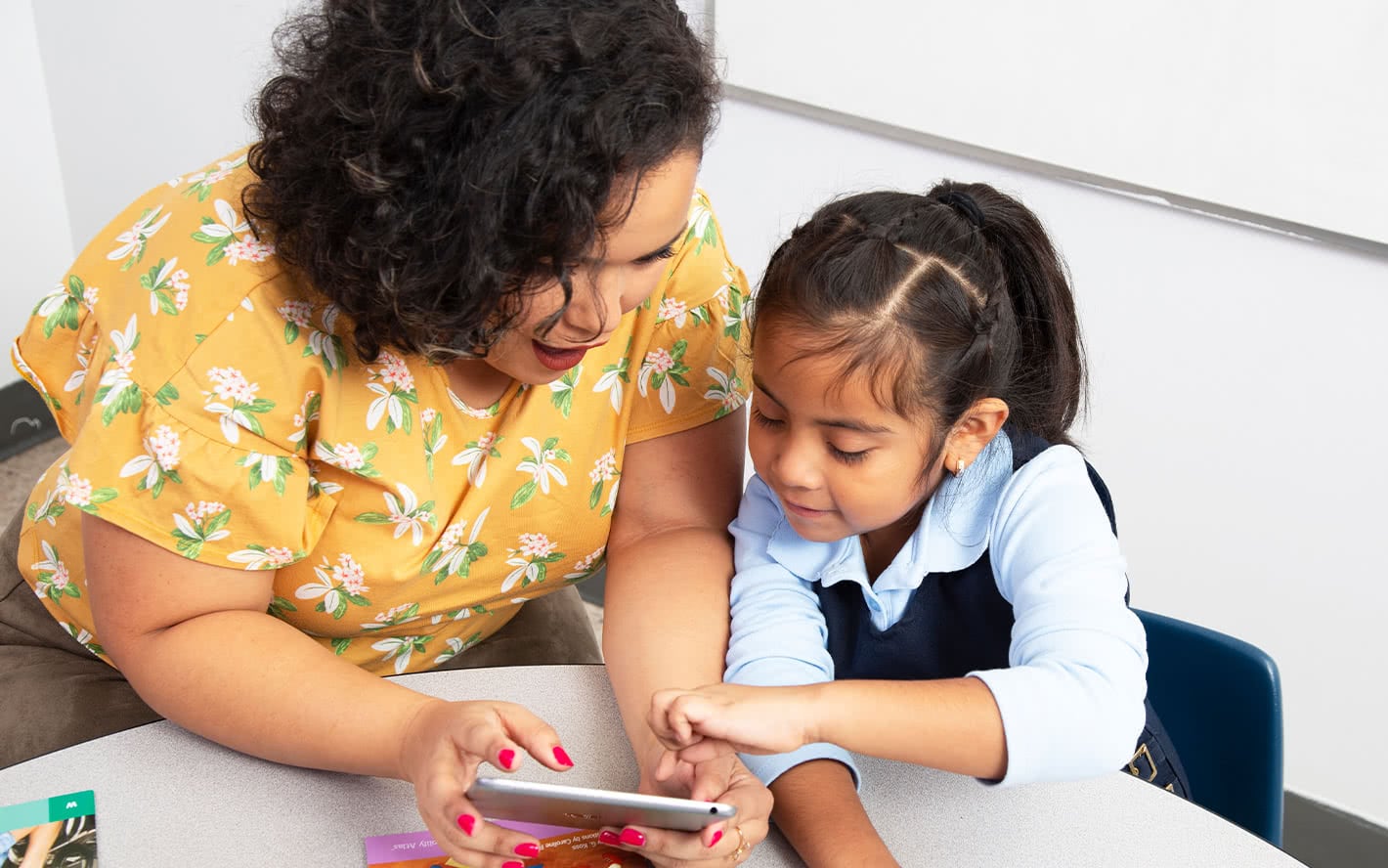
Welcome, Atlanta reviewers!
Welcome, San Diego reviewers!
FL review ELA (state)
Pasco County’s review of the B.E.S.T. program for middle schools, Amplify ELA Florida Edition
Review of the B.E.S.T. program for middle schools, Amplify ELA Florida Edition
Welcome, Amplify ELA families!
We’re excited to welcome you and your student to the Amplify ELA program for the new school year, and to provide you with exceptional learning opportunities through ELA. We’ve assembled the following resources and guides to help you support your student and enable them to have the most productive experience with our platform throughout the year.
Para la versión en español, haga clic aquí.
What is Amplify ELA?
Amplify ELA helps students in grades 6–8 read and understand complex texts that encourage them to grapple with interesting ideas and find relevance for themselves. Amplify ELA is a blended program that includes both digital and print materials, but can also be used as a print-only version. Students using Amplify ELA read text passages closely, interpret what they find, discuss their thinking with peers, and develop their ideas in writing. The lesson structure is easy to follow, but flexible enough to allow for a variety of learning experiences and varied enough to keep students engaged.
Features include:
- Functionality that allows individual students to work at their own level while also being challenged appropriately.
- Built-in tools that allow teachers to track and respond to student work.
- The digital Amplify Library, which contains more than 700 downloadable, full-length fiction and nonfiction books.
- The Vocab App, which uses game-like activities to help students master keywords from the program’s texts. (Students using print materials will see keywords highlighted.)
- Independent writing assignments called Solos, available on mobile devices.
- Interactive projects called Quests that accompany certain units to provide additional practice with analytical reading, writing, speaking, and listening skills.
Getting started
How you can support the child in your care:
- If possible, read with your student daily; even 15 minutes of reading together each day can make a huge impact. You can read aloud sections of the text together—many middle grade students enjoy performing sections of dialogue by taking on the role of a character in a play, or adding some dramatic flair to a poem with which they are working. If your student struggles with reading aloud, you might try reading the text to them with expression, then having them read it back to you. For additional practice, there are an array of fluency activities in the program’s Flex Days. Ask your student to help you find these activities.
- Find moments to discuss what they are reading and discovering. Examples of questions you could ask: What stood out to you from what you read today? Were any sentences or words confusing? What was most surprising? What do you think the writer was trying to communicate? Do you agree with the writer’s ideas or descriptions? What connections can you make between what you are reading and your own life, or other issues you’ve heard about?
- Listen to your student read their written responses or have them share with a friend over the phone or video chat.
- Browse the Amplify Library with your student to find books they’ll enjoy and be able to read fluently and independently.
- Review this Protecting Kids Online website by the Federal Trade Commission addressing digital safety.
Accessing texts in the Amplify Library
We encourage students to utilize the core texts from the Amplify Library while at home! Please follow these steps to download a text for offline reading:
1. Navigate to the Program & Apps menu at the top of your screen and scroll through to find the Amplify Library icon. When you select it, the Amplify Library will open in a new tab.
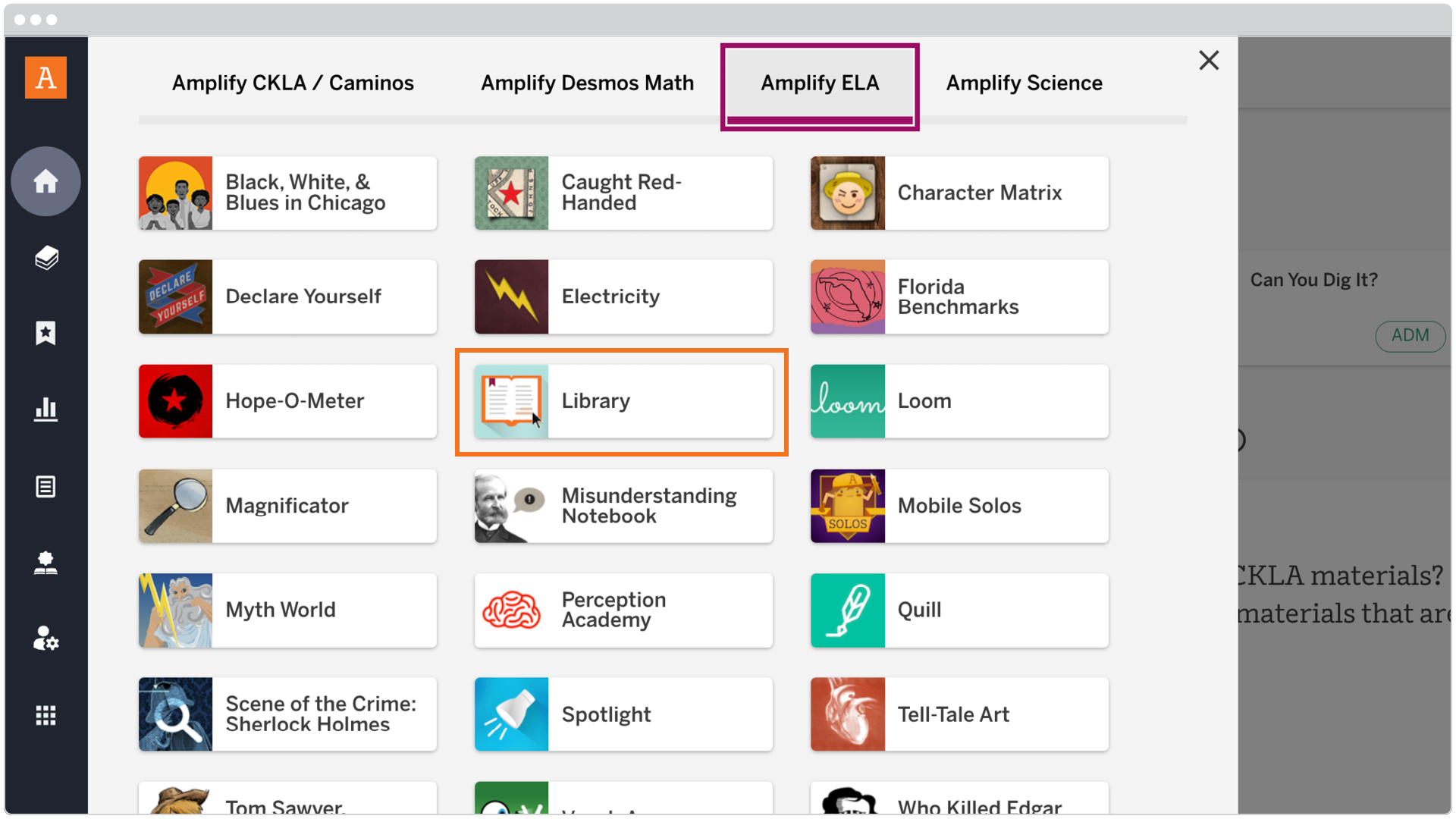
2. If prompted, follow the directions to set up a pin for the Amplify Library; otherwise, proceed to the next step.
3. In the upper right corner of your screen, search for the book you would like to download. Example: The Secret of the Yellow Death: A True Story of Medical Sleuthing.
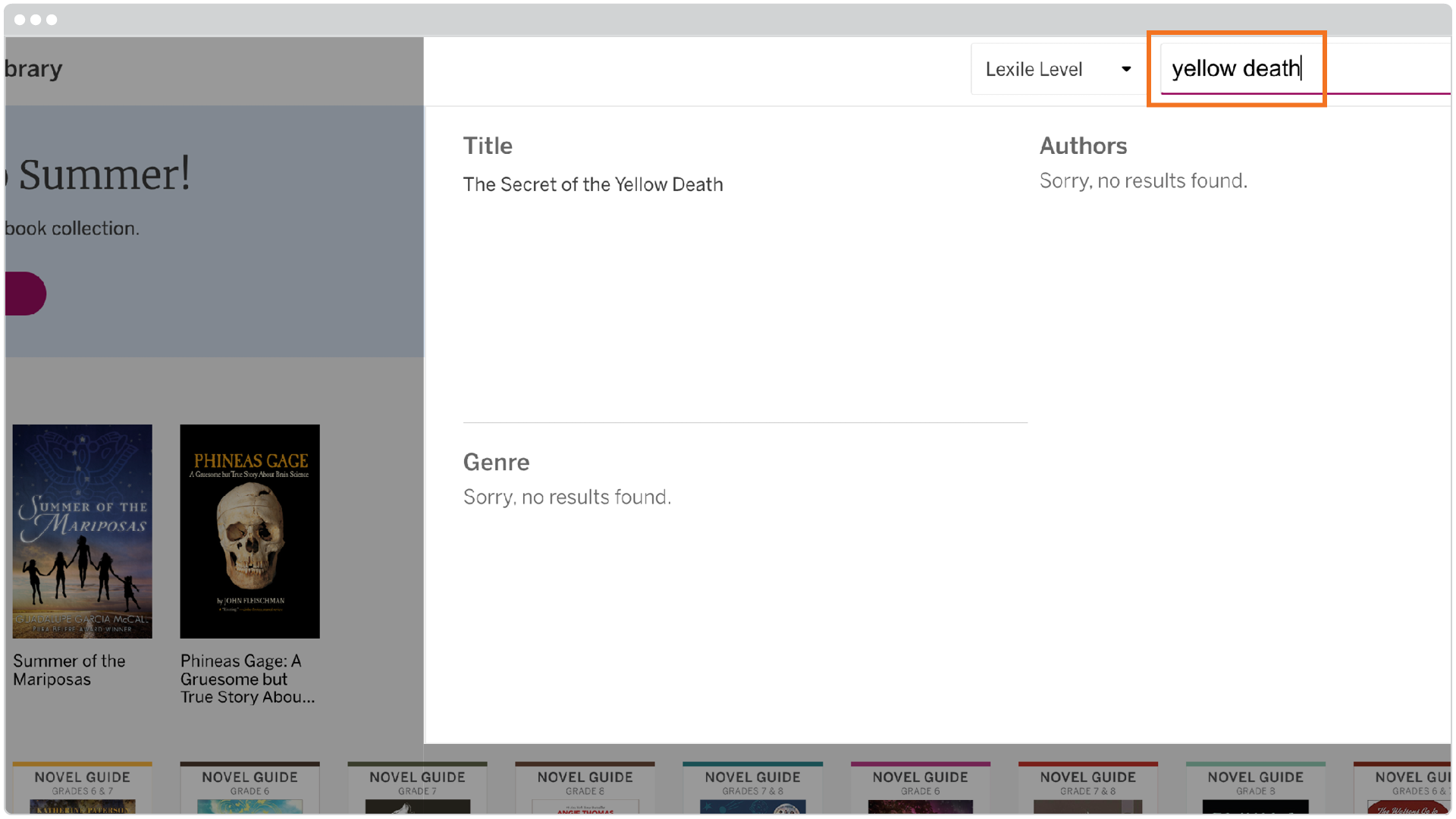
4. Select the Download button.
5. If you lose connection while still in the Amplify Library, you can continue to access and read the downloaded book(s). If the page refreshes without internet access, or you try to login on another device without internet access, you will lose access to the downloaded book(s) until the internet connection is restored.
To retrieve your downloaded texts:
- In the Amplify Library app, open the My Library drop-down menu in the upper left corner.
- Select Downloaded.
- Choose the text you wish to read from all of your pre-downloaded texts.
Materials overview
Not every school will operate the same way, but students attending schools that have both the print and digital editions of the program will likely have the following print materials at home:
- Student Edition: This includes all of the readings and activities necessary for instruction throughout the year. Students can read the selections both digitally and in print, annotating in either format. The lessons in the print Student Edition reflect each digital lesson, but have been modified to work effectively in print.
- Writing Journals: This provides space for students to respond to Writing Prompts and complete other written assignments.
In the case that students are without access to devices or the internet, they can continue to complete key reading and writing assignments using the print Student Editions and student Writing Journals.
Teachers can also access, print, and mail student Novel Guides for up to 12 commonly taught novels. Six of these novels are available in the Amplify Library, and most should be available in a public library.
Unit overviews
Below are quick overviews of each unit your student will be working through in their grade throughout the year. Included along with each unit is a downloadable guide that provides a more in-depth look at what content is covered and how you can help your student advance their understanding of the topics.
- Unit 6A: Dahl & Narrative
- Students begin with narrative writing to quickly boost their writing production, learn the foundational skill of focus, and become comfortable with key classroom habits and routines they will use all year. Students then apply their new observational focus to some lively readings from Roald Dahl’s memoir Boy and learn how to work closely with textual evidence.
- Unit 6B: Mysteries & Investigations
- Students read like an investigator to embark on a multi-genre study of the mesmerizing world of scientific and investigative sleuthing. At the end of the unit, students write an essay explaining which trait is most useful to problem-solving investigators.
- Unit 6C: The Chocolate Collection
- The Aztecs used it as currency. Robert Falcon Scott took it to the Antarctic. The Nazis made it into a bomb designed to kill Churchill. The 3,700-year-long history of chocolate is full of twists and turns, making it a rich and rewarding research topic. In this unit, students explore primary source documents and conduct independent research to better understand the strange and wonderful range of roles that chocolate has played for centuries around the world.
- Unit 6D: The Greeks
- Greek myths help us understand not only ancient Greek culture but also the world around us and our role in it. Drawing on the routines and skills established in previous units, these lessons ask students to move from considering the state of a single person—themselves or a character—to contemplating broader questions concerning the role people play in the world and the communities they inhabit within it.
- Unit 6E: Summer of Mariposas
- The borderlands between the United States and Mexico are the place of legends, both true and fictional. Summer of the Mariposas, by Guadalupe Garcia McCall, plants a retelling of the Odyssey into this setting, launching five sisters on an adventure into a world of heroes and evildoers derived from Aztec myths and Latinx legends. On the journey, the sisters reconcile the dissolution of their parent’s marriage and find new strength in their identity and connection to Aztec lineage. Students consider how McCall uses the structure of the hero’s journey to celebrate women, heritage, and a broad definition of family. Students also have the opportunity to compare these characters’ fictional journey into Mexico to a description of one boy’s true journey into the United States.
- Unit 6F: The Titanic Collection
- In this research unit, students learn to tell the difference between primary, secondary, and tertiary sources; determine if a given source is reliable; and understand the ethical uses of information. Students then construct their own research questions and explore the internet for answers. They also take on the role of a passenger from the Titanic’s manifest to consider gender and class issues as they research and write narrative accounts from the point of view of their passenger.
- Unit 6G: Beginning Story Writing
- In this unit, students get to practice their creative writing skills and learn the elements of storytelling and character development, as well as the importance of vivid language. Students gain a sense of ownership over their writing as they experiment with the impact of their authorial choices on sentences, language, character traits, and plot twists.
- Grade 6: Grammar
- In this unit, students complete self-guided grammar instruction and practice that teachers assign to them throughout the year. Sub-units are organized by key grammar topics, so teachers can assign the content that best meets their student’s needs while making sure students work with the key grammar topics for their grades.
- Unit 7A: Red Scarf Girl & Narrative
- In this study of a highly engaging memoir of a young woman growing up in China during the Cultural Revolution, students quickly learn the history and politics of this tumultuous period by focusing on the story of someone living through the upheaval. As students follow her journey through a world turned upside down, they will track the changes in her feelings and motivations over time.
- Unit 7B: Character & Conflict
- By reading the play A Raisin in the Sun and the short story “Sucker,” students explore how people facing hardships can inflict unintentional harm on the people around them. The two narratives work together to provide opportunities for students to analyze characters’ responses to conflict and the author’s development of ideas over the course of a piece of fiction.
- Unit 7C: Brain Science
- Could you survive an iron rod through your skull? Phineas Gage did, and his gruesome-but-true story allows students to build background information and analyze other informational texts, including the contemporary The Man Who Mistook His Wife For A Hat and the relevant Demystifying the Adolescent Brain.
- Unit 7D: Poetry & Poe
- Poe’s texts always offer so much to notice, decipher, talk about—and creep us out. Since things are not always what they seem, students must use close reading skills to question whether they should believe what Poe’s narrator is telling them … or not.
- Unit 7E: The Frida & Diego Collection
- Mexico’s most famous and provocative artists, Diego Rivera and Frida Kahlo, were an extraordinary couple who lived in extraordinary times. They were both soul mates and complete opposites. Their multifaceted lives and work offer students rich and fascinating subjects to study as they examine primary source documents and conduct independent research.
- Unit 7F: The Gold Rush Collection
- In this research unit, students choose from a large collection of primary and secondary sources to learn about the wide range of people who took part in the California Gold Rush. They also take on the role of someone who lived during the gold rush and write journal entries from their perspective.
- Unit 7G: Intermediate Story Writing
- In this unit, students get to practice their creative writing skills and learn the elements of storytelling and character development, as well as the importance of vivid language. Students gain a sense of ownership over their writing as they experiment with the impact of their authorial choices on sentences, language, character traits, and plot twists.
- Grade 7: Grammar
- In this unit, students complete self-guided grammar instruction and practice that teachers assign to them throughout the year. Sub-units are organized by key grammar topics, so teachers can assign the content that best meets their student’s needs while making sure students work with the key grammar topics for their grades.
- Unit 8A: Perspectives & Narrative
- This unit aims to teach students to read like writers. They practice paying attention to the craft of writing and to the moves a good writer makes to shape the way we see a scene or feel about a character—to stir us up, surprise us, or leave us wondering what will happen next. Students closely read examples of rich, layered narrative nonfiction, analyze the techniques each author uses to make their writing resonate, and practice applying these techniques to their own narrative writing.
- Unit 8B: Liberty & Equality
- In this unit, students look at the words of a range of creators—from poet Walt Whitman to abolitionist Frederick Douglass to President Abraham Lincoln—to see how their writing contributed to an extreme shift in social organization: a whole new concept of what it means for people to be considered “equal.” They also study multiple perspectives on the Civil War, including the memoir of a girl who was enslaved, a confederate girl’s diary, and a nonfiction account of the young boys who served as soldiers during the war.
- Unit 8C: Science & Science Fiction
- Students read Gris Grimly’s Frankenstein, a graphic novel that adds captivating illustrations to an abridgment of the 1818 edition of Mary Shelley’s book. Paired with Shelley’s text, Grimly’s haunting—and, at times, horrific—representations of Frankenstein’s creature push students to wrestle with some of the text’s central themes: the source of humanity and the root of evil. Students then write an essay in which, after arguing both sides of the question, they determine whether or not Frankenstein’s creature should ultimately be considered human.
- Unit 8D: Shakespeare’s Romeo & Juliet
- Romeo and Juliet combines romance with action, offering a wide range of themes and scenes for students to read about and act out. Your middle schoolers are at the right age to identify with the lovers’ strong feelings—and also old enough to think critically about the choices Romeo and Juliet make.
- Unit 8E: Holocaust: Memory & Meaning
- This unit uses a range of primary source articles, images, and videos, as well as literary nonfiction and graphic nonfiction, to study what made the atrocities of the Holocaust possible. Students investigate how propaganda was generated and employed to create a political environment that ultimately corrupted a society. The Olympics are seen through the lens of an international propaganda campaign, providing cover for Nazis to begin eliminating non-Aryans from their culture. The final sub-unit examines the outcomes of Nazi doctrine and the impact on Jewish victims and survivors.
- Unit 8F: The Space Race Collection
- In this unit, students to put their research and close-reading skills to the test to distinguish between reliable and unreliable sources, explore primary documents, and conduct independent research to better understand the space race that took place between two of the world’s superpowers. This dramatic story offers students a rich research topic to explore as they build information literacy skills, learn how to construct their own research questions, and explore the internet for answers.
- Grade 8: Grammar
- In this unit, students complete self-guided grammar instruction and practice that teachers assign to them throughout the year. Sub-units are organized by key grammar topics, so teachers can assign the content that best meets their student’s needs while making sure students work with the key grammar topics for their grades.
- Unit 8G: Advanced Story Writing
- In this unit, students get to practice their creative writing skills. They’ll learn the elements of storytelling and character development, and the power of vivid language to grab readers and pull them into a story.
Additional activities
Quests:
You may notice your student working with peers on the same interactive project over several days, trying to solve a mystery or explain a historical event. That’s what happens when a teacher assigns a Quest: an in-depth week-long exploration that requires collaboration and deepens engagement with texts and topics.
Vocab App:
The Vocab App helps students master vocabulary words through game-like activities that challenge them to think through morphology, analogy, and synonyms/antonyms, and to decipher meaning through context.
Have a question about Amplify ELA?
Visit our help library to search for articles with answers to your program questions.
For additional curriculum support, please contact your student’s teacher.
What’s included in our Spanish language arts curriculum
Amplify Core Knowledge Language Arts® (CKLA) is available in both English and Spanish. Amplify Caminos al Conocimiento Esencial, our robust Spanish language arts companion for grades K–5, supports multiple teaching models, including dual language immersion and transitional classrooms.

Year at a glance
The program’s intentional Knowledge Sequence from K–5 connects knowledge and vocabulary within a grade level and across grade levels, for deeper reading comprehension and preparation for college, career, and life. Instead of “activating prior knowledge,” Amplify Caminos helps you build it in the classroom from day one, for every child, expanding each student’s knowledge base long before they transition to reading to learn.

Units & domains at a glance
Each Knowledge Domain in grades K–2 and Unit in grades 3–5 varies in the number of days based on instructional purpose. Just as with our top-rated Amplify CKLA program, the Amplify Caminos materials engage and delight young learners with resources that are both appealing and original.
Domain
Nursery Rhymes and Fables/Rimas y fábulas infantiles
Start learning about literature with these classic Mother Goose rhymes.
Domain
The Five Senses/Los cinco sentidos
Learning about the body starts with learning about how we experience the world.

Domain
Stories/Cuentos
Learn about the parts of a book and some of the stories that go in one.

Domain
Plants/Plantas
Discover the lifecycle of plants and the history of George Washington Carver.
Domain
Farms/Granjas
Now we know how plants make their food… but what about animals?

Domain
Native Americans/Los nativos americanos
Who were the first people in America? A look at the Lenape, Wampanoag, and Lakota Sioux.

Domain
Kings and Queens/Reyes y reinas
To understand fairy tales, it’s best to first understand royalty.
Domain
Seasons and Weather/Las estaciones y el tiempo
The study of natural cycles continues with the weather and why it happens.

Domain
Columbus and the Pilgrims/Colón y los peregrinos
A look at the first contact between Europe and the Americas, and some of its results.
Domain
Colonial Towns and Townspeople/Las colonias y sus habitantes
Before the War for Independence, how did the town and country depend on one another?

Domain
Taking Care of the Earth/Cuidar el planeta Tierra
We only have one Earth—here are some ways to help care for it.

Domain
Presidents and American Symbols/Presidentes y símbolos de los Estados Unidos
Start learning about government through the lives of five presidents.
Domain
Fables and Stories/Fábulas y cuentos
Learn some of the key elements of a story through classic fables.
Domain
The Human Body/El cuerpo humano
What are germs? What are the organs? And what does it all have to do with health?

Domain
Different Lands, Similar Stories/Tierras diferentes, cuentos similares
A world tour of storytelling, and the stories that stay the same across the world.

Domain
Early World Civilizations/Antiguas civilizaciones del mundo
Rivers, farming, writing, and laws: just what does it take to build a civilization?
Domain
Early American Civilizations/Antiguas civilizaciones de América
What will we find in the great temples of the Aztec, Maya, and Inca civilizations?

Domain
Astronomy/Astronomía
How the Earth relates to the moon, the sun, and the rest of the planets.
Domain
The History of the Earth/La historia de la Tierra
Just what lies beneath the Earth’s surface, and what can it teach us about the past?

Domain
Animals and Habitats/Los animales y sus hábitats
A look at the connection between how animals live and where they make their homes.
Domain
Fairy Tales/Cuentos de hadas
What do fairy tales have to teach us about how stories are told?
Domain
A New Nation: American Independence/Una nueva nación: la independencia de los Estados Unidos
The story of the birth of the United States out of the 13 Colonies.
Domain
Frontier Explorers/Exploradores de la Frontera
The story of the journey west from the newborn U.S.A. to find the Pacific Ocean.
Domain
Fairy Tales and Tall Tales/Cuentos de hadas y cuentos exagerados
Learn about exaggeration and characterization on the frontier.
Domain
Early Asian Civilizations/Antiguas civilizaciones de Asia
Tour the world of classical civilization, starting with India and China.
Domain
Ancient Greek Civilization/La civilización griega antigua
The tour continues with the philosophy and politics of Greece.
Domain
Greek Myths/Mitos griegos
Dive deep into the characters and storytelling of classic myths.
Domain
The War of 1812/La guerra de 1812
Learn about America’s “Second War for Independence.”
Domain
Cycles in Nature/Los ciclos de la naturaleza
Introducing the natural cycles that make our lives possible.
Domain
Westward Expansion/La expansión hacia el oeste
Why did pioneers go west? What happened to the people who were there?
Domain
Insects/Los insectos
Lay the grounds for animal classification by looking at solitary and social insects.

Domain
The U.S. Civil War/La Guerra Civil de los Estados Unidos
Begin to grapple with U.S. history’s central crisis over slavery.
Domain
Human Body: Building Blocks and Nutrition/El cuerpo humano: componentes básicos y nutrición
A deeper dive into the digestive system and the nutrition process.

Domain
Immigration/La inmigración
Why did people immigrate to the United States, and what did they find here?
Domain
Fighting for a Cause/Luchar por una causa
How people can do extraordinary things to make the world better for everyone.
Unit 1
Classic Tales: The Wind in the Willows/Cuentos Clásicos: El viento en los sauces
A deep dive into character, theme, and POV in classic stories from around the world.
Unit 2
Animal Classification/La clasificación de los animales
How do we classify different animals by their appearance and behavior?
Unit 3
The Human Body: Systems and Senses/El cuerpo humano: sistemas y sentidos
Let’s take a closer look at how the skeleton, muscles, and nervous system all work.
Unit 4
The Ancient Roman Civilization/La civilización romana antigua
What is Rome’s greatest cultural contribution? In this unit, your students decide.
Unit 5
Light and Sound/La luz y el sonido
The science behind all the ways we see and hear the world.
Unit 6
The Viking Age/La era vikinga
An immersive narrative experience about what life was like in Viking communities.
Unit 7
Astronomy: Our Solar System and Beyond/Astronomía: nuestro sistema solar y más allá
More about our universe, including a writing project about daily life on a space station.
Unit 8
Native Americans: Regions and Cultures/Los nativos americanos: regiones y culturas
How did Native American nations change their way of life in different parts of the world?
Unit 9
Early Explorations of North America/La exploración europea de América del Norte
What was it like to sail to North America with the early European explorers?
Unit 10
Colonial America/La época colonial en los Estados Unidos
A study of the very different ways of life in the different pre-U.S. colonies.
Unit 11
Ecology/Ecología
Students keep ecologist’s journals to learn about our world and how best to protect it.
Unit 1
Personal Narratives/Narrativas personales
Read stories of personal experience… and learn to reflect on your own.
Unit 2
Empires in the Middle Ages/Los imperios en la Edad Media, parte 1 & Los imperios en la Edad Media, parte 2
Explore the medieval history of Europe and the Middle East.
Unit 3
Poetry/Poesía
Study the poetry of many nations using licensed text anthologies, and begin to write your own.
Unit 4
Eureka! Student Inventor/¡Eureka! Estudiante inventor
Transform the class into a lab for students to build and present inventions.
Unit 5
Geology/Geología
Plate tectonics, volcanoes, erosion: all the forces that shape the Earth.
Unit 6
Contemporary Fiction with excerpts from The House on Mango Street/Ficción Contemporánea con Fragmentos de La Casa en Mango Street
Explore The House on Mango Street… and write a book while doing it.
Unit 7
American Revolution/La Revolución estadounidense
Why did America seek independence? Let’s investigate the causes and effects.
Unit 8
Treasure Island/La Isla del Tesoro
How dSeek the treasure of plot in this detailed study of a classic fiction adventure.
Unit 1
Personal Narratives/Narrativas personales
Through writing and sharing their writing, students begin to identify themselves as writers.
Unit 2
Early American Civilizations/Las primeras civilizaciones americanas
Students craft a codex to explain the rise and fall of the Maya, Aztec, and Inca people.
Unit 3
Poetry/Poesía
Students close read many forms of poetry… and learn to write them.
Unit 4
Adventures of Don Quixote/Las Aventuras de Don Quijote
Was Don Quixote right to fight the windmill? In this full-length novel study, students decide.
Unit 5
The Renaissance/El Renacimiento
Exploring the art and literature of the Renaissance through the works of its masters.
Unit 6
The Reformation/La Reforma
How did the printing press transform the religion and society of Europe?
Unit 7
William Shakespeare’s A Midsummer Night’s Dream/Sueño de Una Noche de Verano de William Shakespeare
Students enter the world of Shakespeare by reading, designing, and acting out his work.
Unit 8
Native Americans/Los nativos americanos
How did the policies of the U.S. government impact Native American culture and lives?
Unit 9
Chemical Matter/Química
Students use knowledge of chemistry to solve a mystery.
Print & digital components
The program includes instructional guidance and student materials for a year of instruction, with lessons and activities that keep students engaged every day.
Component
FORMAT
Knowledge (Conocimientos) Teacher Guides (K–2)
Knowledge Strand Teacher Guides contain Amplify CKLA’s cross-curricular read-alouds and application activities, all of which are standards-based to build mastery of content knowledge and literacy skills. There is one Teacher Guide per Knowledge Domain.
Print and digital
Knowledge Image Cards (K–2)
Amplify Caminos includes Image Cards for each Knowledge Domain to bring each topic to life through vivid visuals.
Print and digital
Knowledge Flip Books (K–2)
Projectable Flip Books are provided to accompany the read-alouds in each Knowledge Domain.
Digital
Teacher Guides (3–5)
Teacher Guides for grades 3–5 units are based on content-rich topics and incorporate reading, writing, speaking, and listening skills in the context of background knowledge. There is one Teacher Guide per unit.
Print or digital
Teacher Resource Site (K–5)
The program includes a one-stop-shop website for lesson projections, digital versions of all Amplify Caminos materials, lesson planning resources, multimedia (such as eBooks), and more.
Digital
Professional Learning Site (K–5)
The Professional Learning site includes training materials, best practices, and other resources to develop program expertise. Access professional development anywhere, anytime.
Digital
Component
FORMAT
Knowledge (Conocimiento) Activity Books (K–2)
Activity Books provide students with the opportunity to deepen world and word knowledge by responding to text in a diversity of ways.
Student Readers (3–5)
Student Readers serve as content-rich anchor texts for each unit. Units such as Poetry and Contemporary Fiction feature authentic texts originally written in Spanish.
Activity Books (3–5)
Activity Books in grades 3–5 provide daily opportunities for students to hone reading and writing skills within the context of each unit.
Print and digital
Explore more programs
Our programs are designed to support and complement one another. Learn more about our related programs.
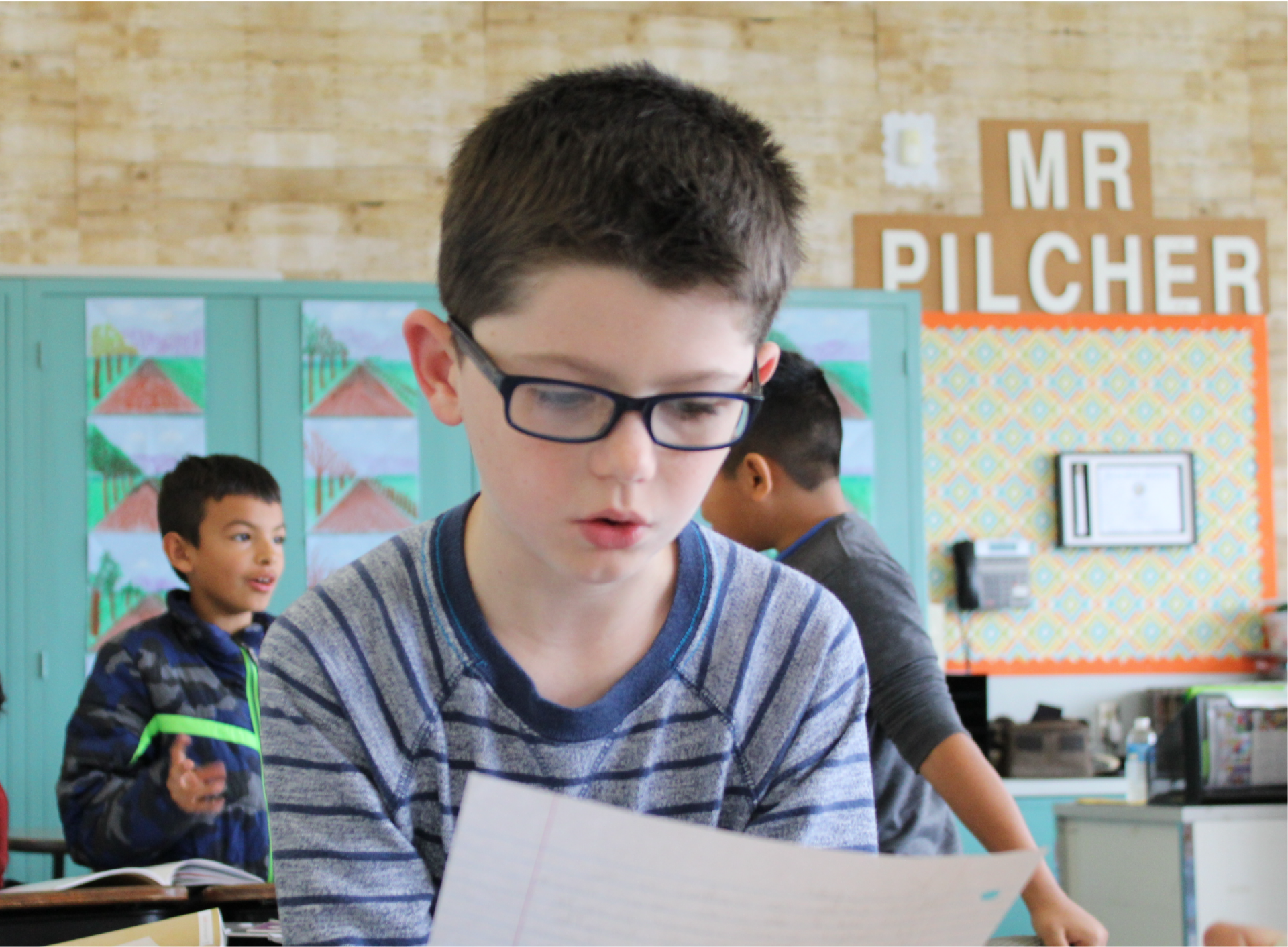
AL review ELA (state)
Miami review ELA
Review of the B.E.S.T. program for Palm Beach middle schools, Amplify ELA Florida
FL review ELA (state)
Welcome, Richmond City reviewers!
Thank you for taking the time to review Amplify ELA for middle school. The items below will allow you to experience our blended program with access to our print materials, digital curriculum, and resources to support your review.
Amplify ELA’s blended model enables teachers to design instruction based on their classroom needs and resources. Our engaging print edition highlights the many digital experiences teachers can share with students through classroom projections. Teachers can make choices about when their students use devices while providing 100% standards coverage and without compromising learning.

Digital program
The content and instruction in Amplify ELA’s digital program mirrors the content provided in the print Teacher Edition and Student Edition. However, the digital program offers more opportunity to engage students through the use of multimedia and a variety of learning apps. Teachers will also find embedded apps to help with scoring, providing student feedback, and reporting.
Visit learning.amplify.com/ela-v2 to review Amplify ELA’s digital program.

Grade 6 materials


Student Edition:

Grade 7 materials


Student Edition:
Grade 8 materials


Student Edition:

Resources

Resources to help with your review:
Welcome, Lake Washington reviewers!
The Roles of Narratives and Storytelling in the Math Classroom
Monday, 4pm ET
Featuring James Oliver
The roles of narratives and storytelling in the math classroom can help students connect to the math. Explore the embedded narratives within Amplify Desmos Math and how to support the shift to problem-based learning across the grades.
Welcome to the Amplify CKLA 3rd Edition program review site!
We’re excited to share everything you need to review Amplify CKLA 3rd Edition, our K–5 core literacy program. On this site, you’ll find a range of materials, including Teacher Guides, Activity Books, and Student Readers, organized by grade and unit.
Please note that the files on this site are static representations of the high-quality materials you’ll receive with your purchase.
We hope you find the site helpful! If you have any questions, please reach out to your Amplify representative.
Reviewer resources
Access key materials designed to support your review of Amplify CKLA 3rd Edition.
- Program Guide
- Components Guide
- Choice Units Overview
- Text Types and Text Complexity Guide
- Writing Brochure
- Assessment Overview
- K–5 Knowledge Map
- Curriculum Maps by Grade and Strand:
- Scope and sequence by Grade and Strand:
- Text Types and Range of Writing by Grade:
Kindergarten
Explore all available resources for Kindergarten, organized by strand and unit.
Knowledge Strand
|
Unit 1: Star Light, Star Bright: Nursery Rhymes and Fables |
Unit 2: See, Hear, Smell, Taste, Touch: The Five Senses |
Unit 3: Underdogs and Heroes: Stories |
|
Unit 4: See How They Grow: Plants |
Unit 5: Moo, Cluck, Oink: Farms |
Unit 6: Deep Roots: Introduction to Native American Cultures |
|
Unit 7: All Around the World: Geography |
Unit 8 (Choice): Royal Tales: Monarchs |
Unit 8 (Choice): National Icons: Presidents and American Symbols |
|
Unit 9 (Choice): Our Planet: Taking Care of the Earth |
Unit 9 (Choice): Rain and Rainbows: Seasons and Weather |
Unit 10: Shaped by Nature: Art and the World Around Us
|
Skills Strand
|
Unit 1 |
Unit 2 |
Unit 3 |
|
Unit 4 |
Unit 5 |
Unit 6 |
|
Unit 7 |
Unit 8 |
Unit 9 |
|
Unit 10 |
Ancillary Components |
Grade 1
Explore all available resources for Grade 1, organized by strand and unit.
Knowledge Strand
|
Unit 1: The Moral of the Story: Fables and Tales |
Unit 2: From Nose to Toes: How Your Body Works |
Unit 3: Common Threads: Different Lands, Similar Stories |
|
Unit 4: Reach for the Stars: Astronomy |
Unit 5: Charting the World: Geography |
Unit 6: A World of Homes: Animals and Habitats |
|
Unit 7: A New Nation: American Independence |
Unit 8 (Choice): Once Upon a Time: Fairy Tales |
Unit 8 (Choice): Our Planet: The History of the Earth |
|
Unit 9 (Choice): From Babylon to the Nile: Early World Civilizations |
Unit 9 (Choice): Early Americas: Maya, Aztec, and Inca |
Unit 10: Adventure Stories: Tales from the Edge
|
Skills Strand
|
Unit 1 |
Unit 2 |
Unit 3 |
|
Unit 4 |
Unit 5 |
Unit 6 |
|
Unit 7 |
Ancillary Components |
Grade 2
Explore all available resources for Grade 2, organized by strand and unit.
Knowledge Strand
|
Unit 1: Fortunes and Feats: Fairy Tales and Tall Tales |
Unit 2: The Birthplace of Democracy: Ancient Greece |
Unit 3: Legends and Heroes: Greek Myths |
|
Unit 4: Our Planet: Cycles in Nature |
Unit 5: Butterflies, Bees, and Beetles: Insects |
Unit 6: A House Divided: The American Civil War |
|
Unit 7: Sounds and Stanzas: Poetry |
Unit 8 (Choice): Journeys to America: Immigration |
Unit 8 (Choice): Making a Difference: Creating Change |
|
Unit 9 (Choice): Building Blocks: All About Nutrition |
Unit 9 (Choice): Early Asian Civilizations: India and China |
Unit 10: Taking Flight: The Age of Aviation
|
Skills Strand
|
Unit 1 |
Unit 2 |
Unit 3 |
|
Unit 4 |
Unit 5 |
Unit 6 |
|
Ancillary Components |
Grade 3
Explore all available resources for Grade 3, organized by unit.
Core Units
|
Unit 1: Timeless Tales: Classic Stories |
Unit 2: Fur, Fins, and Feathers: Animal Classification |
Unit 3: Rhythm and Rhyme: Poetry |
|
Unit 4: Rise and Fall: Ancient Rome |
Unit 5: Our Solar System and Beyond: Astronomy |
Unit 6: Regions and Cultures: Native Americans |
|
Unit 7 (Choice): Novel Study: Charlotte’s Web
|
Unit 7 (Choice): Novel Study: Stella Díaz Has Something to Say
|
Unit 8 (Choice): Systems and Senses: The Human Body |
|
Unit 8 (Choice): From Glow to Echo: Light and Sound |
Unit 9: From Blues to Bebop: All That Jazz
|
Supplemental Skills
Grade 3 Skills resources are included in core classroom kits, although the instruction isn’t required for Grade 3 standards coverage.
|
Unit 1 |
Unit 2 |
Unit 3 |
|
Unit 4 |
Grade 4
Explore all available resources for Grade 4, organized by unit.
|
Unit 1: My Story, My Voice: Personal Narratives |
Unit 2: Knights and Castles: Europe’s Middle Ages |
Unit 3: Meaning and Metaphor: Poetry |
|
Unit 4: Eureka! Student Inventor |
Unit 5: Our Planet: Geology |
Unit 6: Road to Independence: The American Revolution |
|
Unit 7 (Choice): Novel Study: From the Mixed-Up Files of Mrs. Basil E. Frankweiler
|
Unit 7 (Choice): Novel Study: The Season of Styx Malone
|
Unit 8 (Choice): Crafting Stories: A World of Tales |
|
Unit 8 (Choice): Adventure on the High Seas: Treasure Island |
Unit 9: Inspiration and Ingenuity: American Innovation
|
Grade 5
Explore all available resources for Grade 5, organized by unit.
|
Unit 1: In My Own Words: Personal Narratives |
Unit 2: Early Americas: Maya, Aztec, and Inca |
Unit 3: Visions in Verse: Poetry |
|
Unit 4: A Knight’s Tale: Don Quixote
|
Unit 5: The Deep Blue World: Oceans |
Unit 6: Cultures and Histories: Native Americans |
|
Unit 7 (Choice): Novel Study: The Phantom Tollbooth
|
Unit 7 (Choice): Novel Study: The Science of Breakable Things
|
Unit 8 (Choice): Arts and Culture: The Renaissance |
|
Unit 8 (Choice): Through the Forest: A Midsummer Night’s Dream |
Unit 9: Building Up the World: Global Architecture
|
Digital platform
Amplify CKLA’s all-in-one platform offers essential tools that streamline instruction for teachers and engage students with meaningful content. Teachers can plan and deliver lessons efficiently, while students can access assignments, assessments, and fun practice games.

Presentation Screens
Deliver interactive lessons with ready-made, customizable slides for every lesson.
Auto-scored digital assessments
Assess vocabulary, comprehension, and knowledge development at the end of each K–2 Knowledge and 3–5 Integrated Unit.
Standards-based reports
Identify strengths and growth areas for individuals, small groups, or your entire class. Interactive dashboards offer detailed results from assessments and activities.
Skill-building practice games
Engage students with interactive games that reinforce concepts and make learning fun. Powered by Boost Reading™, these games align with lessons and provide real-time feedback.
eReader
Students access texts, take notes, and use audio-enabled eReaders to enhance their reading experience.
Sound Library
Students watch articulation videos and listen to songs for each sound to support phonological awareness.
Vocab App
Helps students in Grades 3–5 practice Amplify CKLA Tier 2 vocabulary words with fun, interactive games.
Intervention Toolkit
Offers user-friendly resources designed to aid educators in identifying and addressing deficiencies in students’ foundation skills.
Oregon Math State Review for 9–12
Oregon Math State Review for 6–8
Review of the B.E.S.T. program for middle schools, Amplify ELA Florida Edition
Thank you for taking the time to review Amplify ELA Florida Edition for middle school. The items below will allow you to experience our fully blended program, with access to our print materials, digital curriculum, and additional resources to support your review.
With the Benchmarks for Excellent Student Thinking (B.E.S.T.) standards as the foundation, our robust curriculum is built with a full appreciation of rich text, history, art, music, and other disciplines. This thoughtful development encourages a broader view of literacy that promotes knowledge-building across varied domains and subjects.

Review digital program
The content and instruction in Amplify ELA’s digital program mirror the content provided in the print Teacher Guides and Student Editions found below. Additionally, the digital program offers enhanced opportunities to engage students through the use of multimedia and a variety of learning apps. Teachers will also find embedded apps that make it easy to score student work, provide feedback, differentiate instruction, and report on progress.

To review the digital program, visit learning.amplify.com.
Click Login with Amplify, and use the following credentials:
Student view
- Username: s2.elafl@tryamplify.net
- Password: AmplifyNumber1
Amplify ELA Florida overview
Review grade 6 materials

Teacher Guides:
Bid #1274: 9781636025216, Amplify ELA Florida Grade 6 Teacher Blended Package
Available digitally and in print, the Teacher Guides contain all of the information teachers need to facilitate classroom instruction.

Reading with the B.E.S.T. Modules have been built to guide teachers and students as they begin to work with Florida’s new reading standards, providing an introduction to each grade-level B.E.S.T. Reading benchmark.

Student Edition (single volume per year):
Bid #1274: 9781643830766, Amplify ELA Grade 6 Student Edition (single)
Available digitally and in print, the Student Edition guides middle schoolers through complex texts and writing by:
- Engaging students with high-quality narrative and informational texts.
- Providing videos, audio supports, and digital experiences that capture their attention.
- Presenting text in a single print volume for students to annotate on the page

Student Writing Journals:
Bid #1274: 9781636025186 Amplify ELA Florida Grade 6 Student Blended Package
Review grade 7 materials

Teacher Guides:
Bid #1276: 9781636025223, Amplify ELA Florida Grade 7 Teacher Blended Package
Available digitally and in print, the Teacher Guides contain all of the information teachers need to facilitate classroom instruction.

Reading with the B.E.S.T. Modules have been built to guide teachers and students as they begin to work with Florida’s new reading standards, providing an introduction to each grade-level B.E.S.T. Reading benchmark.

Student Edition (single volume per year)
Bid #1276: 9781643831114, Amplify ELA Grade 7 Student Edition (single)
Available digitally and in print, the Student Edition guides middle schoolers through complex texts and writing by:
- Engaging students with high-quality narrative and informational texts.
- Providing videos, audio supports, and digital experiences that capture their attention.
- Presenting text in a single-volume print student experience to annotate on the page.

Writing Journals:
Bid #1276: 9781636025193, Amplify ELA Florida Grade 7 Student Blended
Review grade 8 materials

Teacher Guides:
Bid #1277: 9781636025230, Amplify ELA Florida Grade 8 Teacher Blended Package
Available digitally and in print, the Teacher Guides contain all of the information teachers need to facilitate classroom instruction.

Reading with the B.E.S.T. Modules have been built to guide teachers and students as they begin to work with Florida’s new reading standards, providing an introduction to each grade-level B.E.S.T. Reading benchmark.

Student Edition (one volume per year)
Bid #1277: 9781643831466, Amplify ELA Grade 8 Student Edition (single)
Available digitally and in print, the student edition guides middle schoolers through complex texts and writing by:
- Engaging students with high-quality narrative and informational texts.
- Providing videos, audio supports, and digital experiences that capture their attention.
- Presenting text in a single-volume print student experience to annotate on the page.

Writing Journals:
Bid #1277: 9781636025209, Amplify ELA Florida Grade 8 Student Blended
Florida-required guidance
Resources
Additional materials to support your review:
Welcome, Indiana Department of Education!
Amplify CKLA 3rd Edition builds on the principles and instruction of previous editions to provide better-than-ever support for teaching and learning. The focus continues on delivering evidence-based instruction across a system of multi-tiered supports aligned with the Science of Reading and Writing.
We’re excited to share this site, where you’ll find a range of materials and literacy tools including Reviewer Resources and Teaching Materials (Teacher Guides, Activity Books, and Student Readers) organized by grade and unit.
We welcome your thoughts and questions!
Reviewer resources
Overview and program resources:
- Program Guide
- What’s New: CKLA 3rd Edition
- Choice Units Overview
- Text Types and Text Complexity Guide
- Writing Overview
- Assessments Overview
- K-5 Knowledge Map
Alignment and scope and sequence:
- Common Core State Standards (CCSS) Alignment
- K-2 Skills Scope and Sequence
- K-2 Knowledge Scope and Sequence
- 3-5 Integrated Scope and Sequence
Curriculum maps by grade:
- Kindergarten Knowledge | Kindergarten Skills
- Grade 1 Knowledge | Grade 1 Skills
- Grade 2 Knowledge | Grade 2 Skills
- Grade 3
- Grade 4
- Grade 5
Kindergarten
Explore all available resources for Kindergarten, organized by strand and unit.
Knowledge Strand
Skills Strand
Grade 1
Explore all available resources for Grade 1, organized by strand and unit.
Knowledge Strand
Skills Strand
Grade 2
Explore all available resources for Grade 2, organized by strand and unit.
Knowledge Strand
Skills Strand
Grade 3
Explore all available resources for Grade 3, organized by unit.
Core Units
Explore all available resources for Grade 3, organized by unit.
Supplemental Skills Units
Grade 3 Skills resources are included in core classroom kits, although the instruction isn’t required for Grade 3 standards coverage.
Grade 4
Explore all available resources for Grade 4, organized by unit.
Grade 5
Explore all available resources for Grade 5, organized by unit.
Digital platform
In the 2025-26 school year, Amplify CKLA’s all-in-one platform will offer essential tools that streamline instruction for teachers and engage students with meaningful content. Teachers can plan and deliver lessons efficiently, while students can access assignments, assessments, and fun practice games.
Presentation Screens
Deliver interactive lessons with ready-made, customizable slides for every lesson.
Auto-scored digital assessments
Assess vocabulary, comprehension, and knowledge development at the end of each K–2 Knowledge and 3–5 Integrated Unit.
Standards-based reports
Identify strengths and growth areas for individuals, small groups, or your entire class. Interactive dashboards offer detailed results from assessments and activities.
Skill-building practice games
Engage students with interactive games that reinforce concepts and make learning fun. Powered by Boost Reading™, these games align with lessons and provide real-time feedback.
eReader
Students access texts, take notes, and use audio-enabled eReaders to enhance their reading experience.
Sound Library
Students watch articulation videos and listen to songs for each sound to support phonological awareness.
Vocab App
Helps students in Grades 3-5 practice Amplify CKLA Tier 2 vocabulary words with fun, interactive games.
Intervention Toolkit
Offers user-friendly resources designed to aid educators in identifying and addressing deficiencies in students’ foundation skills.
Program support resources
Additional program resource documents:
Welcome to the Amplify CKLA 3rd Edition program review site!
Welcome, NYC reviewers!
S5.E6. Why skepticism is essential to the Science of Reading, with Dr. Claude Goldenberg
Committed to reading equity
We believe that all students have the right to read complex texts and engage in rich classroom discussions. They should also see themselves reflected and experience new worlds through reading.
This commitment guides our text selection, unique artwork, and dedication to reaching every student where they are.

Text selection
Texts in the Amplify ELA curriculum cover a wide range of topics, themes, and genres, with differentiated supports that ensure that all students can work through each reading and lesson. Taken as a whole, the texts show students a diverse picture of the world, while fostering a lifelong love of reading.

In the Liberty & Equality unit, students reflect on the harrowing journeys and avenues to freedom that enslaved African-Americans were forced to forge.
Students read A Raisin in the Sun, a play that focuses on the impact of poverty and racial tensions on family relationships and identity within an African-American family.
In the Summer of the Mariposas unit, students dive into a retelling of the Odyssey through a contemporary Hispanic lens as they explore sibling and extended-family relationships.
In the Perspectives and Narrative unit, students explore a coming of age moment for an adolescent daughter of immigrant parents.
In the Red Scarf Girl and Narrative unit, students learn about a key historic moment in Asian and world history, while making connections to relatable themes like authority figures imposing rules on children, and family and peer loyalties standing at odds.

In the Mysteries & Investigations unit, many of the texts present an ethnically and culturally diverse group of characters, including many pre-teen or teen protagonists rebelling against authority, navigating their relationships with their peers and families, and figuring out their unique identities.
Created with diverse perspectives
With our new illustrations, time spent in our classrooms will feel relevant and relatable to every student. We’ve brought together an art team with unique perspectives and visual styles so that their diversity can shine along with the
complex texts in our curriculum, and illuminate their relationship with our literature. Everyone deserves to see themselves as the hero of a story. It is our hope that our students will find themselves within our program, and will be ever more curious in their learning, and engaged in their reading.

Paige Womack
Dive into the world of Mysteries &
Investigations with Dr. Womack,
the illustrator who may have once
become a scientist…

Tre McClendon
Meet Tre, a seeker and traveller that became homies Fredrick Douglass through illustrating his narrative for our program…

Jackie Pierson
There’s no one way to be a maker, and Jackie certainly has made a lot of things. Check out the weird and mysterious world of her miniatures…

Elizabeth Dantzler
She’s been drawing characters and comics ever since middle school. Now see the drama of Edel’s work in the mythos of the Greeks…

Caroline Hadilaksono
Travel through countries and narratives with Caroline, as she shares her delicate watercolors for illustrating the hero’s journey…

Patrick Mahony
The haunting work that Patrick creates will leave you feeling a sense of melancholy and longing, but not without hope for the future…

Edel Ferri
She’s been drawing characters and comics ever since middle school. Now see the drama of Edel’s work in the mythos of the Greeks…

Eddie Pena
As a latino American, Eddie is an illustrator, a father, and a teacher. He is working in collaboration with Poetry in America to use his heritage as inspiration…

Tory Novikova
Listen to a word from Tory, the Art Director at Amplify, on how the vision
was set for the project and how she brought the team together that would get to illustrate ELA…
Fanart
Here is a library of all the inspiring art that our beloved fans have submitted for our program. Do you or your students have a favorite literary character from our program? Send us your fanart to be shared with our community here!

Welcome, Atlanta reviewers!
Overview
With the Science of Reading at its core, Boost Reading blends compelling storytelling with research-based instructional practices to offer:
Personalized instruction across 13 different critical skill areas that adapts to each student’s needs while building on their strengths. Explicit practice in comprehension processes, phonics, and vocabulary. Extra support and scaffolds for struggling readers and English learners with demonstrated impact. An immersive game-play design that motivates students to discover that learning to read is fun.
Engagement is in the DNA: Every lesson and activity engages students through compelling storytelling and powerful narrative. Students persist longer and learn more deeply than when they are working on repetitive worksheet-like programs.
Instruction and practice: Boost Reading gives students practice as well as instruction in the key concepts they need to master. Our reading instruction and curriculum is interactive, not passive.
Emphasizes deep conceptual understanding: Backed by the latest research and designed with experts, Boost Reading focuses on ensuring that students have a deep understanding of the concepts. And those skills transfer from the program to the real world.
Boost Reading is a supplemental digital literacy instruction program that provides students with practice and explicit instruction in the underlying phonics, phonological awareness, vocabulary, and comprehension skills that are essential for fluent reading with good comprehension (e.g., Cartwright, 2010; NICHD, 2000; Oakhill, Cain, & Elbro, 2015).
The overarching goal of the program is to provide engaging individualized instruction and practice in the skills and strategies that have the most impact on literacy, while making it explicit to students that the skills they are practicing are things that good readers do while they are reading. As repetition with variety is an essential part of effective literacy instruction (e.g., Schuele & Boudreau, 2008), after a brief introduction to each activity, students are given repeated opportunities to practice these skills with varied stimuli. They receive immediate feedback for their responses and are given more explicit instruction in areas that are challenging. The instruction provided incorporates documented principles of effective instructional delivery; the activities engage students in multiple opportunities to practice critical skills at an appropriate pace with consistent feedback and prioritize student engagement and motivation, helping students to see their own growth toward reading goals (Carnine, Silbert, Kame’enui, & Tarver, 2016; Gersten, et. al., 2009; Deci, & Ryan, 2012.).
Activities build on an existing computer-based intervention that has been documented to improve the decoding skills of students in multiple experimental studies (Richardson & Lyytinen, 2014). Since learning is promoted when students use their knowledge across tasks (e.g., Merrill, 2002), generalization is encouraged through ebooks with embedded activities that reinforce skills recently practiced in related games.
Instruction is closely aligned with the English Language Arts Common Core State Standards (CSSS) for literary and informational texts and the North Carolina English Language Arts standards. The program was designed to include content that is most effective at building the word reading and comprehension skills of elementary students (e.g., NICHD, 2000; NIFL, 2008), including at-risk and struggling readers (e.g., NICHD, 2000) and English language learners (e.g., August & Shanahan, 2006). The content focuses on foundational reading skills (i.e., phonological awareness and phonics) as well as vocabulary and reading comprehension.
Research also shows that by providing students with contextualized learning experiences and rich engaging stories, narrative-centered interactive learning environments increase student interest, self-efficacy, and feelings of involvement and control in their learning (McQuiggan, Rowe, Lee, & Lester, 2008).
Over the course of our early efficacy study, kindergarteners using Boost Reading grew an average of 16% more than kindergarteners who didn’t use Boost Reading. First graders using Boost Reading grew 23% more than first graders who didn’t.
We compared students in kindergarten through fifth grade who used Boost Reading during the 2019 fall semester to students from the same district who did not use Boost Reading, using Dynamic Indicators of Basic Early Literacy Skills, 8th Edition (DIBELS® 8th Edition) Composite Scores and Zones of Growth. We found K–5 students who used Boost Reading showed better growth on DIBELS 8th Edition Zones of Growth than those who did not use the product. Additionally, we found that the program was particularly effective for English Language Learners (ELLs). (DIBELS 8th Edition; University of Oregon, 2018)
Boost Reading allows younger students to progress through the curriculum along a pathway that best fits their developing abilities. Students are placed into the program based on prior data and the system maintains a rich profile for them as they master each skill level. Boost Reading also provides adaptive support, meaning that the degree of scaffolding, instruction, and practice adapts within each game based on student performance.
Students are served up content that’s appropriate for them within each quest. If a student struggles with a particular content set (3 failed attempts), the set is removed from the quest and presented to the student in a later quest after they’ve had more practice with the prerequisite skills.
When this happens, the teacher dashboard will indicate that the student is “stuck” through the class view and the student view.
If the teacher taps on the student’s name, they can see the specific content that the student struggled with. This allows teachers to provide additional support for the student. The progress bar will go back to green when the student has mastered the content set at a later date.
Classroom use
For younger students
Boost Reading is a supplemental reading curriculum designed to support a student’s development in key early literacy skills through play. The games in Boost Reading are meant to engage students individually on their own unique path. As a result, there are numerous ways you can use Boost Reading with your students.
We recommend you allow students to play for 10–15 minutes per session, 2–3 times a week in some of the following ways:
- As part of a work station or literacy center
- During reading blocks or choice time
- With students not in intervention groups during intervention time
- During transitions between periods (or at the start or end of school)
- In a computer lab
- In after-school programs
- At home (students may use logins to practice on Boost Reading at home)
For younger students
Students propel the storyline in Boost Reading forward as they take on quests in Bookerton. This narrative is available in both English and Spanish. Students can toggle between the two languages through their settings menu.
In-Game Supports
In addition to the overall narrative, many of the games have features that support ELL students and struggling readers:
- Many of the games have read-aloud text or are picture-based so that students can work independently, whatever their level of language proficiency.
- Supports such as cognates are provided for vocabulary words in Boost Reading interactive Reader.
- Boost Reading has games that cover phonics and phonological awareness, including at the syllable level, to support pre-readers who need robust instruction in these areas.
- Boost Reading has games that provide explicit language instruction, for example connectives and anaphora, as well as strategy instruction in comprehension monitoring and morphology.
- Boost Reading’s instructional methods (e.g., providing clear models, multiple opportunities to practice skills, feedback, cumulative review) and the skills and strategies taught in phonics, morphology, and language leverage techniques proven to help ELs learn how to read in English. Coupled with progressing Spanish-language support, Boost Reading ensures that all students can succeed, no matter what their first language is. Read more here.
Technology
Supported Devices and Network Requirements
To ensure that your hardware and network meet the minimum technical requirements for optimal performance and support of Boost Reading please see Amplify’s customer requirements page
List of IP Addresses to Allow
To make sure Boost Reading is accessible at your district, you can add the appropriate URLs to your district’s firewall allowlist. Visit the Amplify Network Access Validator to see the list of URLs and IP addresses.
Amplify ELA – Review for grades 6-8
Amplify literacy curriculum sample boxes – TX
Amplify literacy curriculum sample boxes – CA
Amplify literacy curriculum sample boxes
What’s included in our Spanish language arts curriculum
Amplify Core Knowledge Language Arts® (CKLA) is available in both English and Spanish. Amplify Caminos al Conocimiento Esencial, our robust Spanish language arts companion for grades K–5, supports multiple teaching models, including dual language immersion and transitional classrooms.
Year at a glance
The program’s intentional Knowledge Sequence from K–5 connects knowledge and vocabulary within a grade level and across grade levels, for deeper reading comprehension and preparation for college, career, and life. Instead of “activating prior knowledge,” Amplify Caminos helps you build it in the classroom from day one, for every child, expanding each student’s knowledge base long before they transition to reading to learn.
Units & domains at a glance
Each Knowledge Domain in grades K–2 and Unit in grades 3–5 varies in the number of days based on instructional purpose. Just as with our top-rated Amplify CKLA program, the Amplify Caminos materials engage and delight young learners with resources that are both appealing and original.
Domain
Nursery Rhymes and Fables/Rimas y fábulas infantiles
Start learning about literature with these classic Mother Goose rhymes.
Domain
The Five Senses/Los cinco sentidos
Learning about the body starts with learning about how we experience the world.
Domain
Stories/Cuentos
Learn about the parts of a book and some of the stories that go in one.
Domain
Plants/Plantas
Discover the lifecycle of plants and the history of George Washington Carver.
Domain
Farms/Granjas
Now we know how plants make their food… but what about animals?
Domain
Native Americans/Los nativos americanos
Who were the first people in America? A look at the Lenape, Wampanoag, and Lakota Sioux.
Domain
Kings and Queens/Reyes y reinas
To understand fairy tales, it’s best to first understand royalty.
Domain
Seasons and Weather/Las estaciones y el tiempo
The study of natural cycles continues with the weather and why it happens.
Domain
Columbus and the Pilgrims/Colón y los peregrinos
A look at the first contact between Europe and the Americas, and some of its results.
Domain
Colonial Towns and Townspeople/Las colonias y sus habitantes
Before the War for Independence, how did the town and country depend on one another?
Domain
Taking Care of the Earth/Cuidar el planeta Tierra
We only have one Earth—here are some ways to help care for it.
Domain
Presidents and American Symbols/Presidentes y símbolos de los Estados Unidos
Start learning about government through the lives of five presidents.
Domain
Fables and Stories/Fábulas y cuentos
Learn some of the key elements of a story through classic fables.
Domain
The Human Body/El cuerpo humano
What are germs? What are the organs? And what does it all have to do with health?
Domain
Different Lands, Similar Stories/Tierras diferentes, cuentos similares
A world tour of storytelling, and the stories that stay the same across the world.
Domain
Early World Civilizations/Antiguas civilizaciones del mundo
Rivers, farming, writing, and laws: just what does it take to build a civilization?
Domain
Early American Civilizations/Antiguas civilizaciones de América
What will we find in the great temples of the Aztec, Maya, and Inca civilizations?
Domain
Astronomy/Astronomía
How the Earth relates to the moon, the sun, and the rest of the planets.
Domain
The History of the Earth/La historia de la Tierra
Just what lies beneath the Earth’s surface, and what can it teach us about the past?
Domain
Animals and Habitats/Los animales y sus hábitats
A look at the connection between how animals live and where they make their homes.
Domain
Fairy Tales/Cuentos de hadas
What do fairy tales have to teach us about how stories are told?
Domain
A New Nation: American Independence/Una nueva nación: la independencia de los Estados Unidos
The story of the birth of the United States out of the 13 Colonies.
Domain
Frontier Explorers/Exploradores de la Frontera
The story of the journey west from the newborn U.S.A. to find the Pacific Ocean.
Domain
Fairy Tales and Tall Tales/Cuentos de hadas y cuentos exagerados
Learn about exaggeration and characterization on the frontier.
Domain
Early Asian Civilizations/Antiguas civilizaciones de Asia
Tour the world of classical civilization, starting with India and China.
Domain
Ancient Greek Civilization/La civilización griega antigua
The tour continues with the philosophy and politics of Greece.
Domain
Greek Myths/Mitos griegos
Dive deep into the characters and storytelling of classic myths.
Domain
The War of 1812/La guerra de 1812
Learn about America’s “Second War for Independence.”
Domain
Cycles in Nature/Los ciclos de la naturaleza
Introducing the natural cycles that make our lives possible.
Domain
Westward Expansion/La expansión hacia el oeste
Why did pioneers go west? What happened to the people who were there?
Domain
Insects/Los insectos
Lay the grounds for animal classification by looking at solitary and social insects.
Domain
The U.S. Civil War/La Guerra Civil de los Estados Unidos
Begin to grapple with U.S. history’s central crisis over slavery.
Domain
Human Body: Building Blocks and Nutrition/El cuerpo humano: componentes básicos y nutrición
A deeper dive into the digestive system and the nutrition process.
Domain
Immigration/La inmigración
Why did people immigrate to the United States, and what did they find here?
Domain
Fighting for a Cause/Luchar por una causa
How people can do extraordinary things to make the world better for everyone.
Unit 1
Classic Tales: The Wind in the Willows/Cuentos Clásicos: El viento en los sauces
A deep dive into character, theme, and POV in classic stories from around the world.
Unit 2
Animal Classification/La clasificación de los animales
How do we classify different animals by their appearance and behavior?
Unit 3
The Human Body: Systems and Senses/El cuerpo humano: sistemas y sentidos
Let’s take a closer look at how the skeleton, muscles, and nervous system all work.
Unit 4
The Ancient Roman Civilization/La civilización romana antigua
What is Rome’s greatest cultural contribution? In this unit, your students decide.
Unit 5
Light and Sound/La luz y el sonido
The science behind all the ways we see and hear the world.
Unit 6
The Viking Age/La era vikinga
An immersive narrative experience about what life was like in Viking communities.
Unit 7
Astronomy: Our Solar System and Beyond/Astronomía: nuestro sistema solar y más allá
More about our universe, including a writing project about daily life on a space station.
Unit 8
Native Americans: Regions and Cultures/Los nativos americanos: regiones y culturas
How did Native American nations change their way of life in different parts of the world?
Unit 9
Early Explorations of North America/La exploración europea de América del Norte
What was it like to sail to North America with the early European explorers?
Unit 10
Colonial America/La época colonial en los Estados Unidos
A study of the very different ways of life in the different pre-U.S. colonies.
Unit 11
Ecology/Ecología
Students keep ecologist’s journals to learn about our world and how best to protect it.
Unit 1
Personal Narratives/Narrativas personales
Read stories of personal experience… and learn to reflect on your own.
Unit 2
Empires in the Middle Ages/Los imperios en la Edad Media, parte 1 & Los imperios en la Edad Media, parte 2
Explore the medieval history of Europe and the Middle East.
Unit 3
Poetry/Poesía
Study the poetry of many nations using licensed text anthologies, and begin to write your own.
Unit 4
Eureka! Student Inventor/¡Eureka! Estudiante inventor
Transform the class into a lab for students to build and present inventions.
Unit 5
Geology/Geología
Plate tectonics, volcanoes, erosion: all the forces that shape the Earth.
Unit 6
Contemporary Fiction with excerpts from The House on Mango Street/Ficción Contemporánea con Fragmentos de La Casa en Mango Street
Explore The House on Mango Street… and write a book while doing it.
Unit 7
American Revolution/La Revolución estadounidense
Why did America seek independence? Let’s investigate the causes and effects.
Unit 8
Treasure Island/La Isla del Tesoro
How dSeek the treasure of plot in this detailed study of a classic fiction adventure.
Unit 1
Personal Narratives/Narrativas personales
Through writing and sharing their writing, students begin to identify themselves as writers.
Unit 2
Early American Civilizations/Las primeras civilizaciones americanas
Students craft a codex to explain the rise and fall of the Maya, Aztec, and Inca people.
Unit 3
Poetry/Poesía
Students close read many forms of poetry… and learn to write them.
Unit 4
Adventures of Don Quixote/Las Aventuras de Don Quijote
Was Don Quixote right to fight the windmill? In this full-length novel study, students decide.
Unit 5
The Renaissance/El Renacimiento
Exploring the art and literature of the Renaissance through the works of its masters.
Unit 6
The Reformation/La Reforma
How did the printing press transform the religion and society of Europe?
Unit 7
William Shakespeare’s A Midsummer Night’s Dream/Sueño de Una Noche de Verano de William Shakespeare
Students enter the world of Shakespeare by reading, designing, and acting out his work.
Unit 8
Native Americans/Los nativos americanos
How did the policies of the U.S. government impact Native American culture and lives?
Unit 9
Chemical Matter/Química
Students use knowledge of chemistry to solve a mystery.
Print & digital components
The program includes instructional guidance and student materials for a year of instruction, with lessons and activities that keep students engaged every day.
Component
FORMAT
Knowledge (Conocimientos) Teacher Guides (K–2)
Knowledge Strand Teacher Guides contain Amplify CKLA’s cross-curricular read-alouds and application activities, all of which are standards-based to build mastery of content knowledge and literacy skills. There is one Teacher Guide per Knowledge Domain.
Print and digital
Knowledge Image Cards (K–2)
Amplify Caminos includes Image Cards for each Knowledge Domain to bring each topic to life through vivid visuals.
Print and digital
Knowledge Flip Books (K–2)
Projectable Flip Books are provided to accompany the read-alouds in each Knowledge Domain.
Digital
Teacher Guides (3–5)
Teacher Guides for grades 3–5 units are based on content-rich topics and incorporate reading, writing, speaking, and listening skills in the context of background knowledge. There is one Teacher Guide per unit.
Print or digital
Teacher Resource Site (K–5)
The program includes a one-stop-shop website for lesson projections, digital versions of all Amplify Caminos materials, lesson planning resources, multimedia (such as eBooks), and more.
Digital
Professional Learning Site (K–5)
The Professional Learning site includes training materials, best practices, and other resources to develop program expertise. Access professional development anywhere, anytime.
Digital
Component
FORMAT
Knowledge (Conocimiento) Activity Books (K–2)
Activity Books provide students with the opportunity to deepen world and word knowledge by responding to text in a diversity of ways.
Student Readers (3–5)
Student Readers serve as content-rich anchor texts for each unit. Units such as Poetry and Contemporary Fiction feature authentic texts originally written in Spanish.
Activity Books (3–5)
Activity Books in grades 3–5 provide daily opportunities for students to hone reading and writing skills within the context of each unit.
Print and digital
Explore more programs
Our programs are designed to support and complement one another. Learn more about our related programs.
Pasco County’s review of the B.E.S.T. program for middle schools, Amplify ELA Florida Edition
Amplify ELA Community Review Site
Welcome to the Amplify ELA community review site for Idaho Falls School District. This site is designed to help you learn about Amplify ELA—a core English Language Arts curriculum for Grade 6.
Your district leaders want to hear from you! Please share your thoughts by completing this district survey.
What is Amplify ELA?
Amplify ELA helps kids in grades 6–8 read and understand complex texts that encourage them to grapple with interesting ideas and find relevance for themselves. Amplify ELA is a blended program that includes both digital and print materials, as well as a print-only version. Students using Amplify ELA read text passages closely, interpret what they find, discuss their thinking with peers, and develop their ideas in writing. The lesson structure is easy to follow, but flexible enough to allow for a variety of learning experiences and varied enough to keep students engaged.
Features include:
- Functionality that allows individual students to work at their own level while also being challenged appropriately.
- Built-in tools that allow teachers to track and respond to student work.
- The digital Amplify Library, which contains more than 700 downloadable full-length fiction and nonfiction books.
- The Vocab App, which uses game-like activities to help students master keywords from the program’s texts. (Students using print materials will see keywords highlighted).
- Independent writing assignments called Solos, available on mobile devices.
Unit Overviews
Students begin with narrative writing to quickly boost their writing production, learn the foundational skill of focus, and become comfortable with key classroom habits and routines they will use all year. Students then apply their new observational focus to some lively readings from Roald Dahl’s memoir Boy and learn how to work closely with textual evidence.
Students read like an investigator to embark on a multi-genre study of the mesmerizing world of scientific and investigative sleuthing. At the end of the unit, students write an essay explaining which trait is most useful to problem-solving investigators.
The Aztecs used it as currency. Robert Falcon Scott took it to the Antarctic. The Nazis made it into a bomb designed to kill Churchill. The 3,700-year-long history of chocolate is full of twists and turns, making it a rich and rewarding research topic. In this unit, students explore primary source documents and conduct independent research to better understand the strange and wonderful range of roles that chocolate has played for centuries around the world.
Greek myths help us understand not only ancient Greek culture, but also the world around us and our role in it. Drawing on the routines and skills established in previous units, these lessons ask students to move from considering the state of a single person—themselves or a character—to contemplating broader questions concerning the role people play in the world and the communities they inhabit within it.
The borderlands between the United States and Mexico are the place of legends, both true and fictional. Summer of the Mariposas, by Guadalupe Garcia McCall, plants a retelling of the Odyssey into this setting, launching five sisters on an adventure into a world of heroes and evildoers derived from Aztec myths and Latinx legends. On the journey, the sisters reconcile the dissolution of their parent’s marriage and find new strength in their identity and connection to Aztec lineage. Students consider how McCall uses the structure of the hero’s journey to celebrate women, heritage, and a broad definition of family. Students also have the opportunity to compare these characters’ fictional journey into Mexico to a description of one boy’s true journey into the United States.
In this research unit, students learn to tell the difference between primary, secondary, and tertiary sources; determine if a given source is reliable; and understand the ethical uses of information. Students then construct their own research questions and explore the internet for answers. They also take on the role of a passenger from the Titanic‘s manifest to consider gender and class issues as they research and write narrative accounts from the point of view of their passenger.
In this unit, students get to practice their creative writing skills and learn the elements of storytelling and character development, as well as the importance of vivid language. Students gain a sense of ownership over their writing as they experiment with the impact of their authorial choices on sentences, language, character traits, and plot twists.
In this unit, students complete self-guided grammar instruction and practice that teachers assign to them throughout the year. Sub-units are organized by key grammar topics, so teachers can assign the content that best meets their student’s needs while making sure students work with the key grammar topics for their grades.
Materials overview
Amplify ELA is a blended program, which means your student will be interacting with both print and digital materials.
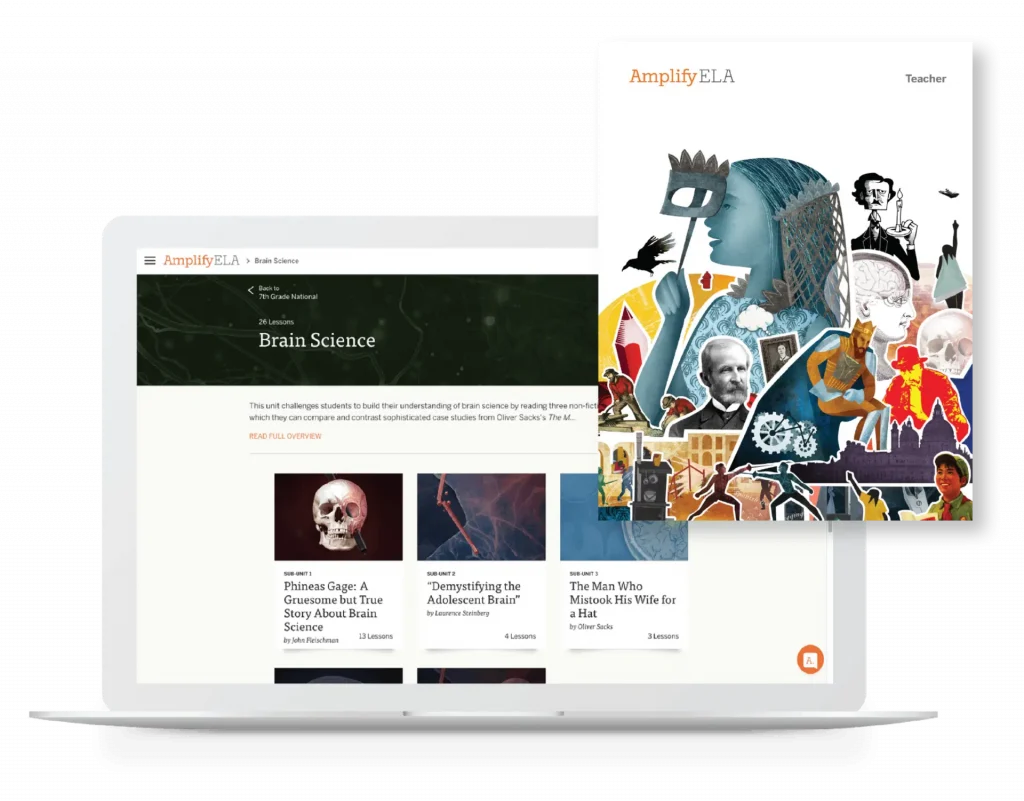
Print materials
Student Edition
Includes all of the readings and activities necessary for instruction throughout the year. Students can read the selections both digitally and in print throughout the year, annotating in either format. The lessons in the print Student Edition reflect each digital lesson, but have been modified to work effectively in print.
Writing Journals
Where students respond to Writing Prompts and complete other written assignments.
Novel Guides
Teachers can also access, print, and mail student Novel Guides for up to 12 commonly taught novels. Six of these novels are available in the Amplify Library, and most should be available in a public library.
Digital materials
Quests
You may notice your student working with peers on the same interactive project over several days, trying to solve a mystery or explain a historical event. That’s what happens when a teacher assigns a Quest: an in-depth week-long exploration that requires collaboration and deepens engagement with texts and topics.
Vocab App
The Vocab App helps students master vocabulary words through game-like activities that challenge them to think through morphology, analogy, and synonyms/antonyms, and to decipher meaning through context.
Support your child at home
How you can support the child in your care
- If possible, read with your student daily; even 15 minutes of reading together each day can make a huge impact. You can read aloud sections of the text together—many middle grade students enjoy performing sections of dialogue by taking on the role of a character in a play, or adding some dramatic flair to a poem with which they are working. If your student struggles with reading aloud, you might try reading the text to them with expression, then having them read it back to you. For additional practice, there are an array of fluency activities in the program’s Flex Days. Ask your student to help you find this activity.
- Find moments to discuss what they are reading and discovering. Examples of questions you could ask: What stood out to you from what you read today? Were any sentences or words confusing? What was most surprising? What do you think the writer was trying to communicate? Do you agree with the writer’s ideas or descriptions? What connections can you make between what you are reading and your own life or other issues?
- Listen to your student read their written responses or have them share with a friend over the phone or video chat.
- Browse the Amplify Library with your student to find books they’ll enjoy and be able to read fluently and independently.
- Review this Protecting Kids Online article by the Federal Trade Commission addressing digital safety.
Program access
Before accessing the program, watch the below video to learn even more about Amplify ELA! Then scroll down and follow the login instructions provided.
Take a closer look at the program with the Idaho Falls Community demo account! Follow these simple instructions to access our program digitally.
- Click the ELA Digital Platform button.
- Select Log in with Amplify.
- Enter this username: t1.ifela6@demo.tryamplify.net
- Enter this password: Amplify1-ifela6
- Select any unit to explore.
Where to go for help
Whether you have questions about your technology or want to know more about the program, Amplify’s Support Team is here to help!
Contact Support via telephone at (833) 97-Care-8 (833-972-2738) or caregiver@amplify.com.
Our support hours are Monday – Friday, 7 am – 9 PM ET, and Sunday, 10 – 6 ET.
Amplify and SFUSD Partnership
We recognize and respect the unique differences of each of our partnering districts—and that includes San Francisco USD.
Out of the box, Amplify Caminos offers districts a rich, comprehensive, research-based SELA experience. That said, no two districts are exactly alike. To that end, we are committed to working with San Francisco USD to ensure that Amplify Caminos addresses the needs of your community. This includes providing implementation guidance and support, as well as collaborating with your staff to determine which domains need to be modified or exchanged.
What is Amplify Caminos?
Amplify Caminos is a core Spanish language arts program for grades TK–5 that delivers:
- Authentic instruction built from the ground up for the Spanish language.
- A unique research-based approach truly built on the Science of Reading.
- A combination of explicit foundational skills with meaningful knowledge-building.
- Embedded support and differentiation that gets all students reading grade-level texts together.
- Opportunities for students to see the strengths and experiences that all people share while also celebrating each others’ unique identities and experiences.
Watch the video below to learn more about Amplify Caminos for Grades K–2.
Watch the video below to learn more about Amplify Caminos for Grades 3–5.
How does Amplify Caminos work?
Amplify Caminos is built on the science of how kids learn to read—in Spanish.
Amplify Caminos is all about helping you teach students how to read, all while giving them authentic and engaging reasons to read. That’s why Amplify Caminos develops foundational skills and builds knowledge in tandem.
- Knowledge: Through complex and authentic Spanish read-alouds with an emphasis on classroom interactivity, oral comprehension, and contextual vocabulary, students start to build their awareness of the world around them—and the way the reading skills they’re building give them access to it.
- Skills: Starting with the sounds at the core of the Spanish
language, students practice their phonemic awareness, handwriting skills, vocabulary, spelling, and grammar. Through daily practice, students become aware of the connection between reading and writing, building confidence as they go.

Respecting the development differences between grade ranges, Amplify Caminos teaches foundational skills and background knowledge as two distinct strands in grades K–2, and combines them into one integrated strand in grades 3–5.
Grades K–2:
Every day, students in grades K–2 complete one full lesson that explicitly and systematically builds foundational reading skills in the Amplify Caminos Lectoescritura strand, as well as one full lesson that builds robust background knowledge to access complex text in the Amplify Caminos Conocimiento strand. Through learning in each of these strands, students develop the early literacy skills necessary to help them become confident readers and build the context to understand what they’re reading.
Grades 3–5:
In grades 3–5, the Amplify Caminos Lectoescritura and Conocimiento strands are integrated in one set of instructional materials. Lessons begin to combine skills and knowledge with increasingly complex texts, close reading, and a greater writing emphasis. Students can then use their skills to go on their own independent reading adventures.
What do Amplify Caminos students explore?
Amplify Caminos builds students’ knowledge about the world.
In addition to teaching all students to crack the written code (which is vital for equity), the Amplify Caminos program helps students see the strengths and experiences we all share while celebrating their own unique identities and experiences.
This is accomplished through the exploration of topics and text that feature people who resemble students and familiar situations or experiences while also exposing them to people whose appearances, lives, beliefs, and backgrounds differ from their own.
Engaging domains
Amplify Caminos builds knowledge coherently across subjects and grades.
Throughout the program, students use their skills to explore domains that relate to storytelling, science, and the history of our world as seen through the eyes of many different groups.
Carefully selected to build from year-to-year, our grade-appropriate topics help students make and deepen connections while also reading, writing, and thinking creatively and for themselves.
New Knowledge Research Units for Grades K–5
Our brand-new Knowledge Research units carry forward Amplify Caminos’ powerful and proven instructional approach while also:
- Adding more diversity. The rich topics and highly visual components featured in these units provide students with even more “windows and mirrors” and perspectives as they work to build knowledge.
- Adding more authentic literature. Each new research unit revolves around a collection of high-interest authentic trade books that will spark more curiosity and inspire more inquiry.
- Adding more flexibility. Units can be implemented for extended core instruction during flex periods, district-designated Pausing Points, or enrichment periods.
Units cover a variety of rich and relevant topics:
With these new units, students will soar to new heights with Dr. Ellen Ochoa, Amelia Earhart, and the Tuskegee Airmen. They’ll feel the rhythm as they learn about Jazz legends Miles Davis, Tito Puente, and Duke Ellington. And they’ll explore the far reaches of the world with Jacques Cousteau, Matthew Henson, and Eugenie Clark.
- Grade K: El arte y el mundo que nos rodea
- Grade 1: Cuentos de aventuras: relatos desde los confines de la Tierra
- Grade 2: ¡A volar! La era de la aviación
- Grade 3: Jazz y más
- Grade 4: Energía: pasado, presente y futuro
- Grade 5: Más allá de Juneteenth: de 1865 al presente
Units will be made available in English and Spanish, and will include the following components:
Why we added this unit:
“Every child is an artist,” said Picasso, meaning that every child uses art to explore and understand the world around them. El arte y el mundo que nos rodea honors that truth by introducing Kindergarten students to some of the ways in which artists have explored and understood the world around them.
This domain introduces students to artists from different time periods, countries, and cultures. Throughout the unit, students learn about different kinds of art and how artists use the world around them as they make art. They also connect this to what they have already learned about the earth, plants, and animals in other Caminos domains: Granjas, Plantas, and Cuidar el planeta Tierra. In addition, students connect this to what they have learned about sculptors in the Presidentes y símbolos de los Estados Unidos domain. As they explore different artists and artistic traditions, they develop their ideas about how humans are connected to each other and to the world around them.
As you read the texts in this unit, students may observe ways in which the characters or subjects are both similar to and different from students. This is a good opportunity to teach students awareness and sensitivity, building on the idea that all people share some things in common, even as they have other things that make them unique. This unit also offers an excellent opportunity to collaborate with your school’s art teacher, as many lessons have suggested activities to help students understand the kind of art they are studying.
Within this unit, students have opportunities to:
- Use details to describe art.
- Identify three ways to create art.
- Identify characteristics of cave art.
- Sequence the steps of making pottery.
- Describe how artists can create work connected to the world around them.
- Describe what makes Kehinde Wiley’s portraits unique.
- Explain how the texture of a surface can affect artwork created on it.
- Explain what a sculpture is.
- Describe what makes James Turrell’s artwork about the sky unique.
- Explain what a museum is and what kinds of things you can see or do there.
Trade books in this unit:
Instruction in this unit revolves around the following collection of high-interest authentic trade books. One copy of each trade book is included with the unit materials.
- Georgia O’Keeffe por Erica Salcedo
- Yayoi Kusama: De aquí al infinito por Sarah Suzuki
- Tejedora del arcoíris por Linda Elovitz Marshall
- Las tijeras de Matisse por Jeanette Winter
- El museo por Susan Verde
- Quizás algo hermoso: Cómo el arte transformó un barrio por F. Isabel Campoy
Sample materials:
Take a sneak peek at the rich instruction and engaging activities for this unit by viewing the PDFs below.
Why we added this unit:
This domain introduces students to adventure stories set around the world and challenges students to dig into the adventures through research. By listening to the Read-Alouds and trade books, students increase their vocabulary and reading comprehension skills, learn valuable lessons about perseverance and teamwork, and become familiar with gathering information for research.
In this unit, students study the careers of real-world explorers Dr. Eugenie Clark and Sophia Danenberg, marvel at the inventions of Jacques Cousteau, think critically about how teamwork and collaboration can make greater adventures possible, learn about the science and technology that enable adventures, and research some of the ways humans have confronted challenges at the edges of the world, from the oceans below to space above.
Each lesson in the domain builds students’ research skills as they ask questions, gather information, and write a paragraph about their findings. Students share what they have learned about adventures in an Adventure Gallery Walkthrough. By taking on the persona of one of the adventurers they meet in the Read-Alouds and trade books, students deliver their final paragraphs as if they are a “speaking portrait” of that person. Students are invited to dress up as that adventurer if they desire.
In addition, teachers can set aside time outside the instructional block to create the picture frames students will hold as they present to the Adventure Gallery Walk guests. Frames can be made from shirt boxes, cardboard, construction paper, or any art supplies that are on hand. This might be an opportunity to collaborate with the school’s art department if resources are available. Another option is to ask students to make their frames at home with their caregivers. On the day of the Adventure Gallery Walk, students will be the hosts and take on specific jobs, such as welcoming the guests, describing their work throughout the unit, and pointing out the areas of study on the domain bulletin board. You can find a complete list of student jobs in Lesson 13.
How this unit builds knowledge:
This unit builds upon the following Caminos units that students will have encountered in the previous grade.
- Rimas y fábulas infantiles (Kindergarten)
- Cuentos (Kindergarten)
The specific core content targeted in these domains is particularly relevant to the Read-Alouds students will hear in Cuentos de aventuras: relatos desde los confines de la Tierra. The background knowledge students bring to this unit will greatly enhance their understanding of the trade books used in this unit.
Trade books in this unit:
Instruction in this unit revolves around the following collection of high-interest authentic trade books. One copy of each trade book is included with the unit materials.
- My Name Is Gabito/Me llamo Gabito por Monica Brown
- Galápagos Girl/Galapagueña por Marsha Diane Arnold
- My Name Is Gabriela/Me llamo Gabriela por Monica Brown
- El viaje de Kalak por María Quintana Silva y Marie-Noëlle Hébert
- Señorita Mariposa por Ben Gundersheimer
- Sharuko, el arqueólogo peruano/Peruvian Archaeologist Julio C. Tello por Monica Brown
- Abuelita fue al mercado por Stella Blackstone
Sample materials:
Take a sneak peek at the rich instruction and engaging activities for this unit by viewing the PDFs below.
- Guía del maestro: Cuentos de aventuras: relatos desde los confines de la Tierra
- Cuaderno de actividades: Cuentos de aventuras: relatos desde los confines de la Tierra
- Tarjetas de imágenes: Cuentos de aventuras: relatos desde los confines de la Tierra
- Componentes digitales: Cuentos de aventuras: relatos desde los confines de la Tierra
Why we added this unit:
With this domain, students head up, up, and away with an introduction to the soaring history of aviation. Students learn the stories of early aviators, such as the Montgolfier brothers, the Wright brothers, Aida de Acosta, and Amelia Earhart.
During the unit, students study the science of flight, including the physics concept of lift, and research the social impacts of the world of flight. Finally, students let their research skills take flight as they explore key figures from the world of aviation.
The lessons in this domain build on earlier Grade 2 Caminos domains about the westward expansion, early Greek civilizations, and Greek myths, and lay the foundation for learning about other periods of world history in future grades.
How this unit builds knowledge:
This unit builds upon the following Caminos units that students will have encountered earlier in the year.
- La civilización griega antigua (Grade 2)
- Mitos griegos (Grade 2)
- La expansión hacia el oeste (Grade 2)
The specific core content targeted in these domains is particularly relevant to the Read-Alouds students will hear in ¡A volar! La era de la aviación. The background knowledge students bring to this unit will greatly enhance their understanding of the trade books used in this unit.
Trade books in this unit:
Instruction in this unit revolves around the following collection of high-interest authentic trade books. One copy of each trade book is included with the unit materials.
- ¡A volar! Todo sobre aviones por Jennifer Prior
- Amelia sabe volar por Mara dal Corso
- Héroes de la aviación que cambiaron el mundo por Dan Green
- El niño que alcanzó las estrellas por José M. Hernández
- La niña que aprendió a volar por Sylvia Acevedo
- Buenas Noches Capitán Mamá por Graciela Tiscareño-Sato
Sample materials:
Take a sneak peek at the rich instruction and engaging activities for this unit by viewing the PDFs below.
Why we added this unit:
This domain teaches students about the vibrant music, poetry, and culture of the Jazz Age in the United States. Students learn about famous writers and musicians like Langston Hughes, Louis Armstrong, Billie Holiday, Melba Liston, Tito Puente, and Miles Davis. They study how the jazz art form took root in the South, then spread to the North to become the sound of the Harlem Renaissance, eventually connecting people around the world in musical expression.
During this unit, students perform guided research to further explore both the history of jazz and what jazz is today. They develop research skills and then use those skills to find deeper connections between the stories and music of the Jazz Age and music today. As students learn about the world of jazz, they collaborate and share ideas with their classmates. They also practice sharing feedback focused on their written work, and, at the end of the unit, students present their research to the group.
The lessons give students opportunities to dive into the rhythms and stories of jazz, utilizing the knowledge sequence in this unit to:
- Collaboratively generate research questions about jazz, jazz musicians, contemporary musicians from the state where they live or have lived, and the evolution of jazz music.
- Utilize Read-Alouds, independent reading, and partner reading to learn about the Jazz Age, the Harlem Renaissance, jazz music, and biographies of celebrated jazz musicians and writers.
- Research the answers to their generated questions, gather information, write a short research essay about a famous jazz musician, write a short essay about a contemporary musician from the state where they live or have lived, and give a presentation about their research.
How this unit builds knowledge:
Within this unit, students have opportunities to:
- Ask relevant questions and make pertinent comments
- Identify details in texts
- Determine key ideas of texts by evaluating details
- Make text-based inferences
- Generate questions based on prior knowledge and gathered information
- Synthesize details across texts to demonstrate comprehension
- Discuss and explain an author’s purpose
- Identify and cite reliable primary and secondary sources of information
- Compose a well-organized and focused informative essay
- Make connections between topics
- Present information using appropriate media
Trade books in this unit:
Instruction in this unit revolves around the following collection of high-interest authentic trade books. One copy of each trade book is included with the unit materials.
- ¡Esquivel! Un artista del sonido de la era espacial por Susan Wood
- Ray Charles por Sharon Bell Mathis
- Tito Puente, el Rey del Mambo por Monica Brown
- Me llamo Celia, la vida de Celia Cruz por Monica Brown
- ¡Azúcar! por Ivar Da Coll
In this unit, students also read the poem “Harlem” by Langston Hughes. (Available for free through the Academy of American Poets website and the Poetry Foundation website, with recorded audio available through the website for John Hancock College Preparatory High School.)
Sample materials:
Take a sneak peek at the rich instruction and engaging activities for this unit by viewing the PDFs below.
Why we added this unit:
With this domain, students become tomorrow’s problem solvers in this study of energy in the United States. Analytical reading skills are developed by examining the challenges of early energy innovators. Students then read about current energy practices and young energy change-makers across the world.
Throughout the unit, students conduct research into different sources of energy and present a proposal, putting them in the shoes of future energy innovators. They also use the knowledge sequence in this unit to:
- Collaboratively analyze texts to identify cause-effect and problem-solution relationships.
- Generate questions and conduct research about energy.
- Write an opinion essay making their case for a fuel of the future.
- Create energy proposals using primary and secondary resources.
How this unit builds knowledge:
This unit builds upon the following Caminos units that students will have encountered in previous grades as well as earlier in the year.
- Plantas (Grade K)
- La historia de la Tierra (Grade 1)
- ¡Eureka! Estudiante inventor (Grade 4)
The specific core content targeted in these domains is particularly relevant to the Read-Alouds students will hear in Energía: pasado, presente y futuro. The background knowledge students bring to this unit will greatly enhance their understanding of the trade books used in this unit.
Trade books in this unit:
Instruction in this unit revolves around the following collection of high-interest authentic trade books. One copy of each trade book is included with the unit materials.
- La historia de los combustibles fósiles por William B. Rice
- El niño que domó el viento por William Kamkwamba y Bryan Mealer
Sample materials:
Take a sneak peek at the rich instruction and engaging activities for this unit by viewing the PDFs below.
Why we added this unit:
Within this domain, Students learn about General Granger’s announcement in Galveston, Texas on June 19, 1865, a day marked in history as Juneteenth. Texts and multimedia sources will support foundational knowledge-building about the end of slavery in the United States. A review of the first freedom announcement, President Lincoln’s Emancipation Proclamation, provides students with background knowledge to further emphasize the significance of Juneteenth in American history.
This unit also takes students on a journey beyond Juneteenth, as they study specific contributions of African Americans from 1865 to the present day. Students participate in a virtual field trip to Emancipation Park in Houston, Texas and use the knowledge sequence in this unit to:
- Collaboratively generate research questions about Juneteenth, The Great Migration, innovators and inventors, education, the humanities, activists, and allies.
- Use Read-Alouds, independent, and partner reading to learn about African American contributions from 1865 to the present.
- Research to find answers to their generated questions, gather information, and write a four-chapter Beyond Juneteenth book.
How this unit builds knowledge:
This unit builds upon the following Caminos units that students will have encountered in previous grades.
- Los nativos americanos (Grade K)
- Una nueva nación: la independencia de los Estados Unidos (Grade 1)
- La Guerra Civil de los Estaods Unidos (Grade 2)
- La inmigración (Grade 2)
- Los nativos americanos (Grade 5)
The specific core content targeted in these domains is particularly relevant to the Read-Alouds students will hear in Más allá de Juneteenth: de 1865 al presente
. The background knowledge students bring to this unit will greatly enhance their understanding of the trade books used in this unit.
Trade books in this unit:
Instruction in this unit revolves around the following collection of high-interest authentic trade books. One copy of each trade book is included with the unit materials.
- Martí’s Song for Freedom/Martí y sus versos por la libertad escrito por Emma Otheguy
- ¡Celebremos Juneteenth! escrito por Carole Boston Weatherford
- Side by Side/Lado a Lado: The Story of Dolores Huerta and Cesar Chavez/La Historia de Dolores Huerta y César Chávez escrito por Monica Brown
- Canto de alabanza para el día: Poema para la ceremonia inaugural del mandato de Barack Obama escrito por Elizabeth Alexander, traducido por Rodrigo Rojas
Sample materials:
Take a sneak peek at the rich instruction and engaging activities for this unit by viewing the PDFs below.
Diverse texts
Amplify Caminos puts a variety of texts in the hands of students every day.
Amplify Caminos includes both transadaptations and authentic texts written by Latin American and Spanish authors. In addition to featuring a diverse range of authors and topics, our texts represent individuals and characters with a broad range of identity factors, including socioeconomic status, age, ability, race, ethnicity, country of origin, religion, and more.
Amplify Caminos texts include:
- Authentic literature: Authentic literature exposes students to a variety of text types and perspectives to deepen their knowledge of fascinating topics in social studies, science, literature, and the arts. Authentic texts support text-to-self, text-to-world, and text-to-text connections for readers.
- Decodable Student Readers: Amplify Caminos is built on the conviction that equitable instruction is vital to an effective program. Decodable Student Readers at grades K–2 are newly re-designed to celebrate students’ diverse experiences and feature individuals with a broad range of identity factors, including socioeconomic status, age, ability, race, ethnicity, country of origin, religion, and more.
- ReadWorks® texts: Amplify and ReadWorks have partnered to deliver high-quality texts curated to support the Amplify Caminos Knowledge Sequence and to extend student learning. Texts include high-interest nonfiction articles in topics in social studies, science, literature, and the arts. These texts are accompanied by vocabulary supports and standards-aligned formative assessment opportunities. Teachers can monitor their students’ progress using the ReadWorks reporting features.

Amplify Caminos Trade Book Collection Guide
Each book in our authentic literature collection was selected specifically to support and enhance the content of the K-2 Conocimiento Strand. These anchor texts are intended for use as an introduction to each domain—engaging students, piquing their curiosity, and building initial background knowledge—before diving into the deeper content of the domain Read-Alouds.
Every trade book has an instructional guide that includes the following:
- Author and illustrator
- Book summary
- The Essential Question of the Knowledge domain, connecting the book to the domain
- Key Tier 2 and Tier 3 vocabulary words found in the book
- A group activity to reinforce and extend students’ knowledge and understanding
- A performance task to help gauge students’ comprehension of concepts in the text
- Writing prompts to expand understanding and critical thinking
- Text complexity ratings and descriptors for quantitative, qualitative, and reader/task categories
Download the Amplify Caminos Trade Book Collection Guide for Grades K–2.
Detailed information about text complexity ratings and descriptors; additional uses for the books before, during, and after domain instruction; and the complete list of domains and books for each grade level can be found in the More About the Books section of this guide.
What makes Amplify Caminos different?
Built on the Science of Reading
Built out of the latest research in the Science of Reading, Amplify Caminos delivers explicit instruction in both foundational literacy skills (systematic phonics, decoding, and fluency) and background knowledge in grades K–2 with an integrated approach to explicit instruction in grades 3–5.

Explicit systematic skills instruction
The skills instruction in Amplify Caminos was distinctly developed with the Spanish language in mind. Its foundational lessons are specific to the language, rather than a direct translation from Amplify CKLA’s English skills instruction.
Reading instruction begins with the vowels first, then the most common consonants, and finally the least common consonants. Students will blend and segment sounds to form syllables, and syllables to form words.
Although Spanish has a highly predictable orthography, there are a few silent letters (h is always silent, u is silent after g or q), as well as letters that can make different sounds, depending on the letters that follow them. For that reason, syllables with these letters are taught somewhat later in the progression. The same is true for syllables with infrequently occurring consonants, such as z, k, x, and w.
Coherent knowledge instruction
While students are learning how to read, the Conocimiento strand gives them authentic and engaging reasons to read.
Amplify Caminos uses spiral learning to reinforce every student’s ability to develop skills like reading, writing, speaking, and listening in Spanish that can be transferred to English. As students engage with their lessons, they explore the similarities and differences in grammar, vocabulary, writing, and language use between Spanish and English. This bridge helps students learning two languages to strengthen their knowledge in both.
Through cross-curricular content, students explore units that relate to storytelling, science, and the history of our world in a holistic and thoughtful way. With these units, you’ll bring the world to your students, showing them how reading can become an exciting, rewarding, and useful part of their lives.

Embedded differentiation for all learners
Amplify Caminos provides built-in differentiation strategies and supports in every lesson.
- Apoyo a la enseñanza y desafío: Support and Challenge suggestions in every lesson provide assistance or opportunities for more advanced work toward the goal of the lesson.
- Notas culturales: These point-of-use notes provide additional information about the traditions, foods, holidays, word variations, and more from across the Spanish-speaking world.
- Apoyo adicional: Every lesson in the Lectoescritura (Skills) Strand provides additional support activities suggested to reinforce foundational skills instruction. These activities can be given to any student who requires extra help, including students with special needs.
Systematic and cohesive writing instruction
Writing instruction in Amplify Caminos builds systematically and cohesively within and across grades.
In Grades K-2, writing mechanics—including handwriting and spelling—are taught in the Amplify Caminos Lectoescritura strand. Starting in Grade 1, instruction includes four steps in the writing process: planning, drafting, editing, and publishing and features lessons that have modeling, collaboration, and sharing. As students gain skills and confidence, they are able to take on more of these steps independently. Students learn to use planning techniques, including brainstorming and graphic organizers.
Beginning in Grade 4, the Amplify Caminos writing process expands to also include sharing and evaluating. In Grades 4 and 5, the writing process is no longer conceptualized as a series of scaffolded, linear steps (an important change from the Grade 3 writing process). Rather, students move between components of the writing process in a flexible manner, similar to the process mature and experienced writers follow naturally.

Amplify Caminos’ writing instruction provides a clear progression through the text types in each grade.
Because Amplify Caminos has two strands of lessons in Grades K-2, Lectoescritura and Conocimiento, students are exposed to both narrative and informational texts throughout the year. In Grades 3-5, the integrated units feature study in literary, informational, or a mix of both types of texts, depending on the content of the unit.
- Grades K–2 introduce and establish the key elements of each text type, allowing students to gain comfort and confidence writing narratives, opinions, and informative texts. This enables students to practice thinking about content in different ways, offering more depth and breadth to their understanding of core content and of the writing text types.
- By Grade 3, students will have gained significant practice in narrative, opinion/argumentative, and informational/explanatory forms of writing and will continue to apply those skills through Grade 5.
How does Amplify Caminos integrate with the other parts of the literacy system?
Amplify Caminos + mCLASS® Lectura
Achieve complete parity between English and Spanish assessments with mCLASS Lectura for K–6. mCLASS Lectura allows teachers to connect with their Spanish-speaking students face-to-face, one-on-one, and in the language most comfortable to them. The result? Valid and reliable student data reports
available in both English and Spanish, enabling teachers to pinpoint where their Spanish-speaking or emergent bilingual students really are in their skill development and what instruction to prioritize.

Amplify Caminos + Amplify Reading
Amplify Reading is an engaging, adaptive digital program that extends the learning in Amplify Caminos. Amplify Reading offers support to a large sub-group of English learners (ELs) through Spanish voice-over. Spanish voiceover instructions are available in vocabulary and sentence-level comprehension games so ELs can build their vocabulary, language, and critical comprehension skills before moving into analyzing complex texts

Demo access and sample materials
Ready to explore on your own? First, watch the videos below to learn about the program’s components and how to navigate the digital platform.
Physical materials walkthrough video
Digital navigation video
Demo access
Next, follow the instructions below to access your demo account.

- Click the CKLA and Caminos Demo button below.
- Select Log in with Amplify.
- To explore as a teacher, enter this username: t1.sfusdreviewer@demo.tryamplify.net
- To explore as a student, enter this username: s1.sfusdreviewer@demo.tryamplify.net
- Enter the password: Amplify1-sfusdreviewer
- Click the Programs and apps menu
- Select CKLA Teacher Resource Site
- Select the desire grade level
- Use the toggle to switch between English (CKLA) and Spanish (Caminos) resources.
Sample materials
Finally, click on the grade levels below to explore your requested sample units.
Each book in our authentic literature collection was selected specifically to support and enhance the content of the K-2 Conocimiento Strand. These anchor texts are intended for use as an introduction to each domain—engaging students, piquing their curiosity, and building initial background knowledge—before diving into the deeper content of the domain Read-Alouds.
Every trade book has an instructional guide that includes the following:
- Author and illustrator
- Book summary
- The Essential Question of the Knowledge domain, connecting the book to the domain
- Key Tier 2 and Tier 3 vocabulary words found in the book
- A group activity to reinforce and extend students’ knowledge and understanding
- A performance task to help gauge students’ comprehension of concepts in the text
- Writing prompts to expand understanding and critical thinking
- Text complexity ratings and descriptors for quantitative, qualitative, and reader/task categories
Download the Amplify Caminos Trade Book Collection Guide for Grades K–2.
Detailed information about text complexity ratings and descriptors; additional uses for the books before, during, and after domain instruction; and the complete list of domains and books for each grade level can be found in the More About the Books section of this guide.
Conocimiento Strand:
- Guía del maestro, Conocimiento 12: Luchar por una causa
- Cuaderno de actividades, Conocimientos 7–12
- Rotafolio de imágenes, Conocimiento 12
- Tarjetas de imágenes, Conocimiento 12
Lectoescritura Strand:
Additional resources
- Caminos Program Guide
- Biliteracy and Science of Reading Principles
- Amplify Caminos Conocimiento Scopes and Sequences
- Grade K Knowledge Strand
- Grade 1 Knowledge Strand
- Grade 2 Knowledge Strand
- Grade 3 Integrated Strand
- Grade 4 Integrated Strand
- Grade 5 Intgrated Strand
Tennessee’s review of Amplify ELA student materials
Thank you for taking the time to review Amplify ELA for middle school. The items below will allow you to experience our blended program with access to our student print materials and digital curriculum.
Amplify ELA’s blended model enables teachers to design instruction based on their classroom needs and resources. Our engaging print edition highlights the many digital experiences that can be shared with students through classroom projections. Teachers can make choices about when their students use devices while providing 100% standards coverage and without compromising learning.
Digital Program
The content and instruction in Amplify ELA’s digital program mirrors the content provided in the print Teacher Edition and Student Edition. However, the digital program offers more opportunity to engage students through the use of multimedia and a variety of learning apps.
To access the Student Edition within the digital program, visit learning.amplify.com and enter the following credentials when logging in with Amplify:
USERNAME: t.elav2-autologin@tryamplify.net
PASSWORD: Demo1234
Grade 6
Grade 7
Grade 8
What’s included in our grades K–2 language arts curriculum
Amplify Core Knowledge Language Arts® (CKLA) is a comprehensive early literacy curriculum, grounded in the Science of Reading. The K–2 curriculum sequences deep content knowledge-building with research-based foundational skills. With Amplify CKLA, you’ll have the instruction and guidance of proven, evidence-based practices to help all of your students become strong readers, writers, and thinkers.
Choose Level
Year at a glance
The Amplify CKLA curriculum is modeled after proven research in early literacy that supports a two-strand approach to literacy instruction in the early years. With this approach, students in Grades K–2 complete one full lesson per day that builds foundational reading skills in the Skills Strand, as well as one full lesson that builds background knowledge in the Knowledge Strand. The deep content knowledge is sequenced together with research-based foundational skills in Grades K–2 so that students develop the early literacy skills necessary to help them become confident readers, as well as build the context to understand what they’re reading.
In Grades 3–5, lessons combine skills and knowledge with increasingly complex texts, close reading, and a greater emphasis on writing. Students start to use their skills to go on their own independent reading adventures, further opening up their worlds.

Units & domains at a glance
The number of days to complete each Skills Unit and Knowledge Domain varies based on instructional purpose.
Knowledge Domain 1
Nursery Rhymes and Fables
Well-known fables introduce students to new vocabulary, build phonological awareness, and prompt discussion of character, virtues, and behavior.
Number of Lessons: 12
Knowledge Domain 2
The Five Senses
Students explore how they learn about the world using their five senses: sight, hearing, smell, taste, and touch.
Number of Lessons: 8
Knowledge Domain 3
Stories
Students develop an awareness of language and recurring themes in children’s literature, including classic stories, trickster tales, and fiction from other cultures.
Number of Lessons: 10
Knowledge Domain 4
Plants
Read-aloud texts introduce students to basic knowledge of ecology, parts of plants, how plants grow, and the interdependence of all living things.
Number of Lessons: 11
Knowledge Domain 5
Farms
Students identify several farm animals and crops and contrast how plants make their food with how animals get their food.
Number of Lessons: 9
Knowledge Domain 6
Native Americans
Students explore cultures of three Native American groups, as well as how conditions in different geographical regions influence their ways of life.
Number of Lessons: 8
Knowledge Domain 7
Kings and Queens
Students listen to read-aloud texts, both fiction and nonfiction, about kings, queens, and royal families, which build students’ understanding of royal customs.
Number of Lessons: 8
Knowledge Domain 8
Seasons and Weather
This is an introduction to weather and the seasons, where students learn that regions of Earth experience different characteristic weather patterns throughout the year.
Number of Lessons: 8
Knowledge Domain 9
Columbus and the Pilgrims
A look at the first contact between Europe and the Americas and some of its results.
Number of Lessons: 9
Knowledge Domain 10
Colonial Towns and Townspeople
Students are introduced to the early history of the United States as they explore what life was like for people in colonial times.
Number of Lessons: 10
Knowledge Domain 11
Taking Care of the Earth
Students are introduced to the importance of environmental awareness and conservation as they become familiar with the earth’s natural resources.
Number of Lessons: 10
Knowledge Domain 12
Presidents and American Symbols
Students learn about the legacies of five famous presidents, several national symbols, the branches of government, the role of the president, and elections.
Number of Lessons: 9
Skills Unit 1
Students build phonological awareness through environmental noises, words within sentences, and sounds within words. They learn basic strokes used to form letters.
Skills Unit 2
Students learn how to blend syllables together to form multisyllabic words. They orally produce two- and three-sound words by blending sounds.
Skills Unit 3
Students learn eight new sounds and practice blending them into words. They learn how to write letters that represent the new sounds.

Skills Unit 4
With oral language games, chaining exercises, and shared reading, students practice blending eight new sounds into words and writing the sound-letter correspondences.

Skills Unit 5
Eight new sounds are introduced, including a spelling alternative for /k/. Students continue to practice previously learned sound-letter correspondences.

Skills Unit 6
Students are introduced to consonant clusters, letter names, and rhyming words. Students begin to read text independently using decodable Student Readers.
Skills Unit 7
Students learn about various digraphs. Students practice blending and segmenting the sounds through phonemic awareness and phonics activities, chaining exercises, and reading.

Skills Unit 8
This unit introduces students to double-letter spellings for consonant sounds, as well as seven new high-frequency Tricky Words.
Skills Unit 9
Students practice writing uppercase letters and learn 17 new Tricky Words. Students answer comprehension questions about stories in the Student Reader.

Skills Unit 10
Students learn the basic code spelling for the five long vowel sounds. Students are administered a cumulative end-of-year assessment.
Knowledge Domain 1
Fables and Stories
Students are introduced to fables and stories, increase vocabulary and reading comprehension skills, and become familiar with the key elements of a story.
Number of Lessons: 10
Knowledge Domain 2
The Human Body
Students are introduced to the systems of the human body, care of the body, germs and disease, vaccines, and keys to good health.
Number of Lessons: 10
Knowledge Domain 3
Different Lands, Similar Stories
Students encounter cultures from around the world as they explore the ways in which folktales from different lands treat similar themes or characters.
Number of Lessons: 9
Knowledge Domain 4
Early World Civilizations
Students explore Mesopotamia and Egypt and learn about the importance of rivers, farming, writing, laws, art, and beliefs.
Number of Lessons: 16
Knowledge Domain 5
Early American Civilizations
Students compare and contrast key features of the early civilizations of the Maya, Aztec, and Inca, and explore the development of cities.
Number of Lessons: 11
Knowledge Domain 6
Astronomy
In this introduction to the solar system, students learn about Earth in relation to the moon, other planets, the sun, and the stars.
Number of Lessons: 9
Knowledge Domain 7
The History of the Earth
Students learn about the geographical features of Earth’s surface, the layers of the earth, rocks and minerals, volcanoes, geysers, fossils, and dinosaurs.
Number of Lessons: 8
Knowledge Domain 8
Animals and Habitats
Students focus on the interconnectedness of living things as they learn what a habitat is and explore specific types of habitats.
Number of Lessons: 9
Knowledge Domain 9
Fairy Tales
Students learn about the Brothers Grimm, identify common elements of fairy tales, make interpretations, and compare and contrast different tales.
Number of Lessons: 9
Knowledge Domain 10
A New Nation: American Independence
Students are introduced to important historical figures and events in the story of how the 13 colonies became an independent nation.
Number of Lessons: 12
Knowledge Domain 11
Frontier Explorers
Students are introduced to exploration of the American West, its key figures, and how colonists spread westward, including their interactions with native peoples.
Number of Lessons: 11
Skills Unit 1
Unit 1 provides a review of the sounds/spellings taught in the CKLA Kindergarten curriculum. Teachers administer the beginning-of-year assessment.
Skills Unit 2
Students read and write words with long vowel spellings and learn new Tricky Words. The unit also includes grammar lessons on nouns.
Skills Unit 3
Work continues on vowel sounds and their spellings. Grammar focus is on verbs and verb tense. Formal instruction in the writing process begins.
Skills Unit 4
Students work with /r/-controlled vowel sounds. Students practice segmenting two-syllable words. Adjectives are introduced as students practice descriptive writing.

Skills Unit 5
Students work with spelling alternatives for sounds. Students also learn to identify sentence types. They plan, draft, and edit opinion letters.

Skills Unit 6
Students continue to work with several spelling alternatives for sounds. Students review nouns and pronouns. They plan, draft, and edit personal narratives.
Skills Unit 7
Students focus on spelling alternatives for sounds. Students plan, draft, and edit an informative/explanatory text. Students are administered an end-of-year assessment.
Knowledge Domain 1
Fairy Tales and Tall Tales
Students consider characteristic elements of fairy tales and tall tales and consider problems faced by the characters and lessons each story conveys.
Number of Lessons: 8
Knowledge Domain 2
Early Asian Civilizations
Students are introduced to Asia, specifically India and China. In addition, students are introduced to related folktales and poetry.
Number of Lessons: 14
Knowledge Domain 3
Ancient Greek Civilization
Students explore the civilization of ancient Greece, which lives on in many ways—in our language, government, art, architecture, the Olympics, and more.
Number of Lessons: 12
Knowledge Domain 4
Greek Myths
Building on the Ancient Greek Civilization domain, students explore common characteristics and story elements of several well-known Greek myths and mythical characters.
Number of Lessons: 10
Knowledge Domain 5
The War of 1812
Students are introduced to major figures and events in the War of 1812, sometimes called America’s “second war for independence.”
Number of Lessons: 8
Knowledge Domain 6
Cycles in Nature
Students are introduced to natural cycles that make life on Earth possible, such as seasonal cycles, life cycles, and the water cycle.
Number of Lessons: 9
Knowledge Domain 7
Westward Expansion
Students are introduced to an important period in the history of the United States—the time of westward expansion during the 1800s.
Number of Lessons: 9
Knowledge Domain 8
Insects
Students learn about the helpful and harmful characteristics of insects, insect life cycles, and social insects such as bees and ants.
Number of Lessons: 8
Knowledge Domain 9
The U.S. Civil War
Students learn about the controversy between the North and the South over slavery and about key historical figures during that time.
Number of Lessons: 11
Knowledge Domain 10
Human Body: Building Blocks and Nutrition
Students learn about the human body, including body systems, good nutrition, keys to good health, and the advances in microbiology made by Anton van Leeuwenhoek.
Number of Lessons: 9
Knowledge Domain 11
Immigration
Students explore the idea of e pluribus unum and the importance of immigration in the history of the United States.
Number of Lessons: 10
Knowledge Domain 12
Fighting for a Cause
Students explore the connection between ideas and actions, and see how people can do extraordinary things to change the dominant ideas and actions of an entire nation.
Number of Lessons: 9

Skills Unit 1
Sound-spellings with an emphasis on consonant sounds, one- and two-syllable words, and Tricky Words are reviewed. The beginning-of-year assessment is administered.
Skills Unit 2
The unit focus is on various sound-spellings and words with one- and two-syllables. Students begin the writing process, writing narratives and opinions.

Skills Unit 3
Practice with spelling alternatives continues. Grammar focuses on capitalization, quotation marks, ending punctuation, and common and proper nouns. Students write personal narratives.
Skills Unit 4
Students practice a range of spelling alternatives. Students practice persuasive writing as part of a friendly letter. Students learn more about nouns and verbs.
Skills Unit 5
Students practice chunking sounds as they read multisyllabic words. Grammar work includes adjectives, subjects, and predicates. Writing includes rewriting a story ending.

Skills Unit 6
Students review advanced phonics and grammar skills. Students are introduced to expository/report writing. Students take an end-of-year assessment.
Program components
The program includes instructional guidance and student materials for a year of instruction, with lessons and activities that keep students engaged every day.
Component
FORMAT
Knowledge Strand Teacher Guide
Knowledge Strand Teacher Guides contain Amplify CKLA’s cross-curricular read-alouds and application activities, all of which are standards-based to build mastery of content knowledge and literacy skills. There is one Teacher Guide per Knowledge Domain.
Print or digital
Knowledge classroom materials
Amplify CKLA includes oversized Flip Books and smaller Image Cards that bring each topic to life through vivid visuals.
Print or digital
Skills Strand Teacher Guide
Amplify CKLA Skills Strand Teacher Guides include comprehensive research-based instruction in phonological and phonemic awareness, phonics, print concepts, the alphabetic principle, grammar, writing mechanics, comprehension, spelling, and other critical foundational literacy skills.
Print or digital
Hands-on Skills ancillaries
Dynamic classroom materials include student Chaining Folders, Small and Large Letter Cards, Spelling Cards, Sound Cards, Big Books, Vowel and Consonant Code Flip Books, Code Charts, and more.
Print or digital
Assessment and Remediation Guide
The unit-by-unit Assessment and Remediation Guide provides thousands of pages of activities for reteaching, differentiation, and additional practice.
Print or digital

Digital experience
The Amplify CKLA digital experience delivers ready-made, customizable, slides-based lesson presentations to enhance instruction and save time. Everything needed to plan and present high-quality, engaging early literacy instruction is in one convenient place.
Digital
Component
FORMAT
Knowledge Strand Activity Books
Knowledge Strand Activity Books provide students with the opportunity to deepen world and word knowledge by responding to text in a diversity of ways.

Skills Strand Student Reader
Unique decodable Student Readers provide direct practice with just-learned sound-spelling patterns, using compelling stories and characters to integrate phonics and comprehension.
Skills Strand Activity book
Skills Strand Activity Books support the program’s connected approach to reading and writing, providing ample opportunities to respond to text while building core skills.
Digital experience
The Amplify CKLA digital experience delivers ready-made, customizable, slides-based lesson presentations to enhance instruction and save time. Everything needed to plan and present high-quality, engaging early literacy instruction is in one convenient place.
Digital
Explore more programs
Our programs are designed to support and complement one another. Learn more about our related programs.
Program overview
Boost Math is a personalized learning math instruction and practice program. The game-based experience engages all students in grade-level mathematics in ways that prepare them for success in, and build enthusiasm around, algebra and later math.
Student experience
When students click on their Curioso icon, they are taken into their quest. Quests consist of brief narrative scenes, punctuated with skill practice in the form of games. Once a student completes a scene, their very own collection of personalized skill games appears on the right side of the screen. Students can play these games in any order.
- Students in grades 1 and 2 will experience games related to comparing numbers, measuring, and more.
- Students in grades 3, 4, and 5 will experience games related to fractions, area, multiplication, and more.
- Students will also experience activities known as “Makers,” which are open-ended activities within each quest related to the quest narrative, giving students an opportunity to apply different math applications to the real world.
Note: This is an early subsection of the product. Some content may be appropriate for some students, but difficult for others. This is feedback we want to hear. The designs are also still in-progress, with many aspects yet to be featured. We welcome all suggestions!
Implementation guidelines
We recommend that students should play for a total of 60 minutes per week, broken up into 3–4, 15–20 minute sessions. Consider using Boost Math during the following times:
- Small group or centers time
- Choice time
- During intervention blocks
- After school
- At home
- Remote learning
Getting your students online
Instruct students to navigate to learning.amplify.com, and log in using the method you typically use when logging into Amplify Reading.

Find and click on the icon for Boost Math, as shown above.
Students will then see the screen showing Sequence Falls, the location in which their Boost Math journey takes place.
Troubleshooting guide
To clear your Chrome browser cache/cookies:
- On your computer, open Chrome.
- At the top right, click the three vertical dots.
- Click More Tools, Clear browsing data.
- At the top, choose a time range, select All time.
- Check the boxes next to “Cookies and other site data” and “Cached images and files.”
- Click Clear data.
- From the Safari menu at the top of the screen, select “Safari”
- Select “Preferences” from the drop-down menu
- Open the “Privacy” tab
- Select the “Manage Website Data” button
- Choose “amplify.com” from the list of sites
- Select the “Remove” button
- Select “Done”, then close the window
Please check to ensure “cookies” are accepted on your device.
If you still receive an error message or blank screen when accessing an Amplify page, please email Aya Bukres.
Please email Jehan Miah to confirm your login credentials.
To reset your Amplify password: click Login with Amplify, then click the Forgot Password link. If you do not receive an email with password reset instructions, please check your Spam folder. To ensure messages to not go to your Spam inbox, make sure to include the following addresses as trusted sources:
- do-not-reply@amplify.com
- noreply@amplify.com
- noreply@welcome.amplify.com
Amplify Caminos for SFUSD
Amplify Caminos is an authentic elementary Spanish language arts program. Like its English language counterpart, Amplify CKLA, Amplify Caminos provides explicit, systematic foundational skills instruction sequenced with deep knowledge-building content to foster comprehension. When used with Amplify CKLA, Amplify Caminos provides full parity across English and Spanish that’s suitable for any dual language implementation model.

Amplify and SFUSD Partnership
We recognize and respect the unique differences of each of our partnering districts—and that includes San Francisco USD.
Out of the box, Amplify Caminos offers districts a rich, comprehensive, research-based SELA experience. That said, no two districts are exactly alike. To that end, we are committed to working with San Francisco USD to ensure that Amplify Caminos addresses the needs of your community. This includes providing implementation guidance and support, as well as collaborating with your staff to determine which domains need to be modified or exchanged.
What is Amplify Caminos?
Amplify Caminos is a core Spanish language arts program for grades TK–5 that delivers:
- Authentic instruction built from the ground up for the Spanish language.
- A unique research-based approach truly built on the Science of Reading.
- A combination of explicit foundational skills with meaningful knowledge-building.
- Embedded support and differentiation that gets all students reading grade-level texts together.
- Opportunities for students to see the strengths and experiences that all people share while also celebrating each others’ unique identities and experiences.
Watch the video below to learn more about Amplify Caminos for Grades K–2.
Watch the video below to learn more about Amplify Caminos for Grades 3–5.
How does Amplify Caminos work?
Amplify Caminos is built on the science of how kids learn to read—in Spanish.
Amplify Caminos is all about helping you teach students how to read, all while giving them authentic and engaging reasons to read. That’s why Amplify Caminos develops foundational skills and builds knowledge in tandem.
- Knowledge: Through complex and authentic Spanish read-alouds with an emphasis on classroom interactivity, oral comprehension, and contextual vocabulary, students start to build their awareness of the world around them—and the way the reading skills they’re building give them access to it.
- Skills: Starting with the sounds at the core of the Spanish
language, students practice their phonemic awareness, handwriting skills, vocabulary, spelling, and grammar. Through daily practice, students become aware of the connection between reading and writing, building confidence as they go.

Respecting the development differences between grade ranges, Amplify Caminos teaches foundational skills and background knowledge as two distinct strands in grades K–2, and combines them into one integrated strand in grades 3–5.
Grades K–2:
Every day, students in grades K–2 complete one full lesson that explicitly and systematically builds foundational reading skills in the Amplify Caminos Lectoescritura strand, as well as one full lesson that builds robust background knowledge to access complex text in the Amplify Caminos Conocimiento strand. Through learning in each of these strands, students develop the early literacy skills necessary to help them become confident readers and build the context to understand what they’re reading.
Grades 3–5:
In grades 3–5, the Amplify Caminos Lectoescritura and Conocimiento strands are integrated in one set of instructional materials. Lessons begin to combine skills and knowledge with increasingly complex texts, close reading, and a greater writing emphasis. Students can then use their skills to go on their own independent reading adventures.
What do Amplify Caminos students explore?
Amplify Caminos builds students’ knowledge about the world.
In addition to teaching all students to crack the written code (which is vital for fairness), the Amplify Caminos program helps students see the strengths and experiences we all share while celebrating their own unique identities and experiences.
This is accomplished through the exploration of topics and text that feature people who resemble students and familiar situations or experiences while also exposing them to people whose appearances, lives, beliefs, and backgrounds differ from their own.
Engaging domains
Amplify Caminos builds knowledge coherently across subjects and grades.
Throughout the program, students use their skills to explore domains that relate to storytelling, science, and the history of our world as seen through the eyes of many different groups.
Carefully selected to build from year-to-year, our grade-appropriate topics help students make and deepen connections while also reading, writing, and thinking creatively and for themselves.
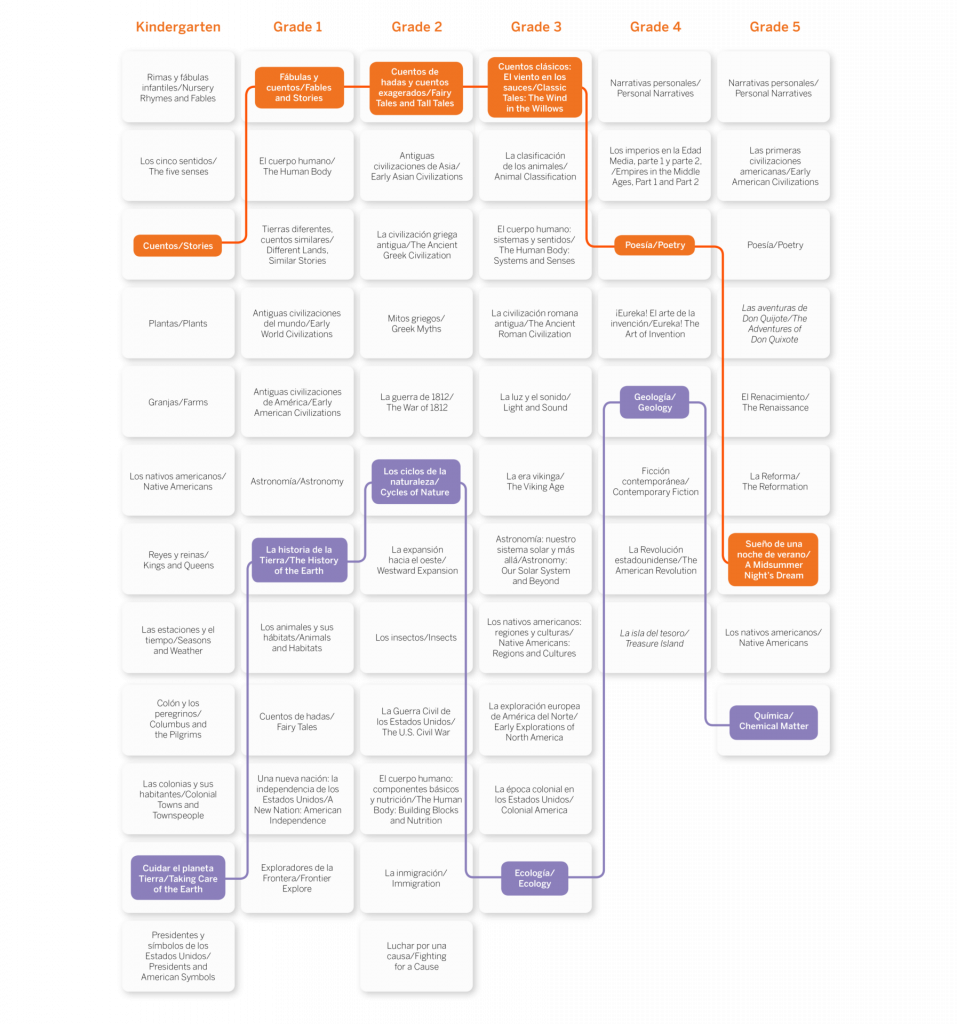
New Knowledge Research Units for Grades K–5
Our brand-new Knowledge Research units carry forward Amplify Caminos’ powerful and proven instructional approach while also:
- Adding more content for students from all walks of life. The rich topics and highly visual components featured in these units provide students with even more “windows and mirrors” and perspectives as they work to build knowledge.
- Adding more authentic literature. Each new research unit revolves around a collection of high-interest authentic trade books that will spark more curiosity and inspire more inquiry.
- Adding more flexibility. Units can be implemented for extended core instruction during flex periods, district-designated Pausing Points, or enrichment periods.
Units cover a variety of rich and relevant topics:
With these new units, students will soar to new heights with Dr. Ellen Ochoa, Amelia Earhart, and the Tuskegee Airmen. They’ll feel the rhythm as they learn about Jazz legends Miles Davis, Tito Puente, and Duke Ellington. And they’ll explore the far reaches of the world with Jacques Cousteau, Matthew Henson, and Eugenie Clark.
- Grade K: El arte y el mundo que nos rodea
- Grade 1: Cuentos de aventuras: relatos desde los confines de la Tierra
- Grade 2: ¡A volar! La era de la aviación
- Grade 3: Jazz y más
- Grade 4: Energía: pasado, presente y futuro
- Grade 5: Más allá de Juneteenth: de 1865 al presente
Units will be made available in English and Spanish, and will include the following components:
- Teacher Guide
- Student Activity Books
- Image Cards
- Trade Book Collection
- Digital Components (for Grades K–3 and Grade 5 only)
Why we added this unit:
“Every child is an artist,” said Picasso, meaning that every child uses art to explore and understand the world around them. El arte y el mundo que nos rodea honors that truth by introducing Kindergarten students to some of the ways in which artists have explored and understood the world around them.
This domain introduces students to artists from different time periods, countries, and cultures. Throughout the unit, students learn about different kinds of art and how artists use the world around them as they make art. They also connect this to what they have already learned about the earth, plants, and animals in other Caminos domains: Granjas, Plantas, and Cuidar el planeta Tierra. In addition, students connect this to what they have learned about sculptors in the Presidentes y símbolos de los Estados Unidos domain. As they explore different artists and artistic traditions, they develop their ideas about how humans are connected to each other and to the world around them.
As you read the texts in this unit, students may observe ways in which the characters or subjects are both similar to and different from students. This is a good opportunity to teach students awareness and sensitivity, building on the idea that all people share some things in common, even as they have other things that make them unique. This unit also offers an excellent opportunity to collaborate with your school’s art teacher, as many lessons have suggested activities to help students understand the kind of art they are studying.
Within this unit, students have opportunities to:
- Use details to describe art.
- Identify three ways to create art.
- Identify characteristics of cave art.
- Sequence the steps of making pottery.
- Describe how artists can create work connected to the world around them.
- Describe what makes Kehinde Wiley’s portraits unique.
- Explain how the texture of a surface can affect artwork created on it.
- Explain what a sculpture is.
- Describe what makes James Turrell’s artwork about the sky unique.
- Explain what a museum is and what kinds of things you can see or do there.
Trade books in this unit:
Instruction in this unit revolves around the following collection of high-interest authentic trade books. One copy of each trade book is included with the unit materials.
- Georgia O’Keeffe por Erica Salcedo
- Yayoi Kusama: De aquí al infinito por Sarah Suzuki
- Tejedora del arcoíris por Linda Elovitz Marshall
- Las tijeras de Matisse por Jeanette Winter
- El museo por Susan Verde
- Quizás algo hermoso: Cómo el arte transformó un barrio por F. Isabel Campoy
Sample materials:
Take a sneak peek at the rich instruction and engaging activities for this unit by viewing the PDFs below.
- Guía del maestro: Cuentos de aventuras: relatos desde los confines de la Tierra
- Cuaderno de actividades: Cuentos de aventuras: relatos desde los confines de la Tierra
- Tarjetas de imágenes: Cuentos de aventuras: relatos desde los confines de la Tierra
- Componentes digitales: Cuentos de aventuras: relatos desde los confines de la Tierra
Why we added this unit:
This domain introduces students to adventure stories set around the world and challenges students to dig into the adventures through research. By listening to the Read-Alouds and trade books, students increase their vocabulary and reading comprehension skills, learn valuable lessons about perseverance and teamwork, and become familiar with gathering information for research.
In this unit, students study the careers of real-world explorers Dr. Eugenie Clark and Sophia Danenberg, marvel at the inventions of Jacques Cousteau, think critically about how teamwork and collaboration can make greater adventures possible, learn about the science and technology that enable adventures, and research some of the ways humans have confronted challenges at the edges of the world, from the oceans below to space above.
Each lesson in the domain builds students’ research skills as they ask questions, gather information, and write a paragraph about their findings. Students share what they have learned about adventures in an Adventure Gallery Walkthrough. By taking on the persona of one of the adventurers they meet in the Read-Alouds and trade books, students deliver their final paragraphs as if they are a “speaking portrait” of that person. Students are invited to dress up as that adventurer if they desire.
In addition, teachers can set aside time outside the instructional block to create the picture frames students will hold as they present to the Adventure Gallery Walk guests. Frames can be made from shirt boxes, cardboard, construction paper, or any art supplies that are on hand. This might be an opportunity to collaborate with the school’s art department if resources are available. Another option is to ask students to make their frames at home with their caregivers. On the day of the Adventure Gallery Walk, students will be the hosts and take on specific jobs, such as welcoming the guests, describing their work throughout the unit, and pointing out the areas of study on the domain bulletin board. You can find a complete list of student jobs in Lesson 13.
How this unit builds knowledge:
This unit builds upon the following Caminos units that students will have encountered in the previous grade.
- Rimas y fábulas infantiles (Kindergarten)
- Cuentos (Kindergarten)
The specific core content targeted in these domains is particularly relevant to the Read-Alouds students will hear in Cuentos de aventuras: relatos desde los confines de la Tierra. The background knowledge students bring to this unit will greatly enhance their understanding of the trade books used in this unit.
Trade books in this unit:
Instruction in this unit revolves around the following collection of high-interest authentic trade books. One copy of each trade book is included with the unit materials.
- My Name Is Gabito/Me llamo Gabito por Monica Brown
- Galápagos Girl/Galapagueña por Marsha Diane Arnold
- My Name Is Gabriela/Me llamo Gabriela por Monica Brown
- El viaje de Kalak por María Quintana Silva y Marie-Noëlle Hébert
- Señorita Mariposa por Ben Gundersheimer
- Sharuko, el arqueólogo peruano/Peruvian Archaeologist Julio C. Tello por Monica Brown
- Abuelita fue al mercado por Stella Blackstone
Sample materials:
Take a sneak peek at the rich instruction and engaging activities for this unit by viewing the PDFs below.
Why we added this unit:
With this domain, students head up, up, and away with an introduction to the soaring history of aviation. Students learn the stories of early aviators, such as the Montgolfier brothers, the Wright brothers, Aida de Acosta, and Amelia Earhart.
During the unit, students study the science of flight, including the physics concept of lift, and research the social impacts of the world of flight. Finally, students let their research skills take flight as they explore key figures from the world of aviation.
The lessons in this domain build on earlier Grade 2 Caminos domains about the westward expansion, early Greek civilizations, and Greek myths, and lay the foundation for learning about other periods of world history in future grades.
How this unit builds knowledge:
This unit builds upon the following Caminos units that students will have encountered earlier in the year.
- La civilización griega antigua (Grade 2)
- Mitos griegos (Grade 2)
- La expansión hacia el oeste (Grade 2)
The specific core content targeted in these domains is particularly relevant to the Read-Alouds students will hear in ¡A volar! La era de la aviación. The background knowledge students bring to this unit will greatly enhance their understanding of the trade books used in this unit.
Trade books in this unit:
Instruction in this unit revolves around the following collection of high-interest authentic trade books. One copy of each trade book is included with the unit materials.
- ¡A volar! Todo sobre aviones por Jennifer Prior
- Amelia sabe volar por Mara dal Corso
- Héroes de la aviación que cambiaron el mundo por Dan Green
- El niño que alcanzó las estrellas por José M. Hernández
- La niña que aprendió a volar por Sylvia Acevedo
- Buenas Noches Capitán Mamá por Graciela Tiscareño-Sato
Sample materials:
Take a sneak peek at the rich instruction and engaging activities for this unit by viewing the PDFs below.
Why we added this unit:
This domain teaches students about the vibrant music, poetry, and culture of the Jazz Age in the United States. Students learn about famous writers and musicians like Langston Hughes, Louis Armstrong, Billie Holiday, Melba Liston, Tito Puente, and Miles Davis. They study how the jazz art form took root in the South, then spread to the North to become the sound of the Harlem Renaissance, eventually connecting people around the world in musical expression.
During this unit, students perform guided research to further explore both the history of jazz and what jazz is today. They develop research skills and then use those skills to find deeper connections between the stories and music of the Jazz Age and music today. As students learn about the world of jazz, they collaborate and share ideas with their classmates. They also practice sharing feedback focused on their written work, and, at the end of the unit, students present their research to the group.
The lessons give students opportunities to dive into the rhythms and stories of jazz, utilizing the knowledge sequence in this unit to:
- Collaboratively generate research questions about jazz, jazz musicians, contemporary musicians from the state where they live or have lived, and the evolution of jazz music.
- Utilize Read-Alouds, independent reading, and partner reading to learn about the Jazz Age, the Harlem Renaissance, jazz music, and biographies of celebrated jazz musicians and writers.
- Research the answers to their generated questions, gather information, write a short research essay about a famous jazz musician, write a short essay about a contemporary musician from the state where they live or have lived, and give a presentation about their research.
How this unit builds knowledge:
Within this unit, students have opportunities to:
- Ask relevant questions and make pertinent comments
- Identify details in texts
- Determine key ideas of texts by evaluating details
- Make text-based inferences
- Generate questions based on prior knowledge and gathered information
- Synthesize details across texts to demonstrate comprehension
- Discuss and explain an author’s purpose
- Identify and cite reliable primary and secondary sources of information
- Compose a well-organized and focused informative essay
- Make connections between topics
- Present information using appropriate media
Trade books in this unit:
Instruction in this unit revolves around the following collection of high-interest authentic trade books. One copy of each trade book is included with the unit materials.
- ¡Esquivel! Un artista del sonido de la era espacial por Susan Wood
- Ray Charles por Sharon Bell Mathis
- Tito Puente, el Rey del Mambo por Monica Brown
- Me llamo Celia, la vida de Celia Cruz por Monica Brown
- ¡Azúcar! por Ivar Da Coll
In this unit, students also read the poem “Harlem” by Langston Hughes. (Available for free through the Academy of American Poets website and the Poetry Foundation website, with recorded audio available through the website for John Hancock College Preparatory High School.)
Sample materials:
Take a sneak peek at the rich instruction and engaging activities for this unit by viewing the PDFs below.
Why we added this unit:
With this domain, students become tomorrow’s problem solvers in this study of energy in the United States. Analytical reading skills are developed by examining the challenges of early energy innovators. Students then read about current energy practices and young energy change-makers across the world.
Throughout the unit, students conduct research into different sources of energy and present a proposal, putting them in the shoes of future energy innovators. They also use the knowledge sequence in this unit to:
- Collaboratively analyze texts to identify cause-effect and problem-solution relationships.
- Generate questions and conduct research about energy.
- Write an opinion essay making their case for a fuel of the future.
- Create energy proposals using primary and secondary resources.
How this unit builds knowledge:
This unit builds upon the following Caminos units that students will have encountered in previous grades as well as earlier in the year.
- Plantas (Grade K)
- La historia de la Tierra (Grade 1)
- ¡Eureka! Estudiante inventor (Grade 4)
The specific core content targeted in these domains is particularly relevant to the Read-Alouds students will hear in Energía: pasado, presente y futuro. The background knowledge students bring to this unit will greatly enhance their understanding of the trade books used in this unit.
Trade books in this unit:
Instruction in this unit revolves around the following collection of high-interest authentic trade books. One copy of each trade book is included with the unit materials.
- La historia de los combustibles fósiles por William B. Rice
- El niño que domó el viento por William Kamkwamba y Bryan Mealer
Sample materials:
Take a sneak peek at the rich instruction and engaging activities for this unit by viewing the PDFs below.
Why we added this unit:
Within this domain, Students learn about General Granger’s announcement in Galveston, Texas on June 19, 1865, a day marked in history as Juneteenth. Texts and multimedia sources will support foundational knowledge-building about the end of slavery in the United States. A review of the first freedom announcement, President Lincoln’s Emancipation Proclamation, provides students with background knowledge to further emphasize the significance of Juneteenth in American history.
This unit also takes students on a journey beyond Juneteenth, as they study specific contributions of African Americans from 1865 to the present day. Students participate in a virtual field trip to Emancipation Park in Houston, Texas and use the knowledge sequence in this unit to:
- Collaboratively generate research questions about Juneteenth, The Great Migration, innovators and inventors, education, the humanities, activists, and allies.
- Use Read-Alouds, independent, and partner reading to learn about African American contributions from 1865 to the present.
- Research to find answers to their generated questions, gather information, and write a four-chapter Beyond Juneteenth book.
How this unit builds knowledge:
This unit builds upon the following Caminos units that students will have encountered in previous grades.
- Los nativos americanos (Grade K)
- Una nueva nación: la independencia de los Estados Unidos (Grade 1)
- La Guerra Civil de los Estaods Unidos (Grade 2)
- La inmigración (Grade 2)
- Los nativos americanos (Grade 5)
The specific core content targeted in these domains is particularly relevant to the Read-Alouds students will hear in Más allá de Juneteenth: de 1865 al presente
. The background knowledge students bring to this unit will greatly enhance their understanding of the trade books used in this unit.
Trade books in this unit:
Instruction in this unit revolves around the following collection of high-interest authentic trade books. One copy of each trade book is included with the unit materials.
- Martí’s Song for Freedom/Martí y sus versos por la libertad escrito por Emma Otheguy
- ¡Celebremos Juneteenth! escrito por Carole Boston Weatherford
- Side by Side/Lado a Lado: The Story of Dolores Huerta and Cesar Chavez/La Historia de Dolores Huerta y César Chávez escrito por Monica Brown
- Canto de alabanza para el día: Poema para la ceremonia inaugural del mandato de Barack Obama escrito por Elizabeth Alexander, traducido por Rodrigo Rojas
Sample materials:
Take a sneak peek at the rich instruction and engaging activities for this unit by viewing the PDFs below.
Wide-ranging texts
Amplify Caminos puts a variety of texts in the hands of students every day.
Amplify Caminos includes both transadaptations and authentic texts written by Latin American and Spanish authors. Our texts feature a wide variety of authors, topics, individuals and characters representing many different socioeconomic statuses, ages, abilities, races, ethnicities, countries of origin, religions, and more.
Amplify Caminos texts include:
- Authentic literature: Authentic literature exposes students to a variety of text types and perspectives to deepen their knowledge of fascinating topics in social studies, science, literature, and the arts. Authentic texts support text-to-self, text-to-world, and text-to-text connections for readers.
- Decodable Student Readers: Decodable Student Readers at grades K–2 are newly redesigned to include students from all walks of life and educational backgrounds. They feature characters with a broad range of backgrounds, experiences, ages, races, religions, and more.
- ReadWorks® texts: Amplify and ReadWorks have partnered to deliver high-quality texts curated to support the Amplify Caminos Knowledge Sequence and to extend student learning. Texts include high-interest nonfiction articles in topics in social studies, science, literature, and the arts. These texts are accompanied by vocabulary supports and standards-aligned formative assessment opportunities. Teachers can monitor their students’ progress using the ReadWorks reporting features.

Amplify Caminos Trade Book Collection Guide
Each book in our authentic literature collection was selected specifically to support and enhance the content of the K-2 Conocimiento Strand. These anchor texts are intended for use as an introduction to each domain—engaging students, piquing their curiosity, and building initial background knowledge—before diving into the deeper content of the domain Read-Alouds.
Every trade book has an instructional guide that includes the following:
- Author and illustrator
- Book summary
- The Essential Question of the Knowledge domain, connecting the book to the domain
- Key Tier 2 and Tier 3 vocabulary words found in the book
- A group activity to reinforce and extend students’ knowledge and understanding
- A performance task to help gauge students’ comprehension of concepts in the text
- Writing prompts to expand understanding and critical thinking
- Text complexity ratings and descriptors for quantitative, qualitative, and reader/task categories
Download the Amplify Caminos Trade Book Collection Guide for Grades K–2.
Detailed information about text complexity ratings and descriptors; additional uses for the books before, during, and after domain instruction; and the complete list of domains and books for each grade level can be found in the More About the Books section of this guide.
What makes Amplify Caminos different?
Built on the Science of Reading
Built out of the latest research in the Science of Reading, Amplify Caminos delivers explicit instruction in both foundational literacy skills (systematic phonics, decoding, and fluency) and background knowledge in grades K–2 with an integrated approach to explicit instruction in grades 3–5.

Explicit systematic skills instruction
The skills instruction in Amplify Caminos was distinctly developed with the Spanish language in mind. Its foundational lessons are specific to the language, rather than a direct translation from Amplify CKLA’s English skills instruction.
Reading instruction begins with the vowels first, then the most common consonants, and finally the least common consonants. Students will blend and segment sounds to form syllables, and syllables to form words.
Although Spanish has a highly predictable orthography, there are a few silent letters (h is always silent, u is silent after g or q), as well as letters that can make different sounds, depending on the letters that follow them. For that reason, syllables with these letters are taught somewhat later in the progression. The same is true for syllables with infrequently occurring consonants, such as z, k, x, and w.
Coherent knowledge instruction
While students are learning how to read, the Conocimiento strand gives them authentic and engaging reasons to read.
Amplify Caminos uses spiral learning to reinforce every student’s ability to develop skills like reading, writing, speaking, and listening in Spanish that can be transferred to English. As students engage with their lessons, they explore the similarities and differences in grammar, vocabulary, writing, and language use between Spanish and English. This bridge helps students learning two languages to strengthen their knowledge in both.
Through cross-curricular content, students explore units that relate to storytelling, science, and the history of our world in a holistic and thoughtful way. With these units, you’ll bring the world to your students, showing them how reading can become an exciting, rewarding, and useful part of their lives.
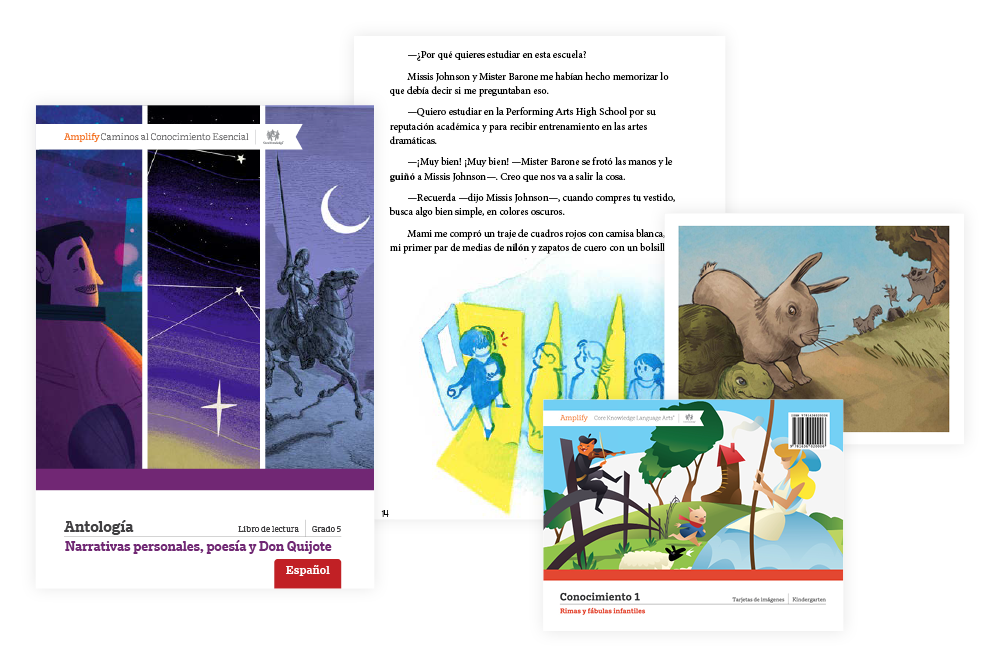
Embedded differentiation for all learners
Amplify Caminos provides built-in differentiation strategies and supports in every lesson.
- Apoyo a la enseñanza y desafío: Support and Challenge suggestions in every lesson provide assistance or opportunities for more advanced work toward the goal of the lesson.
- Notas culturales: These point-of-use notes provide additional information about the traditions, foods, holidays, word variations, and more from across the Spanish-speaking world.
- Apoyo adicional: Every lesson in the Lectoescritura (Skills) Strand provides additional support activities suggested to reinforce foundational skills instruction. These activities can be given to any student who requires extra help, including students with special needs.
Systematic and cohesive writing instruction
Writing instruction in Amplify Caminos builds systematically and cohesively within and across grades.
In Grades K-2, writing mechanics—including handwriting and spelling—are taught in the Amplify Caminos Lectoescritura strand. Starting in Grade 1, instruction includes four steps in the writing process: planning, drafting, editing, and publishing and features lessons that have modeling, collaboration, and sharing. As students gain skills and confidence, they are able to take on more of these steps independently. Students learn to use planning techniques, including brainstorming and graphic organizers.
Beginning in Grade 4, the Amplify Caminos writing process expands to also include sharing and evaluating. In Grades 4 and 5, the writing process is no longer conceptualized as a series of scaffolded, linear steps (an important change from the Grade 3 writing process). Rather, students move between components of the writing process in a flexible manner, similar to the process mature and experienced writers follow naturally.

Amplify Caminos’ writing instruction provides a clear progression through the text types in each grade.
Because Amplify Caminos has two strands of lessons in Grades K-2, Lectoescritura and Conocimiento, students are exposed to both narrative and informational texts throughout the year. In Grades 3-5, the integrated units feature study in literary, informational, or a mix of both types of texts, depending on the content of the unit.
- Grades K–2 introduce and establish the key elements of each text type, allowing students to gain comfort and confidence writing narratives, opinions, and informative texts. This enables students to practice thinking about content in different ways, offering more depth and breadth to their understanding of core content and of the writing text types.
- By Grade 3, students will have gained significant practice in narrative, opinion/argumentative, and informational/explanatory forms of writing and will continue to apply those skills through Grade 5.
How does Amplify Caminos integrate with the other parts of the literacy system?
Amplify Caminos + mCLASS® Lectura
Achieve complete parity between English and Spanish assessments with mCLASS Lectura for K–6. mCLASS Lectura allows teachers to connect with their Spanish-speaking students face-to-face, one-on-one, and in the language most comfortable to them. The result? Valid and reliable student data reports
available in both English and Spanish, enabling teachers to pinpoint where their Spanish-speaking or emergent bilingual students really are in their skill development and what instruction to prioritize.

Amplify Caminos + Amplify Reading
Amplify Reading is an engaging, adaptive digital program that extends the learning in Amplify Caminos. Amplify Reading offers support to a large sub-group of English learners (ELs) through Spanish voice-over. Spanish voiceover instructions are available in vocabulary and sentence-level comprehension games so ELs can build their vocabulary, language, and critical comprehension skills before moving into analyzing complex texts

Demo access and sample materials
Ready to explore on your own? First, watch the videos below to learn about the program’s components and how to navigate the digital platform.
Physical materials walkthrough video
Digital navigation video
Demo access
Next, follow the instructions below to access your demo account.
- Click the CKLA and Caminos Demo button below.
- Select Log in with Amplify.
- To explore as a teacher, enter this username: t1.sfusdreviewer@demo.tryamplify.net
- To explore as a student, enter this username: s1.sfusdreviewer@demo.tryamplify.net
- Enter the password: Amplify1-sfusdreviewer
- Click the Programs and apps menu
- Select CKLA Teacher Resource Site
- Select the desire grade level
- Use the toggle to switch between English (CKLA) and Spanish (Caminos) resources.
Sample materials
Finally, click on the grade levels below to explore your requested sample units.
Conocimiento Strand:
- Guía del maestro, Conocimiento 12: Luchar por una causa
- Cuaderno de actividades, Conocimientos 7–12
- Rotafolio de imágenes, Conocimiento 12
- Tarjetas de imágenes, Conocimiento 12
Lectoescritura Strand:
Additional resources
- Caminos Program Guide
- Biliteracy and Science of Reading Principles
- Amplify Caminos Conocimiento Scopes and Sequences
- Grade K Knowledge Strand
- Grade 1 Knowledge Strand
- Grade 2 Knowledge Strand
- Grade 3 Integrated Strand
- Grade 4 Integrated Strand
- Grade 5 Intgrated Strand
Welcome, Amplify ELA reviewers!
Welcome, Florida middle school educators!
Amplify ELA Florida is the program built for Florida middle school teachers and students. We designed the program to help ensure the B.E.S.T standards are covered; the skills are taught; the test is prepped for; and your students are scaffolded and encouraged. We want you to spend your time bringing the text to life, making the classroom hum, and letting every student know you are paying attention to their growth.

Instruction matters
Florida’s new standards have been crafted to give your students the B.E.S.T. Amplify ELA Florida’s lessons explore the most compelling aspect of a text and target the standards that best support that analysis through reading, writing, and communication. These key standards are identified as the lesson’s Spotlight benchmark. Strategic connections are attained in the program through:
- Florida model texts including rich literature and compelling non-fiction, taught in engaging new ways for today’s learners.
- Benchmark stacks that build connections within lessons and across units.
- Foundational instruction that targets key standards and multiple learning modes.
- Writing that builds directly from reading complex text and is evaluated by Amplify’s Automated Writing Evaluation (AWE).
- Reading with the B.E.S.T. Modules have been built to guide teachers and students as they begin to work with Florida’s new reading standards, providing an introduction to each grade-level B.E.S.T. Reading Benchmark. (Example module: Grade 6, Understanding Rhetoric)
Knowledge matters
Texts in the Amplify ELA Florida Edition curriculum cover a wide range of topics, themes, and genres with differentiated supports that ensure that all students can work through each reading and lesson. Taken as a whole, the texts show students a diverse picture of the world and help foster a lifelong love of reading. Comprehension develops as students engage with literary and informational text selections that are complex, rich, and meaningful.
Texts were selected for Amplify ELA Florida Edition using the following criteria:
- Text complexity as defined by qualitative, quantitative, and reader and task measurements as required by the B.E.S.T. Standards and the Amplify Text Complexity Index
- Balance of literary and informational texts
- Varied representation of genres: novels, plays, poetry, biographies, and other full-length texts
- Diverse cultures, perspectives, and authors
- Engaging texts that extend learning and support students as they build knowledge
- Grade-appropriate texts, with scaffolding and compelling activities to support student engagement with 100% authentic texts
- A library with more than 700 complete books, both classic and contemporary, encompassing a wide range of genres, topics, and cultural perspectives

Curriculum matters
Amplify ELA Florida is a blended curriculum designed specifically for grades 6–8. The heart of every lesson is the text. Each grade includes six units centered on literary or informational texts, delivered in several forms of media. Your classroom will also benefit from two or three immersive, project-based experiences and a dedicated Story Writing unit.
- Full B.E.S.T. coverage: Standards are clearly labeled in each lesson, so teachers can save time planning and get back to what they love: teaching. Also included are Benchmark Modules that support teachers’ and students’ introduction to the new standards for Florida.
- Five levels of differentiation: Based on each student’s needs and the performance measures within Amplify ELA reports, a teacher can choose the differentiation level that’s the right fit for everyone.
- Embedded Assessments: Teachers benefit from uninterrupted instructional time and a continuously updated picture of each student’s progress with key skills and standards.
- Powerful feedback tools: Comprehensive tools help teachers maximize both the quantity and quality of feedback.
- Robust reporting: Our reporting app offers information on student progress to help inform instructional decisions.
All in one place: Embedded teacher support, differentiation tools, student data, text, and other curriculum features—they’re all right there.
Materials
Amplify ELA Florida Edition is a blended curriculum that seamlessly integrates print and digital resources to be used in any learning environment. The resources are designed to facilitate instruction for planning, teaching, learning, and assessment.
Student materials
Available digitally and in print, the student materials guide middle schoolers through complex texts and writing with the following:
- Student Edition will engage students with high-quality narrative and informational texts.
- Digital experience will provide videos, a library of more than 700 texts, audio supports, and other online experiences that capture their attention.
- Writing Journal will keep all of their thinking and writing about text in one place.

Teacher materials
Available digitally and in print, the Teacher Edition contains all of the information teachers need to facilitate classroom instruction, including:
- From detailed lesson plans.
- Video teacher tips embedded in the lesson.
- B.E.S.T. standards alignment and assessments including exit tickets.
- Real-time differentiation strategies.
- Clarify and Compare lessons.
- Robust reporting.
Professional learning
Amplify employs a national cohort of more than 50 ELA facilitators, all of whom have experience as former classroom teachers and many of whom are former school and/or district leaders. Our professional learning team has decades of experience working with large districts across the nation. Amplify has experience supporting district launches over multiple years and has partnered with districts of all sizes nationwide. We partner deeply with districts and tailor professional learning to their unique needs.

Welcome, Minnesota Educators!
S5-03. Cultivating a joy of learning with Sesame Workshop
Listen as we chat with Dr. Rosemarie Truglio, senior vice president of curriculum and content for Sesame Workshop! Continuing our theme of math anxiety this season, we sat down with Dr. Truglio to chat about Sesame Street and her thoughts on how to spread a growth mindset to young children and put them on course to academic achievement and long-term success.
Listen today and don’t forget to grab your MTL study guide to track your learning and make the most of this episode!
Dr. Rosemarie Truglio (00:00):
Children don’t come with this math anxiety. Math anxiety is learned.
Bethany Lockhart Johnson (00:07):
Welcome back to Math Teacher Lounge. I’m Bethany Lockhart Johnson.
Dan Meyer (00:11):
And I’m Dan Meyer.
Bethany Lockhart Johnson (00:12):
Hello, Dan Meyer.
Dan Meyer (00:14):
Great to see you, Bethany. We are on episode three. Can you believe it?
Bethany Lockhart Johnson (00:18):
So, I feel like we’ve just started scratching the surface about math anxiety. We’ve talked to two amazing researchers. We’ve talked about what math anxiety is, how it’s often screened for some of the causes, some of the consequences … I mean, we’ve had some good conversations. Dan, what do you think?
Dan Meyer (00:38):
Definitely, I think that the consequences have only grown more dire in my head. I’m not sure how you feel about the consequences. But, you know, it is enough for me that we ask students to take mathematics for much of their childhoods, to worry about their anxiety, taking that. But to hear about from these researchers about all the different things that correlate with math achievement and math anxiety—talking about future careers, certainly, but even some other, more serious lifelong concerns? That gives me a lot of motivation to continue this study of math anxiety here with you on the show.
Bethany Lockhart Johnson (01:14):
It is really widespread. It has a big impact, not only on students, but on parents, on educators. You know, it’s—
Dan Meyer (01:23):
Multi-generational.
Bethany Lockhart Johnson (01:25):
Yes. And you know, so often when folks think of math anxiety, what I hear them say is, “Oh, yeah, in high school is when math really ramps up. That’s when anxiety starts.” But we know that it starts in our youngest learners. And our research has already backed that up. We know it. I’ve seen it in my classroom. You may have seen it with some students you work with. And let me tell you, it starts young.
Dan Meyer (01:52):
It does start early. Right now, I have a son that’s just started kindergarten, and he seems relatively math-positive, but we’ve known from our interviews on this show and other kinds of experiences that oftentimes, that feeling —that math is for me, and I am for math, and we are all friends — can turn on a single moment. It seems like one teacher says a thing that changes a student’s perception of themselves as a mathematician or of math itself. So I keep waiting with bated breath, hoping not to find that one moment that changes our current open posture towards mathematics. So now it’s time to really dive into some strategies for combating math anxiety.
Bethany Lockhart Johnson (02:34):
To help us out, we’ve called on a pretty exciting guest. I am so excited, Dan Meyer! We are being joined by Dr. Rosemarie Truglio. She is Senior Vice President of Curriculum and Content at Sesame Workshop. Sesame Workshop! As in, “Tell me how to get to Sesame Street.” Dan, I have to tell you, I spent many, many hours of my childhood watching Sesame Street. I have to ask, do you have happy Sesame Street memories? Is this part of your formation, Dan Meyer?
Dan Meyer (03:08):
At this point? In my advancing years, and the brain cells that I have left, Sesame Street is really kind of just a vibe in my head. But that vibe is such a pleasant one. One in which like nothing bad could happen. One in which learning is common and normalized and fun. And you just kind of feel at home, constantly.
Bethany Lockhart Johnson (03:33):
I don’t know about the “just the vibe” part, because for me, it is visceral. I’m there. I am actually … I mean, I might still be there.
Dan Meyer (03:42):
You could reenact some of the skits?
Bethany Lockhart Johnson (03:44):
. You didn’t watch Sesame Street with your kiddos when they were younger?
Dan Meyer (03:49):
We watched a lot of Elmo. A lot of Elmo. Yeah.
Bethany Lockhart Johnson (03:52):
Next-generation Sesame Street. Well, I think it’s so perfect that we’re gonna be talking about what Sesame Workshop does to help combat math anxiety and create a positive connection and relationship with mathematics. So I’m really excited to hear what Dr. Truglio and her team have been working on. And here’s our conversation with Dr. Truglio.
Dan Meyer (04:15):
Welcome to the show, Dr. Truglio. It is an honor.
Dr. Rosemarie Truglio (04:18):
Great to be here. Thank you for inviting me.
Dan Meyer (04:20):
You are Senior Vice President of Curriculum and Content at Sesame Workshop, which definitely sounds like the coolest job in the world to both four-year-old me and also Now me. Would you just help us help us with some backstory of how you ended up here, and what you do at Sesame Workshop?
Dr. Rosemarie Truglio (04:38):
Sure. It is a pretty cool job. And I am very fortunate that I’ve been in this position for the past 26 years. So, I am a developmental psychologist, and my job is to help Sesame Workshop identify curriculum needs, so that we could address them in the content that we create on the show and across our various platforms. So, Sesame Street is currently in its 53rd season. And we just, wrapped production for the 54th season, which we’ll debut next fall. And Sesame Street began with an experiment: Can television actually teach children school readiness skills, to have them better prepared for school? Especially those children who did not have access to formal education during the preschool years? And it is what we call a whole-child curriculum, because we’re dealing with all of the school readiness needs. So that that includes the academic needs, their social-emotional needs, and their health needs, as well as what we call these cognitive processing skills—how children learn content. Right? So it’s not just content skills, but how you approach learning and how you actually learn content. So as a grad student, I was fortunate to work at the Center for Research on the Influences of Television on Children. Very special center. It was at the University of Kansas. And my advisors, developmental psychologists, they studied the effects of television on children, both the positive effects and the negative effects. And so part of their research was to actually look at the longterm educational effects of Sesame Street. So I was working with Sesame Street content as a grad student, and then came to New York City. My first job was Assistant Professor at Teachers College, Columbia University. And when this position became available, Director of Research at the time, it was called, I took that job. And so my job was to oversee both the curriculum and the implementation of the curriculum, as well as the research. Because what we know, our co-founder, Joan Ganz Cooney has always said, for Sesame Street to be a successful educational program, production has to work closely with early childhood educators. They are the ones who know the curriculum and, and develop the curriculum goals, as well as the developmental psychologists who actually study how children are paying attention to the content. But more importantly, what are they comprehending from the content? And we all have to work together. Because even though we are the experts, the real experts are the children themselves. So nothing is deemed final until we actually show the children and see what they are learning from the content that we are producing.
Dan Meyer (07:54):
Are you referring to like, test audiences of kids then?
Dr. Rosemarie Truglio (07:57):
Yeah, I guess you could call it test audiences. I mean, I don’t. I don’t like to call it that because I see them as co-collaborators. I don’t see them as a test audience. Because, as I said, they’re the experts. It’s a collaboration. I mean, they’re the experts. And so I wanna know—
Dan Meyer (08:12):
As collaborators. I got it now. Yeah.
Dr. Rosemarie Truglio (08:14):
They help us. So that’s exactly what we tell the children too. So it’s called formative research. You know, we, we do what we call, um, storybook testing, an animated version of a storybook to have some little movement and see are they finding the story engaging, but more importantly, are they picking up on the intended educational lesson that we’re trying to teach in the story. So they are co-collaborators. they’re the ones who are helping us get the story just right for them.
Dan Meyer (08:46):
That’s really exciting, and makes me think about what classes might be like if students were regarded in that kind of lens as well. I just wanna say that my four-year-old self is on this interview as well, and is re-contextualizing all the stuff I saw as a kid. And it just felt like, at the time, you folks turned the camera on and went down to the street and we just had this real natural time. And it’s great to hear about all the intense preparation and co-construction at work and work that went into that time. Yeah,
Dr. Rosemarie Truglio (09:12):
It’s about a year preparation from start to finish. From the start of identifying, “What is the educational need? Is it an academic need? Is it a social-emotional need? Is it a health need? Is it a cognitive-processing need?” And then once we have the need identified, we have what we call a curriculum seminar. We bring in the experts who are studying this topic with preschoolers, because we wanna get it, we wanna get it right.
Bethany Lockhart Johnson (09:41):
Which, by the way, little behind the scenes: How often do you get to go to set?
Dr. Rosemarie Truglio (09:46):
So we’re in a production probably about six weeks out of the year. Covid really messed things up. ‘Cause we have to be really—we have very strict Covid protocols, but there is someone on my team—and sometimes we have to, you know, rotate for availability—but there’s always an educator on set.
Bethany Lockhart Johnson (10:06):
Awesome.
Dr. Rosemarie Truglio (10:07):
Because even though you stick to the script, questions arise; they wanna make changes; sometimes they have to cut; things are running too long and they have to cut and we gotta figure out where to cut. So there’s always an educator on set.
Bethany Lockhart Johnson (10:19):
But sometimes you go and have lunch, like—.
Dr. Rosemarie Truglio (10:21):
Oh, I go, yes. Sometimes I go—
Bethany Lockhart Johnson (10:23):
And just hang out with Big Bird, right?
Dr. Rosemarie Truglio (10:24):
Sometimes I go hang out with Big Bird. No, those are my friends!
Bethany Lockhart Johnson (10:27):
They are!
Dr. Rosemarie Truglio (10:28):
No, no, I go hang out with them. They’re my friends. Yes.
Bethany Lockhart Johnson (10:32):
When I think about Sesame Street and I think about … like, I can’t help but smile. Because I think I have such fond memories of the characters. I mean, we invited them, my mom invited them, into our home, right? And, you know, now I have a two-year-old and there’s no doubt that I’m gonna introduce him to Sesame Street. And I see how it really does feel like the folks who are doing this work, you and your team, you have a deep respect for children. So it makes sense that you call your test collaborators “collaborators,” right? They’re a part of it. And you know, I love that. And Sesame Street makes me smile. However, I’m like, we’re talking about math anxiety. And it’s so interesting, because as Dan and I were talking about our memories of Sesame Street … you know, it’s like Sesame Street feels like there’s not much anxiety. I mean, there are problems, and there’s problem solving, and it’s not like everything is perfect. But we figure it out. And it’s OK to make mistakes and it’s OK to try again. And a lot of times, we don’t see that in the math classroom—or at least, how folks talk about math. So, how do you all think about anxiety, about how to prevent it? Like, when you’re doing your work, you know that math anxiety is a real thing. But then that’s not translated in these experiences and the relationships with math that you’re building with your viewers.
Dr. Rosemarie Truglio (12:07):
Yeah, that’s a really good question, because it’s really easy, because our core audience are two- to four-year-olds and they love math. And what’s not to love, right? Because they are figuring the world out as they’re exploring the world. So you said something really interesting, that when you turn on the TV—when you turned on the TV when you were a child, and now you’re a mom of a two-year-old, we wanna make sure that the show represents content that is relevant and meaningful to our target audience. And that comes through with the characters. So all of our characters have very specific personalities, as all children do. And our characters represent all children, in terms of not only personality, but interest and learning styles, ’cause we wanna see—we wanna make sure that children see themselves in these characters. And we have a character who actually loves math. And he’s The Count.
Bethany Lockhart Johnson (13:12):
I’m like, “I know! I know who it is!” I will save you my impression. Although I have done it for my child. But I’ll save our listeners .
Dr. Rosemarie Truglio (13:20):
And you know, he’s an adult character. Some of our characters are preschoolers, like Elmo and Abby—they’re preschoolers—and Zoe. But The Count is an adult. He lives in the castle and he just loves numbers. But what’s really important is while we have The Count to explain—not explain to, but to portray to children, cause we don’t explain anything; we show children that math is more than number, right? Math is a pretty wide concept. Which is what I love about math. And the other thing about math is math language. The language of math. ‘Cause when we’re teaching children vocabulary words, we’re also teaching children the concept. Be it a math concept or a science concept or a social-emotional concept. So children don’t come with this math anxiety. Math anxiety is learned and it’s unfortunate. It’s picked up by their observations of the adults in their lives, who sometimes say out loud, “I don’t like math,” or “Math is hard,” or even worse, “I’m not good at math.” Or may even label it as math anxiety. That word won’t mean anything to a young child. But it then provides a, whaddya call it, like a negative valence for something that they never felt negative about. Because as they’re growing and interacting with the world, math is all around them. And there’s that sense of awe and wonder and joy, especially as they’re learning and they’re figuring it out. So I think we have to reframe math. Instead of saying “math anxiety,” we have to talk about the joy of math and all the wonderful joys that come with the exploration of these math concepts. Number is great. We know kids love numbers. We know that they love to count and use a big word here: enumerate . Because so many parents don’t make this distinction. They’ll say, “Oh, my child is counting!” Well, there’s rote counting, 1, 2, 3, 4, 5, 6, 7, 8, 9, 10, which is important. But then it’s like there’s an item for each number. So it’s one Cheerio, two Cheerios. And then as you point to each number, you are then figuring out what the set is, of the number of objects that you have. And then you get at what I love to call the meaningfulness of math. Right? Number has meaning. And as I said, it’s all part of your everyday activities. It’s part of—it’s in your kitchen; you’re following recipes; you’re measuring; you’re weighing. It’s at bath time, right? You could have the sorting of nested cups and you could, you know, and once again, the math language: big, bigger, biggest. These are relational concepts. You could then count what sinks and what floats, if you’re doing science. And then you could put them in two different buckets, and count. These are the items that sunk and these are the items that float. So math and bath time could be a lot of fun. And then there’s math and music. Music is so rich with math, as you talk about rhythm and tempo and dynamics and pitch and duration. That’s all math.
Bethany Lockhart Johnson (16:57):
The way that you talk about it, it is so rich, right? It is so multi-layered. And you know, I’ve shared on the podcast before: I’ve actually had parents in parent-teacher conferences say that, “Well, I wasn’t good at math either,” or “Math’s really not my thing.” And it’s really—it is, it’s rooted in that fear. And so I do see the way that you’re talking about it; I see that come through in Sesame Street. That, in a lot of ways, it’s reeducating parents, right? Because we hope that our caregivers are sitting next to their kiddo and enjoying it together and having conversations about it later. And there’s a way that parents then are also getting their own sense of what math can be, expanded. And I think there’s such a beauty in that. And I love the way that you talk about that, that you really are looking at, “Well, we wanna celebrate counting and the joyfulness of that. And let’s use math talk, you know, and let’s use these words and try out these ideas.” And it’s not because you’re trying to check some list. But you’re really exploring it and having fun together.
Dr. Rosemarie Truglio (18:03):
And you’re embracing it. And you mentioned the word “mistake.” So often when it comes to math, if you make a mistake—you make a mistake in counting or, you know, we’re not doing a lot of math equations on Sesame Street, but that’s when people feel like they can’t do math. ‘Cause they made a mistake. And that’s something that we are trying to address on Sesame Street, that it’s OK to make mistakes and you learn through mistakes. But you have to have—and I’m gonna come up with this other phrase now—you have to have what we call a growth mindset. What that means is that I may not be able to do this yet. Like, it’s called “the power of yet.” So we know that learning any concept, it takes time and practice. And how do we have children embrace the process, right? So often we focus on right and wrong. Now, there is right and wrong with math, of course. You know, there’s a right answer and there’s a wrong answer. But how do we focus, not on the end product, but the process through which you are engaging in? So let’s talk about measurement. Let’s talk about measuring the length and the width or the height of something. You might make some mistakes along the way, but you’re processing it. My son used to make all of these little structures for all his little play animals. Well, you know, he would measure and think he got it right. And then when he put the animals in, of course, you know, either the animal was too wide or it was too tall. And he would have to redo it. But you’re not redoing it from scratch, you’re redoing it now from experience. “I realize that if I’m gonna put the giraffe in with the elephant, I’m gonna need something wide as well as high.” Right? For the length, tall. And that’s process. And then, for children, when they figure it out, that “oops” and “aha”—the “aha” was like, “I did it!” And it’s so empowering, you know, giving them agency—not swooping in and saying, “All right, I’ll fix it for you. You know, we got the wide elephant and the tall giraffe and I’ll you know…”. NO! Having them do it. And another fun activity is in what we call informal measurement. And that’s like getting something of an equal size. It could be paper clips or it could be same-size blocks, and then measuring how long something is. So if it’s measured by blocks versus paperclips, you’re gonna have a lot more paperclips than you are blocks. And that kind of comparison is so fascinating for children. And so that’s measurement. And now we have counting. Like, how many paperclips long is something versus how many blocks long is something.
Dan Meyer (21:02):
So checking my understanding here, you’ve talked about how caregivers and other adults can transmit math anxiety by naming it and claiming it for themselves. And you’ve talked about, some really exciting ways that adults can involve students and kids in different kinds of math. I’d love to go upstream with you a little bit and wonder out loud, where does this anxiety come from initially? It’s gotta be more than adult one to kid two talking about anxiety, and transmitting it from human to human. What is the original spring from which all this anxiety flows?
Dr. Rosemarie Truglio (21:36):
Yeah. I do think it does—a lot of it does come from the adults in their lives. It’s unfortunate, because there is a lot of math talk about it, right? I can’t do math; I’m not good at math. Even when you’re at a restaurant and you get the bill and someone’s figuring out the tip, I can’t tell you how often it’s like, “Pass the bill, because I can’t do math.” Or if you actually then bring gender into it, you know, “Oh, girls aren’t good at math,” and that’s not true. There’s no evidence of that whatsoever, right? So in the younger grades, there’s no gender difference in terms of math ability. What’s also interesting about even socioeconomic status differences, you don’t see a lot of differences between low-income and middle-income children when it comes to math skills. Where you see differences is children’s ability to talk about their mathematical thinking. So if a child doing a math problem is asked, “How did you solve the problem?”, low-income children don’t often have the language to explain their thinking. So that’s something that we did on Sesame Street, where we focused a lot on what we call math talk. So, not just show number and show doing math, but actually narrate and giving the language. Because math literacy is one of the predictors of overall school achievement. So there’s that. They’re getting it from the adults in their lives. They’re getting it, unfortunately, sometimes from their teachers. But I think the anxiety comes from the fear of making mistakes. Because math, there is right and wrong, and always wanting to get the right answer. So that’s why this whole idea of reframing, and saying, “But really, it’s in the process.” So, you know, my son, math is not his strong suit. And I’ve been doing a lot of growth mindset with him as well. And there was a teacher that he had—I think in like 10th or 11th grade—who said, “In a test, I don’t wanna—I’m not even gonna look at the answer. I wanna see the process through which you GOT to this answer. And I’m going to grade the process. So the process could yield a right answer; it could yield a wrong answer. But you’re gonna get graded on the process. Because I wanna see how you are approaching the problem and how you’re thinking it through.” And I think that is a great example of, maybe, to try to reduce math anxiety. Because if you can get people excited about the process through which you’re learning—and that applies to all subjects, it’s not just math!
Bethany Lockhart Johnson (24:36):
I’m like, that applies to life! Right?
Dr. Rosemarie Truglio (24:38):
That applies to life!
Bethany Lockhart Johnson (24:39):
That’s so spot on. Wow. Yeah.
Dr. Rosemarie Truglio (24:41):
But I think that there’s so much focus on right and wrong, and not really understanding the value of the process. So on Sesame, we’ve been doing a lot of “oops” and “ahas.” You know, we’re gonna make mistakes, but what’s important is what do you DO when you make a mistake? So there’s a great episode with The Count. A couple of years ago. The Count was counting. Something he does every day. A lot of time, every day, ’cause he’s obsessed with counting and numbers. And he was counting an array of items.
Gladys the Cow (25:17):
I need 10 sandwiches all together.
The Count (25:22):
Well, of course.
Dr. Rosemarie Truglio (25:23):
And he made a mistake.
Elmo (25:25):
The Count?
The Count (25:25):
Hmm?
The Count (25:25):
Elmo thinks The Count made a little mistake.
The Count (25:31):
No mistake.
The Count (25:32):
Mm-hmm. Yeah.
Dr. Rosemarie Truglio (25:33):
And first time ever, did he make a mistake. And he fell apart.
The Count (25:38):
I must make sure that that never happens again. So I shall never count again.
Dr. Rosemarie Truglio (25:46):
And that’s an example of showing that, you know, you could get upset when you make a mistake, but what’s important is you gotta come back and you gotta come back to doing what you love. In his case, is counting and letting him know that it was an “oops.” But you learn that mistakes are OK. It’s OK to make a mistake and continue to do what you love.
The Count (26:13):
I must keep trying and you should, too.
Elmo (26:17):
Yeah!
The Count (26:17):
So come, let’s count the carrots together!
Elmo (26:18):
Oh, cool!
Bethany Lockhart Johnson (26:19):
And what a beautiful gift to show kiddos. Show that to kiddos, right? And to the adults. I wanna, you know, really acknowledge it, and say, “Hey look this, it’s OK.” And again, you’re giving them that language. That’s such a gift.
Dr. Rosemarie Truglio (26:34):
Thank you.
Dan Meyer (26:34):
We spend a lot of time wondering why other subjects don’t seem to suffer from this negative perception. And I think you’ve unlocked a lot of that. You’ve mentioned that there are issues that cut across different subject areas, but I think from my own experience and research and interviews, it seems that in ELA and the social sciences, there’s this aspect where you need to come up with a claim and “how are you seeing this?” And there are multiple defensible claims. And I love how you imported that generous pedagogy over into math with this example of a teacher who says, “You know what? It’s about the process here.” Disassociating answer and process.
Dr. Rosemarie Truglio (27:09):
And I think the other thing is like, when children are engaged in a project, for parents to point out: “You’re doing math!” Because they don’t realize that they’re doing math. Once again, math is so often equated solely with numbers and mathematical computations. So it was really interesting—the same is true for science. You know, when we’re talking to parents about the use of everyday—like, going to the supermarket or making dinner or bath time, there’s so much math and science in the everyday. And then when you point it out to them—”you’re doing math”—it’s like, “I’m doing math!” Like, you’re setting the table for a family of six: you’re doing math. That’s called one one-to-one correspondence. “I’m doing math: I’m setting the table.” Yeah, but you’re doing math. You can’t set the table because you have to know how many people are gonna be sitting at the table for dinner. You can’t follow a recipe without doing math. You can’t go shopping without doing math. There’s quantity; you gotta figure out how many peppers you gotta buy, or pounds. “I gotta get a bunch of potatoes and I gotta put ’em in the scale. And I have to get two pounds of potatoes.”
Bethany Lockhart Johnson (28:29):
So your book Ready for School: A Parent’s Guide to Playful Learning for Children Ages Two to Five. First, as a parent of a young toddler, I gotta say it’s such a tool; it’s such a resource. It’s very conversational. And I think about these ideas a lot, both in my work and, you know, just for fun. And yet, even if this wasn’t my chosen field, I still feel like it’s just so accessible. And I wanna flag something.
Dr. Rosemarie Truglio (29:01):
Thank you.
Bethany Lockhart Johnson (29:01):
Yeah, no. Thank YOU. . I wanna flag something that you said in the math chapter You were talking about the joy of math, and you said when it comes to our children, caregivers: “take pleasure in reading stories together, especially at bedtime, which in many households is a regular part of a child’s routine. But somehow the notion of introducing math concepts to our children seems daunting. In fact, some studies have shown that parents harbor a strong belief that while it’s important and pleasurable to support their child’s reading skills, it’s the responsibility of the schools to take care of teaching math.” And that quote, I highlighted it, I starred it! And I would love for you to say a little more about that, because you have given us already, like, a bounty of ideas that as caregivers we can do with our kiddos or the kiddos in our lives. And we’ve seen that even what they’re learning in school, it may not be the freeing, joyful math language that we hope our kiddos have access to.
Dr. Rosemarie Truglio (30:05):
Yeah, I’m glad you brought that up. Because a lot of our focus is on how children learn through playful experiences, and how they learn through play in particular. And there are so many playing, either a game or even playing ideas—like we talked about building, you know, a house for animals or building a fort. It’s just so filled with math. And I wish I could narrate for every young parent how I would hope that they would talk as they are co-engaged in this activity. And I think … we asked about, with the anxiety, the adults have to find the joy in math first. They have to see the math. That’s the problem. That’s why I hope that my book provides that. I want you to know that you are doing math and I want you to know that your child is what we call a mathematician—or in the science chapter, is a STEMist. Your child is already doing science, technology, engineering, and math. STEM is so integrated. So to acknowledge them—because babies are doing math! Babies know, they can distinguish between a small quantity and something that is a of a larger quantity and want the larger. Right? So, it’s natural for them. And they are taking it all in. I mean, the joy of watching a child just early counting: you know, one, two. And trying to then figure out the meaningfulness of two. It’s not three objects. There are actually two. And for a parent to see the joy in that I think is step one. And then to see the richness and how expansive math is, and that power of, oops, “I made a mistake, don’t freak out,” and then [not] say, “See, I’m not good at math,” but say, “Let me try again. I know I could figure this out.” Right? It’s all of that supportive language and supportive experiences that builds this mindset, a positive mindset. So that you hope that when you get into the higher grades, they’re not walking in and saying, “I can’t, I can’t do math.”
Dan Meyer (32:26):
Yeah. Super helpful. I think you point at one of the grownups—great powers in the world of kids, which is to label. To name things. And you know, you’ve talked about how grownups should ideally downplay some of their negative experiences with mathematics for the sake of the kid, but also to play up the positive stuff that they’re doing as mathematics. Like that right there, that’s math. I would love to know … you have an extremely loud megaphone to communicate messages about math and the world and everything through Sesame Street. One of the biggest that there is—and I just wonder if you could step out and imagine you had a magic wand to wave over the world in which students grow up, play and learn—what would you do like to help students have better associations or less math anxiety? And, you know, learn more about math itself?
Dr. Rosemarie Truglio (33:19):
If I had a magic wand, I would give everyone what we call a growth mindset that nothing is fixed and everything can be changed if you put the time and effort into the process, and enjoy the process. The joy of learning. I think, you know, it’s really sad. I don’t wanna be sad on your show. But when we were getting ready for the 50th anniversary, I was wondering, “What is gonna be the curriculum focus?” You know, we just came off of literacy and math literacy and social-emotional development. And we talked about the power of play. Playful learning. And building careers. Give children sophisticated play scenarios so that they could explore what they may wanna be when they grow up. Because there’s a concept: If I can see it, I can play it, I can be it. Right? So where are those portrayals? And it’s like, “What are we gonna do for the 50th?” And I had a convening of experts across all disciplines, and brought them into a room. And I said, you know, “What keeps you up at night? Like, what are you worried about?” Sort of like the State of the Union of Child Development. And this is where the sad part is. They talked about how that sense of joy, that sense of wonder, that sense of curiosity, that sense of flexible thinking and creative thinking, was disappearing in early childhood. Wow. If it’s disappearing in early childhood, we are in big, big trouble . ‘Cause I could see it disappearing later on, you know, as you advance in grade. But what do you mean, it’s disappearing in childhood? And then they talked about the fear of making mistakes. And that goes against—it’s the opposite of a growth mindset. And so we have to bring back that sense of joy, wonder, asking those why questions and embracing them. So it’s another problem parents have. They’re fine with the “why” questions until the “whys” become so difficult they don’t have the answers. And then they don’t want the “why” questions, because now they feel like they’re not smart enough to answer their child’s “why” questions. How do I flip that around to be much more positive and say, “You know, I don’t know! But let’s find out together. Let’s explore together; let’s experiment together.” That’s what I mean about the shift in the mindset, that growth mindset. We should not know all of the answers, but where’s the joy of, “Wow, I don’t know, let’s go find out together”? And that applies to math too. But you have to have that open mindset. You have to—you, as yourself, have to have that growth mindset.
Bethany Lockhart Johnson (36:20):
I love that magic wand. I want that magic wand! And I think what—like Dan said about this megaphone, this opportunity to reach so many young people, so many caregivers—what a gift! And I’m so grateful that you took time to be in the lounge with us, and that you have shared these ideas. Because truly, I think, like you said, it’s really our youngest learners, right? How can we create and cultivate these opportunities for our youngest learners to find the joy in mathematics and just in learning, right?
Dr. Rosemarie Truglio (36:54):
Yeah.
Bethany Lockhart Johnson (36:55):
So thank you. Thank you so much, Dr. Truglio. We are deeply grateful for your insight and for all the work you do. And we continue to invite the world of Sesame Street into our homes.
Dr. Rosemarie Truglio (37:08):
Thank you. Thank you for allowing us to come into your home, and for you to re-learn with your child as you’re watching Sesame Street. Because it’s very much a parenting show, as it is for a child-directed show, because we are blessed to have these wonderful human cast members who are the stand-ins for parents. And so we are often giving you the language for how to talk about and how to problem-solve together. So thank you.
Dan Meyer (37:43):
Thanks so much for listening to our conversation with Dr. Rosemarie Truglio, Senior Vice President of Curriculum and Content at Sesame Workshop.
Bethany Lockhart Johnson (37:51):
Dr. Truglio is also the author of Sesame Street Ready for School, A Parents Guide to Playful Learning for Children Ages Two to Five, and we’re gonna make sure we put a link to that in the show notes because it is really, really a rich resource. I’m diving in. I have so many ideas bookmarked that I wanna try out with my kiddo.
Dan Meyer (38:09):
Yeah, it’s really exciting to see—like, for a classroom educator, I just kinda assumed that a lot of math learning happens in the classroom context. That’s my lens. So yeah, I loved reading the book and seeing all the different opportunities for parents for just out there in the world, in front of your house, at the supermarket. All the different opportunities there are for mathematical thinking, and then to think about how to bring that into some of those routines and ideas into the classroom, into formal schooling.
Bethany Lockhart Johnson (38:35):
Exactly. Exactly. Like Dr. Truglio said, the caregivers’s disposition about mathematics matters so deeply. Your teachers’ dispositions about mathematics, their beliefs, the way that you hear people talking about math, that impacts our learners. That impacts—like, as a student, that impacts what you think is possible for yourself. So I love this, re-educating ourselves about what math can look like out in the world, in everyday conversations. I don’t know. I really, really appreciated this conversation with Dr. Truglio.
Dan Meyer (39:12):
Same. Yeah. We’d love to hear what you folks think about the work. the book, her ideas. Definitely get in touch with us. Subscribe to Math Teacher Lounge, wherever you get podcasts. And keep in touch with us on Facebook at Math Teacher Lounge Community, and on Twitter at MTL show.
Bethany Lockhart Johnson (39:27):
Also, if you haven’t already, please subscribe to Math Teacher Lounge wherever you get your podcast. And if you like what you’re hearing, please leave us a rating and a review. It’ll help more listeners find the show. And while you’re at it, let a friend know about this episode, because you enjoyed it; they might enjoy it. On our next episode, we’re gonna be chatting with Dr. Heidi Sabnani and taking a closer look at best practices for coaching teachers to reduce their own math anxiety.
Dr. Heidi Sabnani (39:56):
One of the teachers that I worked with had done her student teaching with a teacher who had math anxiety and who never taught math. And so she entered her teaching career never having taught math before or seeing it taught.
Dan Meyer (40:10):
Thanks again for listening, folks.
Bethany Lockhart Johnson (40:12):
Bye.
Stay connected!
Join our community and get new episodes every other Tuesday!
We’ll also share new and exciting free resources for your classroom every month.
Meet the guest
Rosemarie T. Truglio, Ph.D. is the Senior Vice President of Curriculum and Content at Sesame Workshop. Dr. Truglio is responsible for the development of the interdisciplinary curriculum on which Sesame Street is based and oversees content development across platforms (e.g., television, publishing, toys, home video, and theme park activities). She also oversees the curriculum development for all new show production, including Bea’s Block, Mecha Builders, Esme & Roy, Helpsters, and Ghostwriter. Dr. Truglio has written numerous articles in child and developmental psychology journals and presented her work at national and international conferences. Her current book is Ready for School! A Parent’s Guide to Playful Learning for Children Ages 2 to 5, published by Running Press (2019).
About Math Teacher Lounge
Math Teacher Lounge is a biweekly podcast created specifically for K–12 math educators. In each episode co-hosts Bethany Lockhart Johnson (@lockhartedu) and Dan Meyer (@ddmeyer) chat with guests, taking a deep dive into the math and educational topics you care about.
Join the Math Teacher Lounge Facebook group to continue the conversation, view exclusive content, interact with fellow educators, participate in giveaways, and more!
You might also like:



Welcome to Amplify CKLA 3rd Edition, Utah Reviewers!
We’re excited to share everything you need to review Amplify CKLA 3rd Edition, our K–5 core literacy program. On this site, you’ll find a comprehensive collection of resources and overviews to get you started, as well as a range of materials to explore the program, including Teacher Guides, Activity Books, Student Readers, and more, organized by grade and unit.
Please note that the files on this site are static representations of the high-quality materials you’ll review on the digital platform.
Reviewer resources
Access key materials designed to support your review of Amplify CKLA 3rd Edition.
- Utah Instructional Strategies and Routines
- Utah Science of Reading Evidence-Informed Core Criteria Checklist
- Utah State Standards for English Language Arts and 3rd Edition Core Knowledge Language Arts Alignment
- Program Guide
- Components Guide
- Amplify Technology Requirements
- Choice Units Overview
- Text Types and Text Complexity Guide
- Writing Brochure
- Assessment Overview
- K–5 Knowledge Map
- Scope and Sequence by Grade and Strand:
- Text Types and Range of Writing by Grade:
Digital platform access
Amplify CKLA’s all-in-one platform offers essential tools that streamline instruction for teachers and engage students with meaningful content.
In order to access your digital materials, you’ll need to log into our platform using your unique login credentials found on the Start Here flyer inside of your Reviewer Binder. Once you have located the flyer:
- Click the orange button below to access the platform.
- Click “Log in with Amplify.”
- Enter the username and password provided on your Start Here flyer.
The video below will provide you with instructions on how to access and navigate the digital platform.
Teachers can plan and deliver lessons efficiently, while students can access assignments, assessments, and fun practice games within the CKLA digital platform. The digital experience includes:
Presentation Screens
Deliver interactive lessons with ready-made, customizable slides for every lesson.
Auto-scored digital assessments
Assess vocabulary, comprehension, and knowledge development at the end of each K–2 Knowledge and 3–5 Integrated Unit.
Standards-based reports
Identify strengths and growth areas for individuals, small groups, or your entire class. Interactive dashboards offer detailed results from assessments and activities.
Skill-building practice games
Engage students with interactive games that reinforce concepts and make learning fun. Powered by Boost Reading™, these games align with lessons and provide real-time feedback.
eReader
Students access texts, take notes, and use audio-enabled eReaders to enhance their reading experience.
Sound Library
Students watch articulation videos and listen to songs for each sound to support phonological awareness.
Vocab App
Helps students in Grades 3–5 practice Amplify CKLA Tier 2 vocabulary words with fun, interactive games.
Intervention Toolkit
Offers user-friendly resources designed to aid educators in identifying and addressing deficiencies in students’ foundation skills.
Kindergarten
Explore all available resources for Kindergarten, organized by strand and unit.
Knowledge Strand
|
Unit 1: Star Light, Star Bright: Nursery Rhymes and Fables |
Unit 2: See, Hear, Smell, Taste, Touch: The Five Senses |
Unit 3: Underdogs and Heroes: Stories |
|
Unit 4: See How They Grow: Plants |
Unit 5: Moo, Cluck, Oink: Farms |
Unit 6: Deep Roots: Introduction to Native American Cultures |
|
Unit 7: All Around the World: Geography |
Unit 8 (Choice): Royal Tales: Monarchs |
Unit 8 (Choice): National Icons: Presidents and American Symbols |
|
Unit 9 (Choice): Our Planet: Taking Care of the Earth |
Unit 9 (Choice): Rain and Rainbows: Seasons and Weather |
Unit 10: Shaped by Nature: Art and the World Around Us
|
Skills Strand
|
Unit 1 |
Unit 2 |
Unit 3 |
|
Unit 4 |
Unit 5 |
Unit 6 |
|
Unit 7 |
Unit 8 |
Unit 9 |
Grade 1
Explore all available resources for Grade 1, organized by strand and unit.
Knowledge Strand
|
Unit 1: The Moral of the Story: Fables and Tales |
Unit 2: From Nose to Toes: How Your Body Works |
Unit 3: Common Threads: Different Lands, Similar Stories |
|
Unit 4: Reach for the Stars: Astronomy |
Unit 5: Charting the World: Geography |
Unit 6: A World of Homes: Animals and Habitats |
|
Unit 7: A New Nation: American Independence |
Unit 8 (Choice): Once Upon a Time: Fairy Tales |
Unit 8 (Choice): Our Planet: The History of the Earth |
|
Unit 9 (Choice): From Babylon to the Nile: Early World Civilizations |
Unit 9 (Choice): Early Americas: Maya, Aztec, and Inca |
Unit 10: Adventure Stories: Tales from the Edge
|
Skills Strand
|
Unit 1 |
Unit 2 |
Unit 3 |
|
Unit 4 |
Unit 5 |
Unit 6 |
|
Unit 7 |
Ancillary Components |
Grade 2
Explore all available resources for Grade 2, organized by strand and unit.
Knowledge Strand
|
Unit 1: Fortunes and Feats: Fairy Tales and Tall Tales |
Unit 2: The Birthplace of Democracy: Ancient Greece |
Unit 3: Legends and Heroes: Greek Myths |
|
Unit 4: Our Planet: Cycles in Nature |
Unit 5: Butterflies, Bees, and Beetles: Insects |
Unit 6: A House Divided: The American Civil War |
|
Unit 7: Sounds and Stanzas: Poetry |
Unit 8 (Choice): Journeys to America: Immigration |
Unit 8 (Choice): Making a Difference: Creating Change |
|
Unit 9 (Choice): Building Blocks: All About Nutrition |
Unit 9 (Choice): Early Asian Civilizations: India and China |
Unit 10: Taking Flight: The Age of Aviation
|
Skills Strand
|
Unit 1 |
Unit 2 |
Unit 3 |
|
Unit 4 |
Unit 5 |
Unit 6 |
|
Ancillary Components |
Grade 3
Explore all available resources for Grade 3, organized by unit.
Core Units
|
Unit 1: Timeless Tales: Classic Stories |
Unit 2: Fur, Fins, and Feathers: Animal Classification |
Unit 3: Rhythm and Rhyme: Poetry |
|
Unit 4: Rise and Fall: Ancient Rome |
Unit 5: Our Solar System and Beyond: Astronomy |
Unit 6: Regions and Cultures: Native Americans |
|
Unit 7 (Choice): Novel Study: Charlotte’s Web
|
Unit 7 (Choice): Novel Study: Stella Díaz Has Something to Say
|
Unit 8 (Choice): Systems and Senses: The Human Body |
|
Unit 8 (Choice): From Glow to Echo: Light and Sound |
Unit 9: From Blues to Bebop: All That Jazz
|
Supplemental Skills
Grade 3 Skills resources are included in core classroom kits, although the instruction isn’t required for Grade 3 standards coverage.
|
Unit 1 |
Unit 2 |
Unit 3 |
|
Unit 4 |
Grade 4
Explore all available resources for Grade 4, organized by unit.
|
Unit 1: My Story, My Voice: Personal Narratives |
Unit 2: Knights and Castles: Europe’s Middle Ages |
Unit 3: Meaning and Metaphor: Poetry |
|
Unit 4: Eureka! Student Inventor |
Unit 5: Our Planet: Geology |
Unit 6: Road to Independence: The American Revolution |
|
Unit 7 (Choice): Novel Study: From the Mixed-Up Files of Mrs. Basil E. Frankweiler
|
Unit 7 (Choice): Novel Study: The Season of Styx Malone
|
Unit 8 (Choice): Crafting Stories: A World of Tales |
|
Unit 8 (Choice): Adventure on the High Seas: Treasure Island |
Unit 9: Inspiration and Ingenuity: American Innovation
|
Grade 5
Explore all available resources for Grade 5, organized by unit.
|
Unit 1: In My Own Words: Personal Narratives |
Unit 2: Early Americas: Maya, Aztec, and Inca |
Unit 3: Visions in Verse: Poetry |
|
Unit 4: A Knight’s Tale: Don Quixote
|
Unit 5: The Deep Blue World: Oceans |
Unit 6: Cultures and Histories: Native Americans |
|
Unit 7 (Choice): Novel Study: The Phantom Tollbooth
|
Unit 7 (Choice): Novel Study: The Science of Breakable Things
|
Unit 8 (Choice): Arts and Culture: The Renaissance |
|
Unit 8 (Choice): Through the Forest: A Midsummer Night’s Dream |
Unit 9: Building Up the World: Global Architecture
|
Welcome, Amplify Math families and community to Amplify Desmos Math!
Amplify welcomes you and your learner to Amplify Math for the new school year. We are very excited to provide you with exceptional learning opportunities through math. Below are resources and helpful guides for enabling your student to have the most productive experience with our platform throughout the year.

What is Amplify Math?
Amplify Math is a core math curriculum built for grades 6, 7, 8, and Algebra 1. It features a full suite of products for teachers and students that includes lesson plans, instructional materials, practice, assessments, and support to meet all learners’ needs. Amplify Math is built upon the highly rated curriculum, Illustrative Mathematics’® IM K–12 Math™, which was heavily researched and field-tested and has earned an all-green score on EdReports, the nationally recognized non-profit curriculum evaluation organization.
Amplify Math helps students learn math in a way that is engaging and relevant to the world around them using student-centered instruction, which has been proven to increase students’ motivation, engagement, and enjoyment of math. Students using the program are active participants in their learning, solving problems while working with their classmates.
The digital experience allows your student’s teacher to monitor your student’s work in real time and make sure they get the exact support that they need at every part of the lesson. Amplify Math’s open-ended tasks provide engaging challenges for students of all levels, preparing them to solve all types of problems. The parts of Amplify Math work together to help students master the key skills of a 21st century learner!
Features
Some of the unique features of Amplify Math include:
- Narrative connections: Exciting stories that help students to make connections between the math they learn in class and their everyday lives, making math class more engaging for your student.
- Amps: Interactive digital activities (included in every lesson) let your student can explore the math and collaborate with their peers.
- Power-ups: Additional activities that teachers can use to identify when your student needs support and help your student improve on the most important skills.
- Featured mathematicians: Stories of important mathematicians that help your students see themselves mirrored in the history of math.
Why student-centered instruction?

Student-centered instruction may look different from the way students have learned math for decades, and maybe even the way you learned math. Student-centered instruction instead emphasizes student-led discovery. When students explore and discover strategies, they are more engaged and make longer lasting connections.
Research shows that students and teachers alike prefer this method, and teachers report that student-centered instruction has helped their students learn more math. This way of learning helps students to remember what they learn in class and apply their knowledge to new situations. Students who experience student-centered instruction have been shown to perform better on standardized tests and have more growth in their grades than their peers who learn through other methods. Your student will also learn to communicate in writing and verbally, understand and challenge the opinions of others, and build confidence in solving new problems. With student-centered learning, students will begin to develop key skills for success in college and the workplace, like using technology, completing projects independently and with others, and persevering through difficult problems.
What does an Amplify Math lesson look like?

Students using Amplify Math will be active participants in their learning and get practice solving interesting and new types of problems. Here’s what a typical Amplify Math lesson includes:
- Warm-up: A short, attention-getting problem to get students interested in the lesson
- Activities: 2-3 mini-activities that challenge students’ problem-solving skills
- Summary: Discussion to review and bring together the important concepts from the lesson
- Exit Ticket: Questions for students to show what they know from the lesson
- Practice: Additional problems your student’s teacher may assign for classwork or homework
Check out lessons from Grade 6, Grade 7, Grade 8, and Algebra 1, and watch this video of a typical Amplify Math lesson:
Materials overview
Your student will have access to all learning, practice, and assessment materials through the Amplify platform. In addition, depending on the district, your student may also have a print Student Edition to use instead of the digital lesson if they do not have a device or internet. The Student Edition is a workbook that students can use to complete their work on problems and practice within the lessons.
Students can access the digital curriculum in school and at home with login information provided by their teachers. You can contact your student’s teacher to learn more about how they log in. Here are some key resources of the digital platform for students:
- Digital activities to allow students to explore and make sense of math, leading to increased engagement and understanding
- Digital supports such as a calculator and manipulatives to support all students where they are
- Power-ups to give students just-in-time practice with key skills
- Ability to access instructional materials in English or Spanish
Unit Caregiver Letters
Click a unit below to download the caregiver letter for that unit, in both English and Spanish.
- Unit 1: Rigid Transformations and Congruence
- Unit 2: Dilations and Similarity
- Unit 3: Linear Relationships
- Unit 4: Linear Equations and Systems of Linear Equations
- Unit 5: Functions and Volume
- Unit 6: Exponents and Scientific Notation
- Unit 7: Irrationals and the Pythagorean Theorem
- Unit 8: Associations in Data
How to support your student

- Review the unit caregiver letters to understand the key concepts in each unit. You can walk through the worked examples with your student, asking them to explain the strategy shown and asking if they know any other strategies to solve the problems.
- Your student’s teacher may assign practice problems at the end of each lesson for classwork or homework. Ask your student to walk you through how they solved each problem or talk about any parts that were challenging for them.
- Emphasize that getting stuck is part of the process and a necessary part of learning. Many students (and adults!) fear making mistakes, however, research shows that making mistakes helps your brain grow more. When your student gets stuck on a problem, encourage them to try different strategies, even if they are not sure if they are right.
- Relate math to daily activities at home, whether it be baking, grocery shopping, or planning for a road trip. Your student can help you figure out the price of an item after a coupon, cut a recipe in half, or figure out how much gas you’ll need to make it to your destination. Encourage your student to point out ways that your family uses math in your daily tasks.
Want to learn more?
Interested in learning more about Amplify Math? These resources will help you dig deeper:
Welcome to the Amplify CKLA 3rd Edition program review site!
Tulsa, exciting updates in CKLA 2nd Edition!
Tulsa, exciting updates in CKLA 2nd Edition!
As part of our commitment to creating even richer and more wide-ranging curricula, we have built on the foundation of 1st Edition to release a new edition of Amplify CKLA with a collection of program enhancements that save you time and help you reach every student.

Amplify Caminos for Spanish literacy
Amplify Core Knowledge Language Arts® (CKLA) is proud to introduce Amplify Caminos al Conocimiento Esencial, a Spanish language arts program that will inspire and engage your students to become confident readers, writers, and thinkers.

Like Amplify CKLA, Amplify Caminos is designed to spark curiosity through content-rich instruction. Amplify Caminos features complex interactive Read-Alouds and authentic Spanish literature to develop reading and writing skills and build bridges across Spanish and English.
Explore the Amplify Caminos Program Guide.
Research units to inspire inquiry and curiosity
Our brand-new Knowledge Research units carry forward Amplify CKLA’s powerful and proven instructional approach while also:
- Adding more content for students from all walks of life. The rich topics and highly visual components featured in these units provide students with even more “windows and mirrors” and perspectives as they work to build knowledge.
- Adding more authentic literature. Each new research unit revolves around a collection of high-interest authentic trade books that will spark more curiosity and inspire more inquiry.
- Adding more flexibility. Units can be implemented for extended core instruction during flex periods, district-designated Pausing Points, or enrichment periods.
Units cover a variety of rich and relevant topics:
With these new units, students will soar to new heights with Dr. Ellen Ochoa, Amelia Earhart, and the Tuskegee Airmen. They’ll feel the rhythm as they learn about Jazz legends Miles Davis, Tito Puente, and Duke Ellington. And they’ll explore the far reaches of the world with Jacques Cousteau, Matthew Henson, and Eugenie Clark.
- Grade K: Art and the World Around Us
- Grade 1: Adventure Stories: Tales from the Edge of the World
- Grade 2: Up, Up, and Away: The Age of Aviation
- Grade 3: All That Jazz
- Grade 4: Energy: Past, Present, and Future
- Grade 5: Beyond Juneteenth: 1865 to present
Watch the overview webinar to learn more.
Units will be made available in English and Spanish, and will include the following components:
- Teacher Guide
- Student Activity Books
- Image Cards
- Trade Book Collection
- Digital Components (grades K–3 and 5)
Richly illustrated Skills Readers
Student Readers in grades K–2 are newly redesigned with gorgeous illustrations that celebrate students’ diverse experiences. The new readers feature individuals with a broad range of identities and culture, providing students with more windows and mirrors. Each reimagined reader has a unique illustration style to draw students into the engaging stories, characters, and plots.
Review the new readers.
New digital platform with presentation slides
Amplify CKLA 2nd Edition is on Interactive Classroom, a new digital platform, that makes it easier and more engaging than ever to plan lessons, present digital content, and review and assign student work online.
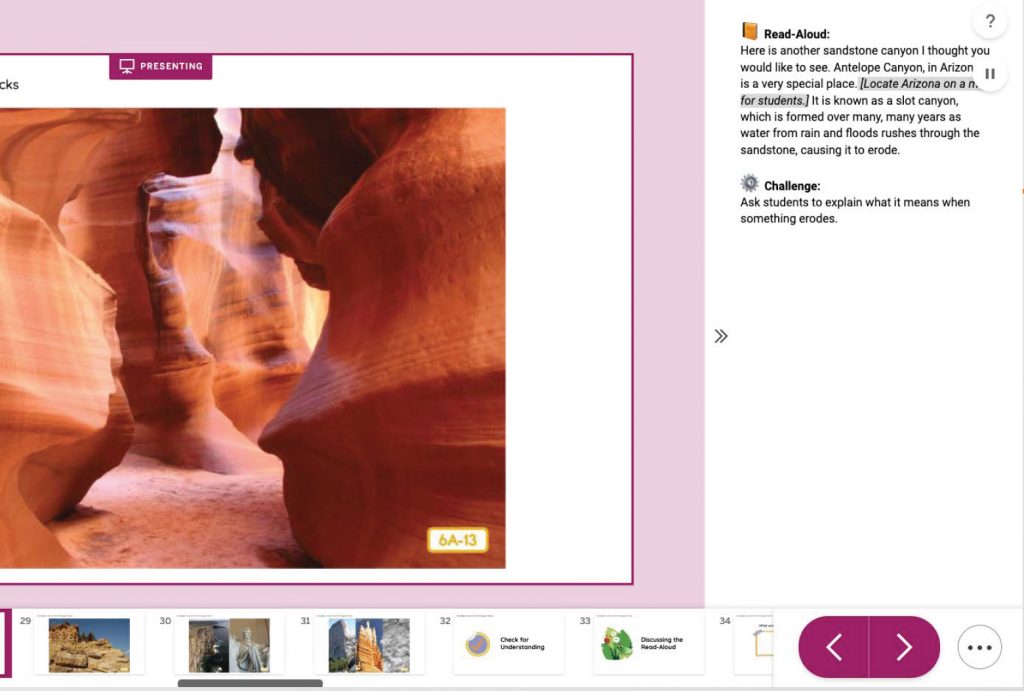
Interactive Classroom provides ready-to-use, customizable lesson slides, complete with all the prompts from the Teacher Guide embedded in the teacher view. As teachers deliver each lesson, students engage with the content through slides that include digital activities, digital components, multimedia, Student Readers, and more. Students can complete work in the platform through digital Activity Pages that allow them to type, draw, record audio, and more.
Explore the Interactive Classroom overview brochure.
Improved layout, more focused lessons, new content & more
From 1st Edition to 2nd Edition, we made updates to make it easier to plan and deliver Amplify CKLA lessons, including a variety of ways to differentiate instruction to meet the needs of all students.
Key enhancements include:
- Scaffolds for English Language Learners added to all lessons
- In-the-moment differentiation opportunities added to support and challenge all students
- Integrated Grade 3 into one instructional strand to better match students’ learning trajectories
- New layout to make Teacher Guides easier to scan and use.
New content at the beginning of each lesson:
- Primary Focus Objectives identify the goals of each lesson. Each objective is standards-aligned and corresponds to a formative assessment.
- Formative Assessment opportunities are explicitly called out in a chart at the beginning of each lesson. Formative assessments are aligned to the Primary Focus Objectives.
- Universal Access suggests modifications to the lesson to support a diversity of learning styles.
New content within each lesson:
- Support and Challenge sidebars added throughout for extensions, support, and enrichment.
- Access Supports provide scaffolds to support English Language Learners across five proficiency levels.
New content in each Skills Strand lesson:
- Additional Support section at the end of every Skills lesson provides opportunities for re-teaching and reinforcing skills taught in the lesson. Specific activities and extensions are provided to meet the needs of all learners.
New content in all grades, including:
- Grade K: Picture Reader with supporting instruction
- Grade 3: Content integrated into one instructional strand to improve pacing and closely match students’ learning trajectories; excerpts of read-aloud text now appear in select student readers; added new Vikings Quest (problem-based interactive learning).
- Grade 4: Updated the Personal Narratives unit, added The Contraption Quest (writing across the year).
- Grade 5: Updated Personal Narratives unit, added Chemical Matter unit, added The Robot Quest (writing across the year).
- Moved Contemporary Fiction unit from Grade 5 to Grade 4.
- Supplemental cursive instruction and activity book added for Grades 3 and 4.
Take a deeper look at the enhancements.
Language Studio for English Language Learners
Language Studio is a companion English Language Development program to 2nd Edition designed to support students learning English at all proficiency levels. Aligned to WIDA, the program helps students strengthen vocabulary and academic language skills while deepening the background knowledge developed in the core program. This unique approach provides an effective structure for moving English Language Learners students towards English proficiency.
View sample lessons to see how it works.
Multimedia Hub for teachers and students
Students will be able to access multimedia resources and engage in a new way on the Amplify CKLA Hub. Students can access digital resources independently from anywhere, taking full advantage of the instructional multimedia experiences that Amplify CKLA has to offer. Students can access the Hub at home, in the classroom, and on the go, making it ideal for remote learning. It’s compatible with laptops, Chromebooks, tablets, and desktops.
Grades K–2
Grades K–2 students will have access to Knowledge Builder videos to introduce each domain; Sound Library videos and songs for each sound in the English language; and audio-enabled eBooks of grade-level Student Readers.
Grades 3–5
Grades 3–5 students will have access to the Vocab App for independent practice with domain vocabulary and audio-enabled eBooks of grade-level Student Readers in English and Spanish.
Welcome Texas Home Learning Users!
Note: This site is no longer being actively updated. To access the latest 2021-22 Elementary Literacy Program instructional materials, please visit my.amplify.com.
If you have any questions, please reach out to texashomelearning@tea.texas.gov

Grade K
- English
- Spanish
Skills Unit 1
Skills Unit 2
Skills Unit 3
Skills Unit 4
Knowledge 1: Nursery Rhymes and Fables
Knowledge 2: The Five Senses
Knowledge 3: Stories: Fairy Tales and Folktales
Knowledge 4: Plants: How Do They Grow?
Conocimiento 1: Rimas y fábulas infantiles
Conocimiento 2: Los cinco sentidos
Conocimiento 3: Cuentos: cuentos de hadas y cuentos populares
Conocimiento 4: Plantas: ¿cómo crecen?
Grade 1
- English
- Spanish
Skills Unit 1
Skills Unit 2
Skills Unit 3
Skills Unit 4
Knowledge 1: Fables and Stories
Knowledge 2: The Human Body
Knowledge 3: Different Lands, Similar Stories
Knowledge 4: Different Lands, Similar Stories
Conocimiento 1: Fábulas y cuentos
Conocimiento 2: El cuerpo humano
Conocimiento 3: Tierras diferentes, cuentos similares
Conocimiento 4: Antiguas civilizaciones de América
Grade 2
- English
- Spanish
Skills Unit 1
Skills Unit 2
Skills Unit 3
Skills Unit 4
Knowledge 1: Fairy Tales and Tall Tales
Knowledge 2: The Ancient Greek Civilization
Knowledge 3: Stories from Mount Olympus
Knowledge 4: The War of 1812
Conocimiento 1: Cuentos de hadas y cuentos exagerados
Conocimiento 2: La civilización griega antigua
Conocimiento 3: Historias del monte Olimpo
Conocimiento 4: La guerra de 1812
Grade 3
- English
- Spanish
Unit 1: Classic Tales: The Wind in the Willows
Unit 2: Scales, Feathers, and Fur: Animal Classification
Unit 3: The Human Body: Systems and Senses
Unit 4: The Ancient Roman Civilization
Unidad 1: Cuentos clásicos: El viento en los sauces
Unidad 2: Escamas, plumas y pelaje: la clasificación de los animales
Unidad 3: El cuerpo humano: sistemas y sentidos
Unidad 4: El cuerpo humano: sistemas y sentidos
Grade 4
- English
- Spanish
Unit 1: Personal Narratives: My Story, My Voice
Unit 2: Eureka! The Art of Invention
Unit 3: Contemporary Fiction: Mi Calle, Tu Calle
Unit 4: American Revolution: Building a Nation
Unidad 1: Narrativas personales: mi historia, mi voz
Unidad 2: ¡Eureka! El arte de la invención
Unidad 3: Ficción contemporánea: mi calle, tu calle
Unidad 4: La Revolución estadounidense: construir una nación
- English
- Spanish
Grade 5
- English
- Spanish
Unit 1: Personal Narratives: Let Me Tell You a Story
Unit 2: The Renaissance: Art and Culture
Unit 3: Early American Civilizations: Myths, Pyramids, and Kings
Unit 4: Don Quixote: A Hopeful Knight’s Tale
Unidad 1: Narrativas personales: déjame contarte una historia
Unidad 2: El Renacimiento: arte y cultura
Unidad 3: Las primeras civilizaciones americanas: mitos, pirámides y reyes
Unidad 4: Don Quijote: la historia de un caballero optimista
Coming Soon!
Public review of the B.E.S.T. program for Florida middle schools, Amplify ELA Florida Edition
Welcome to the Amplify CKLA 3rd Edition program review site!
What is Amplify Math?
Amplify Math is a core math curriculum built for grades 6, 7, 8, and Algebra 1. It features a full suite of products for teachers and students that includes lesson plans, instructional materials, practice, assessments, and support to meet all learners’ needs. Amplify Math is built upon the highly rated curriculum, Illustrative Mathematics’® IM K–12 Math™, which was heavily researched and field-tested and has earned an all-green score on EdReports, the nationally recognized non-profit curriculum evaluation organization.
Amplify Math helps students learn math in a way that is engaging and relevant to the world around them using student-centered instruction, which has been proven to increase students’ motivation, engagement, and enjoyment of math. Students using the program are active participants in their learning, solving problems while working with their classmates.
The digital experience allows your student’s teacher to monitor your student’s work in real time and make sure they get the exact support that they need at every part of the lesson. Amplify Math’s open-ended tasks provide engaging challenges for students of all levels, preparing them to solve all types of problems. The parts of Amplify Math work together to help students master the key skills of a 21st century learner!
Features
Some of the unique features of Amplify Math include:
- Narrative connections: Exciting stories that help students to make connections between the math they learn in class and their everyday lives, making math class more engaging for your student.
- Amps: Interactive digital activities (included in every lesson) let your student can explore the math and collaborate with their peers.
- Power-ups: Additional activities that teachers can use to identify when your student needs support and help your student improve on the most important skills.
- Featured mathematicians: Stories of important mathematicians that help your students see themselves mirrored in the history of math.
Why student-centered instruction?

Student-centered instruction may look different from the way students have learned math for decades, and maybe even the way you learned math. Student-centered instruction instead emphasizes student-led discovery. When students explore and discover strategies, they are more engaged and make longer lasting connections.
Research shows that students and teachers alike prefer this method, and teachers report that student-centered instruction has helped their students learn more math. This way of learning helps students to remember what they learn in class and apply their knowledge to new situations. Students who experience student-centered instruction have been shown to perform better on standardized tests and have more growth in their grades than their peers who learn through other methods. Your student will also learn to communicate in writing and verbally, understand and challenge the opinions of others, and build confidence in solving new problems. With student-centered learning, students will begin to develop key skills for success in college and the workplace, like using technology, completing projects independently and with others, and persevering through difficult problems.
What does an Amplify Math lesson look like?

Students using Amplify Math will be active participants in their learning and get practice solving interesting and new types of problems. Here’s what a typical Amplify Math lesson includes:
- Warm-up: A short, attention-getting problem to get students interested in the lesson
- Activities: 2-3 mini-activities that challenge students’ problem-solving skills
- Summary: Discussion to review and bring together the important concepts from the lesson
- Exit Ticket: Questions for students to show what they know from the lesson
- Practice: Additional problems your student’s teacher may assign for classwork or homework
In class, your student will spend their time working on challenging problems while the teacher acts as a guide, highlighting different strategies for solving problems and helping students to understand the reasoning behind the math they do in class. Your student will be pushed to think more deeply about the math in their class as the teacher and other students question them on why their ideas make sense. Research has proven that this method helps students become better problem solvers, critical thinkers, and have a stronger conceptual understanding of what they are learning.
Check out lessons from Grade 6, Grade 7, Grade 8, and Algebra 1, and watch this video of a typical Amplify Math lesson:
Materials overview
Your student will have access to all learning, practice, and assessment materials through the Amplify platform. In addition, depending on the district, your student may also have a print Student Edition to use instead of the digital lesson if they do not have a device or internet. The Student Edition is a workbook that students can use to complete their work on problems and practice within the lessons.
Students can access the digital curriculum in school and at home with login information provided by their teachers. You can contact your student’s teacher to learn more about how they log in. Here are some key resources of the digital platform for students:
- Digital activities to allow students to explore and make sense of math, leading to increased engagement and understanding
- Digital supports such as a calculator and manipulatives to support all students where they are
- Power-ups to give students just-in-time practice with key skills
- Ability to access instructional materials in English or Spanish
Unit Caregiver Letters
Click a unit below to download the caregiver letter for that unit, in both English and Spanish.
- Unit 1: Rigid Transformations and Congruence
- Unit 2: Dilations and Similarity
- Unit 3: Linear Relationships
- Unit 4: Linear Equations and Systems of Linear Equations
- Unit 5: Functions and Volume
- Unit 6: Exponents and Scientific Notation
- Unit 7: Irrationals and the Pythagorean Theorem
- Unit 8: Associations in Data
How to support your student

- Review the unit caregiver letters to understand the key concepts in each unit. You can walk through the worked examples with your student, asking them to explain the strategy shown and asking if they know any other strategies to solve the problems.
- Your student’s teacher may assign practice problems at the end of each lesson for classwork or homework. Ask your student to walk you through how they solved each problem or talk about any parts that were challenging for them.
- Emphasize that getting stuck is part of the process and a necessary part of learning. Many students (and adults!) fear making mistakes, however, research shows that making mistakes helps your brain grow more. When your student gets stuck on a problem, encourage them to try different strategies, even if they are not sure if they are right.
- Relate math to daily activities at home, whether it be baking, grocery shopping, or planning for a road trip. Your student can help you figure out the price of an item after a coupon, cut a recipe in half, or figure out how much gas you’ll need to make it to your destination. Encourage your student to point out ways that your family uses math in your daily tasks.
Want to learn more?
Interested in learning more about Amplify Math? These resources will help you dig deeper:
CKLA 1st Edition Resources (new)
Welcome, Volusia reviewers!
Welcome to Amplify Core Knowledge Language Arts (CKLA), a comprehensive reading and language arts curriculum for Grades K–5 built on today’s rigorous standards. Amplify CKLA delivers superior results through a uniquely research-based approach, combining explicit foundational skills instruction with meaningful content knowledge in science, history, literature, and the arts.
By focusing deeply on building students’ knowledge base, Amplify CKLA levels the playing field for every child.
Amplify CKLA was developed by the Core Knowledge Foundation and Amplify.

Grades K–2 introduction
In grades K–2, Amplify CKLA is segmented into two distinct strands: Knowledge and Skills.
Skills Strand: Skills Strand lessons build a strong foundation for students through daily instruction in phonemic awareness, spelling patterns, decoding with engaging, decodable texts, writing mechanics, and writing structure and processes.
Knowledge Strand: It is vital to build students’ knowledge and vocabulary while they are still in the process of learning to read. In doing so, you better ensure their long-term success. CKLA’s Knowledge Strand is based on that very principle.
Grades K–2 materials
Student Reader
Unlike other decodable texts, CKLA’s Readers feature engaging plots and characters, making the process of learning to read rewarding. Student Readers are provided for each unit in the program beginning in Kindergarten Unit 6.
Grades 3–5 introduction
In grades 3–5, the Skills and Knowledge strands are integrated. As part of the curriculum’s research-based design, students in grades 3–5 spend several weeks immersed in sequenced domains in science, history, and literature, deepening both critical literacy skills and background knowledge.
Grades 3–5 materials
Student Reader
Rich in knowledge and diverse in content, Student Readers are the foundation of each unit as students dive into increasingly complex text and sharpen their analytical skills. From geology to the Middle Ages, students engage with a truly diverse range of topics.
Student Readers
- Unit 1: Classic Tales: The Wind in the Willows
- Unit 2: Animal Classification
- Unit 3: The Human Body
- Unit 4: The Ancient Roman Civilization
- Unit 5: Light and Sound
- Unit 6: The Viking Age
- Unit 7: Astronomy: Our Solar System and Beyond
- Unit 8: Native Americans: Regions and Cultures
- Unit 9: Early Explorations of North America
- Unit 10: Colonial America
- Unit 11: Ecology
Welcome, Tennessee reviewers!
Welcome to Amplify Core Knowledge Language Arts (CKLA), a comprehensive reading and language arts curriculum for Grades K–5 built on today’s rigorous standards. Amplify CKLA delivers superior results through a uniquely research-based approach, combining explicit foundational skills instruction with meaningful content knowledge in science, history, literature, and the arts.
By focusing deeply on building students’ knowledge base, Amplify CKLA levels the playing field for every child.
Amplify CKLA was developed by the Core Knowledge Foundation and Amplify.
Grades K–2 introduction
In grades K–2, Amplify CKLA is segmented into two distinct strands: Knowledge and Skills.
Skills Strand: Skills Strand lessons build a strong foundation for students through daily instruction in phonemic awareness, spelling patterns, decoding with engaging, decodable texts, writing mechanics, and writing structure and processes.
Knowledge Strand: It is vital to build students’ knowledge and vocabulary while they are still in the process of learning to read. In doing so, you better ensure their long-term success. CKLA’s Knowledge Strand is based on that very principle.
Grades K–2 student materials
Student Reader
Unlike other decodable texts, CKLA’s Readers feature engaging plots and characters, making the process of learning to read rewarding. Student Readers are provided for each unit in the program beginning in Kindergarten Unit 6.
Grades 3–5 introduction
In grades 3–5, the Skills and Knowledge strands are integrated. As part of the curriculum’s research-based design, students in grades 3–5 spend several weeks immersed in sequenced domains in science, history, and literature, deepening both critical literacy skills and background knowledge.
Grades 3–5 student materials
Student Reader
Rich in knowledge and diverse in content, Student Readers are the foundation of each unit as students dive into increasingly complex text and sharpen their analytical skills. From geology to the Middle Ages, students engage with a truly diverse range of topics.
Student Readers
- Unit 1: Classic Tales: The Wind in the Willows
- Unit 2: Animal Classification
- Unit 3: The Human Body
- Unit 4: The Ancient Roman Civilization
- Unit 5: Light and Sound
- Unit 6: The Viking Age
- Unit 7: Astronomy: Our Solar System and Beyond
- Unit 8: Native Americans: Regions and Cultures
- Unit 9: Early Explorations of North America
- Unit 10: Colonial America
- Unit 11: Ecology
Tennessee’s review of Amplify ELA for middle school
Thank you for taking the time to review Amplify ELA for middle school. The items below will allow you to experience our blended program with access to our print materials, digital curriculum, and resources to support your review.
Amplify ELA’s blended model enables teachers to design instruction based on their classroom needs and resources. Our engaging print edition highlights the many digital experiences teachers can share with students through classroom projections. Teachers can make choices about when their students use devices while providing 100% standards coverage and without compromising learning.
Digital Program
The content and instruction in Amplify ELA’s digital program mirrors the content provided in the print Teacher Edition and Student Edition. However, the digital program offers more opportunity to engage students through the use of multimedia and a variety of learning apps. Teachers will also find embedded apps to help with scoring, providing student feedback, and reporting.
To review the digital program, visit learning.amplify.com and enter the credentials that were provided on the cover of your Getting Started guide.
Grade 6 materials

Student Edition:

Grade 7 materials
Student Edition:

Grade 8 materials

Student Edition:

Resources
Resources to help with your review:
Get to know Amplify ELA
Start by taking a look at the Amplify ELA Program Guide, where you’ll find:
- Grade-level overviews for grades 6–8 (pages 11–31)
- Amplify ELA pedagogy (page 10)
- Sample lesson routine (page 38)
- Amplify ELA foundations (pp 70-80)
Want to go deeper or look at Amplify ELA’s approach to writing, vocabulary, grammar, and differentiation? Check out the Table of Contents for all this and much more!
Navigating the curriculum
Amplify ELA is a truly blended curriculum, designed specifically for grades 6–8. The program includes instructional guidance and student materials for a year of instruction, with lessons and activities that keep students engaged every day. Materials can be accessed either digitally or through print materials, depending on what your class needs.
Navigating in print
- Watch this video exploring the print resources available for students and teachers in Amplify ELA.
- Follow this link to open an ebook version of the print materials for your grade level and explore Unit A (the first unit).
Navigating digital
- Watch this video exploring the digital curriculum platform and the many resources available for teachers and students.
- Log in to the curriculum at learning.amplify.com using the demo account and password provided by your Sales rep.
- Once you have finished the tour, try out the scavenger hunt below!
Amplify ELA Scavenger Hunt
Inside a lesson
1. Overview & planning

The Lesson Brief equips teachers with the tools they need to plan instruction. It begins with an Overview, which describes the big ideas students will grapple with and summarizes the lesson’s sequence of activities. Next, there is a Preparation section, which points out key moments and materials to prepare. The Preparation section also describes the location and content of the lesson’s Exit Ticket.
The Lesson Brief also includes: the Lesson Objective, which details the reading, writing, and/or speaking and listening objectives; Words to Use, which points out key vocabulary from the reading; Skills & Standards, which lists the focus and coverage standards; and Differentiation, which describes differentiated supports and provides additional suggestions for modifying activities.
2. Vocab App

The Vocab App helps students master vocabulary words through game-like activities based on morphology, analogy, synonyms/ antonyms, and deciphering meaning. These activities help students develop dictionary skills by focusing on parts of speech, etymology, and multiple meanings. There are also activities for ELL-appropriate words from the unit’s texts, asking students to match an English definition, Spanish translation, context sentence, audio pronunciation, and visual definition. These activities also align to vocabulary standards.
Vocab App (Teacher View)
3. Work Visually

Visualization activities are an essential part of Amplify ELA, as they open the door to more comprehensive understanding of complex texts. In these learning experiences, students break apart the text in visual ways or use visual cues to “see” key details as they construct meaning.
In this early lesson from grade 7, students unpack propaganda images and short videos from the Chinese Cultural Revolution to build their understanding of the setting before beginning the memoir Red Scarf Girl.
Other units include visualization activities such as using an app to “see” the evidence for and against scientific theories, making storyboards and planning visual adaptations of texts to “read like a movie director,” and comparing and contrasting illustrations with key textual moments.
4. Author Videos & Dramatic Readings

Students benefit from using listening comprehension skills as they build fluency with complex texts. In these close reading experiences, students listen to the text, perform the text out loud, or watch a dramatic reading of the text.
In this lesson, students listen and watch as author Ji-Li Jiang reads the opening prologue of her memoir, Red Scarf Girl. Her facial expressions, tone of voice, and emphasis help students develop early ideas about what matters to this narrator.
Additional author videos and dramatic readings are embedded in other units. In Unit 8D: Shakespeare’s Romeo & Juliet, students watch WordPlay Shakespeare videos where actors perform each selected scene next to the text of that excerpt. In Unit 8B: Liberty & Equality, two members of the Marvel cinematic universe—Chadwick Boseman and Elizabeth Olsen—offer masterful performances of Narrative of the Life of Frederick Douglass, an American Slave and A Confederate Girl’s Diary.
5. Reading/eReader

Reading standards establish high expectations for all students, even as they enter the middle grades at a variety of reading levels. In Amplify ELA lessons, students access universal supports embedded in the eReader (and built into the print versions of the text) to help them participate fully in grade-level activities.
Point-of-use vocab in print: The print Student Edition places key vocabulary words and their relevant definitions in the text margin to support students and keep them reading.
Reveal: By clicking on these pre-selected words, students access short contextual definitions for key and challenging vocabulary.
Highlight, Bookmark, and Notes: The digital highlighting, bookmarking, and annotation tools allow students to save and review any text notes from any lesson.
Text size and line spacing: Students can adjust text size and line spacing to find what works best for them
6. Writing

Two or three times a week, students complete their reading work by developing a piece of writing to refine their reading analysis. They write for 10–15 minutes, focusing on one claim in response to a prompt, and using evidence from the text in support of their claim.
In this lesson, students build on their discussion of the setting and their analysis of the passage to determine the author’s point of view at the start of her memoir.
Differentiated supports: Five levels of differentiated supports can be assigned in the moment or in advance to help every student work productively. Levels can be assigned ahead of time (by simply dragging and dropping students into groups) and students remain in their assigned levels until they’re changed by the teacher. For more information on differentiation in Amplify ELA, click here.
Automated Writing Evaluation: The Automated Writing Evaluation (AWE) tool has been developed in conjunction with Amplify’s regular writing activities, which ask students to use textual evidence to develop one focused idea or claim about the text and communicate that idea clearly and effectively to an audience. AWE is a tool designed to help teachers understand, track, and support student skill progress with these key foundational skills, which are a strong indicator of a student’s analytic writing proficiency. AWE provides auto scores for Focus and Conventions, allowing teachers to prioritize their assessment of a student’s progress with Use of Evidence, a skill that is relatively new for many middle-grade students.
7. Share

Establishing a supportive writing community in the classroom helps students develop their voices as writers. Each writing activity is coupled with a sharing session, where clear routines and student-facing feedback protocols support students as they share and respond to each other’s writing. Here, students try out their writing with an audience of their peers to figure out how to express their ideas in a clear and convincing way. In addition, these sharing sessions allow students to learn from the range of perspectives in the classroom.
Clear and consistent Response Starters ensure that students provide feedback that targets key skills and focuses on where a student is using a skill effectively, fostering an effective and supportive feedback environment.
8. Solos
Solos are an important part of the ELA curriculum, and are designed to be completed as homework—but not every student has a computer at home. However, most students DO have access to a mobile device. The new Mobile Solos give every student access to this part of the curriculum, protecting valuable classroom time for lessons and group activities.
Navigating the first unit
Dig into Unit A
It’s time to continue your journey by exploring the first unit!
- Choose a 6th-, 7th-, or 8th-grade Unit A.
- Find the Print Materials for your grade level’s Unit A and review the unit overview. (password: middle678school)
- Log in to the curriculum and navigate to your chosen unit.
- Scroll down to the unit guide. Open each section and read it.
- Read the background and context document in the Materials section.
- Go to Sub-unit 3 and read the Sub-unit Overview.
- Choose two lessons to explore further.
- Open the first lesson and read the Lesson Overview. Be sure to open and read each section in the Lesson Overview.
- Open each activity tab and read the teacher Instructional Guide. Familiarize yourself with the entire lesson and note where students are building reading and writing skills
- Repeat with the second lesson.
Diving Deeper
Check out Amplify ELA’s professional learning website, featuring self-guided training modules and videos to help you with planning and pacing, navigation, and learning key curriculum features.
You can log in using your Amplify credentials or the demo account and password provided by your sales rep.
Additional support
As you continue to explore the curriculum, you may also want to take a look at the Amplify ELA Resources Website, which is full of additional information on the program. If you have any questions, please contact us through the Amplify Help section.
And you’ll find even more information by watching this session from our Literacy Symposium, in which Sarah Kitzmiller from the Niswonger Foundation and Teddy Redding from Amplify discuss some of the challenges of the 2020–21 school year.
Amplify’s Literacy Symposium session: Focusing on the Fundamentals to Start the Year Right
You may choose to view other sessions from the Literacy Symposium as well, all accessible from the schedule menu in the top left corner.
This webinar also offers valuable insight, with Baltimore City middle school ELA teacher Lucas Drerup describing his experiences with Amplify ELA and discussing how he brings middle school ELA to life, even in a remote teaching setting.
How to bring middle school ELA to life: A teacher’s perspective
Support
- elahelp@amplify.com
- Amplify Help Center
- 1(800) 823-1969
Louisiana’s review of Amplify ELA for middle school
Welcome, Florida community reviewers!
Welcome, Michigan Committee for Literacy Achievement!
We’re excited to share everything you need to critically evaluate Amplify CKLA 3rd Edition, our K–5 core literacy program. On this site, you’ll find a range of materials and literacy tools, including Reviewer Resources and Teaching Materials (Teacher Guides, Activity Books, and Student Readers) organized by grade and unit.
We hope you find the site helpful. We welcome your thoughts and questions!
Reviewer resources
Key bid documents:
- ESSA Level Evidence Worksheet
- K-5 Reading League Curriculum Evaluation Tool
- K-2 EdReports Self-Evaluation
- 3-5 EdReports Self-Evaluation
Overview and program resources:
- Program Guide
- Choice Units Overview
- Text Types and Text Complexity Guide
- Writing Overview
- Assessment Overview
- K–5 Knowledge Map
Alignment and scope and sequence:
- Common Core State Standards (CCSS) Alignment
- K-2 Skills Scope and Sequence
- K-2 Knowledge Scope and Sequence
- 3-5 Instruction Scope and Sequence
Curriculum maps by grade:
- Kindergarten Knowledge | Kindergarten Skills
- Grade 1 Knowledge | Grade 1 Skills
- Grade 2 Knowledge | Grade 2 Skills
- Grade 3
- Grade 4
- Grade 5
Kindergarten
Explore all available resources for Kindergarten, organized by strand and unit.
Knowledge Strand
Skills Strand
Grade 1
Explore all available resources for Grade 1, organized by strand and unit.
Knowledge Strand
Skills Strand
Grade 2
Explore all available resources for Grade 2, organized by strand and unit.
Knowledge Strand
Skills Strand
Grade 3
Explore all available resources for Grade 3, organized by unit.
Grade 4
Explore all available resources for Grade 4, organized by unit.
Grade 5
Explore all available resources for Grade 5, organized by unit.
Skills Supplement (Grades 3-5)
These supplementary units for Grades 3-5 reinforce and build on K-2 foundational skills instruction.
Digital platform
In the 2025-26 school year, Amplify CKLA’s all-in-one platform will offer essential tools that streamline instruction for teachers and engage students with meaningful content. Teachers can plan and deliver lessons efficiently, while students can access assignments, assessments, and fun practice games.
Presentation Screens
Deliver interactive lessons with ready-made, customizable slides for every lesson.
Auto-scored digital assessments
Assess vocabulary, comprehension, and knowledge development at the end of each K–2 Knowledge and 3–5 Integrated Unit.
Standards-based reports
Identify strengths and growth areas for individuals, small groups, or your entire class. Interactive dashboards offer detailed results from assessments and activities.
Skill-building practice games
Engage students with interactive games that reinforce concepts and make learning fun. Powered by Boost Reading™, these games align with lessons and provide real-time feedback.
eReader
Students access texts, take notes, and use audio-enabled eReaders to enhance their reading experience.
Sound Library
Students watch articulation videos and listen to songs for each sound to support phonological awareness.
Vocab App
Helps students in Grades 3–5 practice Amplify CKLA Tier 2 vocabulary words with fun, interactive games.
Intervention Toolkit
Offers user-friendly resources designed to aid educators in identifying and addressing deficiencies in students’ foundation skills.
Program support resources
Additional program resource documents: